Skip to content

Electrical component marketing agency

Marketing for electrical component suppliers: parametric search, datasheets, reel and cut tape quantities, lifecycle status, BOM uploads and price break tiers.

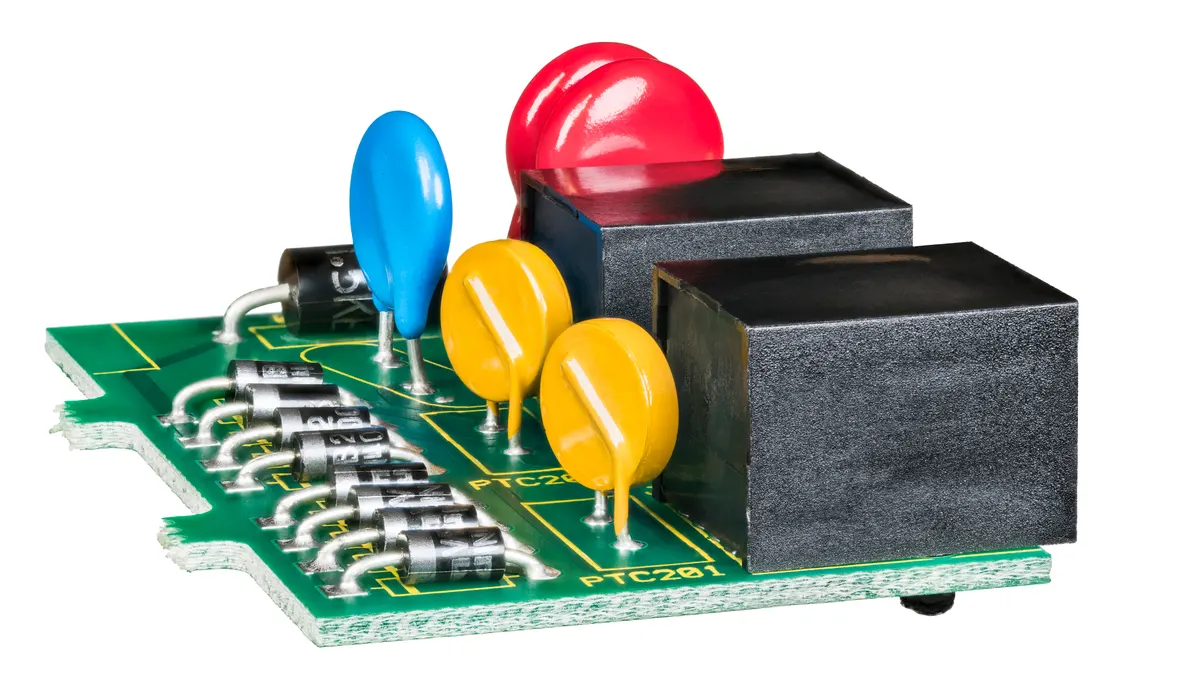
Electrical component marketing agency: electronic components on green circuit board isolated on a white background.

How engineers and buyers source components

Component buying starts with a parameter, not a product. An engineer needs a capacitor at a value, a voltage rating, a tolerance and a package size, and once a part is designed into a board it stays there until something forces a change. Then the same part is bought again in a completely different quantity, because a prototype needs ten and production needs ten thousand on a reel.

We write growth plans for electrical and electronic component suppliers that already sell online. The plan covers parametric filtering that matches how engineers narrow a search, product pages that publish the datasheet, lifecycle status and compliance declarations as readable content, quantity handling that respects reels, cut tape and minimum packaging quantities, a bill of materials upload that turns a design into a cart, and price break tables that make the next tier obvious.

It also covers the moment a part goes end of life, which is either a lost customer or a redesign you help with.

There are two buyers behind one part number. The engineer chooses it, filtering by parameters, opening the datasheet, checking the footprint and the operating range, and often ordering a handful to prototype. The purchasing team buys it later in production volume, and their questions are entirely different: unit price at the tier, lead time, minimum packaging quantity, country of origin and whether the part is going to still exist in two years.

Lifecycle status drives both. A part marked not recommended for new designs changes an engineer's decision immediately, and an end of life notice sends a buyer looking for a drop in alternate before a line stops. Suppliers who publish status honestly and suggest a genuine second source are the ones who keep the account through the change.

Quantity is not a simple number. Parts come in cut tape, on partial reels or on full reels, with minimum packaging quantities that a cart has to respect, and price breaks that can change the sensible order size dramatically between ten and a hundred.

Compliance paperwork follows almost every order. Declarations for restricted substances, country of origin, tariff classification and sometimes a certificate for the specific lot are needed by the customer's own compliance process, and a supplier who cannot produce them slows their customer down.
Where electrical component suppliers
lose revenue

The four levers, in this niche.

Visitors

Visitors: part numbers and parameter strings

Traffic arrives as exact manufacturer part numbers, as parameter phrases such as a value with a voltage rating and a package code, and as second source searches when a part has gone scarce. Every part number needs its own indexable page carrying the full number including suffixes, the package, and the common alternates. Shopping campaigns split by component family, since passives sold in hundreds and connectors or modules sold singly need different bids. Search ads take the selection questions a tile cannot answer.

Conversion rate

Conversion: datasheet, lifecycle status and real stock

An engineer converts when the page shows the datasheet, the parametric table, the package and footprint, the lifecycle status and stock they can trust. A buyer converts when the price break table, the minimum packaging quantity, the lead time for anything not in stock and the compliance declarations are on the same page. Cart rules must respect cut tape and reel quantities rather than silently rounding, and account customers should see their negotiated pricing on login with purchase order checkout.

Average order

Order value: from prototype quantities to production reels

The same part is ordered in tens and then in thousands, so the page has to make the jump visible. Show the price break table with the tier boundaries and the reel quantity, so someone ordering ninety can see what a hundred costs. A bill of materials upload that prices a whole design at once turns a single line order into a full board. Suggested companions matter too: the connector needs the mating half and the crimps, the module needs the header, the sensor needs the breakout.

Repeat purchases

Repeat purchases: the design is the subscription

Once a part is designed in, reordering is inevitable until the product changes, so the job is to be the easy option every time. Saved bills of materials, one action reordering of a previous build, and stock alerts on parts a customer has bought before all reduce the chance of a switch. Lifecycle notices are the retention moment: when a part goes end of life, the customer who hears it from you, with a viable alternate and a last time buy quantity, stays with you through the redesign.

What we do for
electrical component suppliers

Five channels, one plan.

Google Shopping and search

Google Shopping and search ads for electronic components

Shopping can work for components, but only if the feed respects how the category is priced and packed. Titles lead with the manufacturer part number and then the parameters that identify it: value, voltage rating, tolerance, package. The price shown must be a price a visitor can actually pay at the minimum quantity, which for a part sold in hundreds means the feed price and the landing page price have to agree at that quantity.

Campaigns split by family so passives, semiconductors, connectors, electromechanical parts and modules hold their own budgets and bids, because average order values differ by an order of magnitude. Search ads carry the selection and substitution queries: an alternate for a part in shortage, a footprint equivalent, a part with a wider temperature range. Copy states stock quantity, whether cut tape is available and the cut off for same day dispatch, since a stalled prototype is an urgent problem.

Meta and TikTok

Meta and TikTok ads for electronic components

Social does not catch an engineer mid search, so it is used to build familiarity and to bring people back. Retargeting reaches visitors who viewed a part or started a bill of materials upload and left, showing stock and lead time rather than a discount. Custom audiences from your account list work for shortage alerts and new line announcements to people who already buy.

Organic and paid video does have a real audience among hardware developers, makers and maintenance electricians. Short content that shows a part in use, explains how to read a package code, or walks through choosing a value earns attention and feeds the SEO programme with proven questions. Keep the specification on screen so a viewer can search for it later. For distributors serving panel builders and installers, tightly targeted local campaigns around trade audiences can be tested with an account opening offer rather than a product ad.

Merchant Center and the feed

Merchant Center and the feed for electronic components

Component feeds break on identifiers and on quantity. Populate brand and mpn with the manufacturer's part number exactly as printed, including package and packaging suffixes, and set identifier_exists correctly for parts with no assigned barcode. Where a part is sold in fixed multiples, use multipack and unit_pricing_measure so the tile shows a per piece price alongside the pack price, and make sure the landing page offers that same pack at that same price.

Product_detail carries the parameters buyers filter on: value, tolerance, voltage or current rating, package or case code, mounting type, operating temperature range and lifecycle status. Availability must reflect real stock, since components move fast and an out of stock click is wasted. Parts with export or destination restrictions need to be excluded from feeds for markets you cannot ship to, and anything quote only or allocation controlled should stay out rather than promising a price you cannot honour.

SEO and AI search

SEO and AI search for electronic components

Every part number deserves a page, and that page should carry the parameters as text, the package and footprint, the lifecycle status, the compliance declarations and a link to the datasheet. That text is what search engines index and what an AI assistant reads when an engineer asks for a replacement for a part that has gone obsolete or a drop in equivalent from another manufacturer.

Parametric category pages are the other half. Build indexable pages for the combinations people actually search, such as a value and package pairing, rather than leaving everything behind a filter that produces no crawlable URL. Selection guides explain how to read a package code, how to choose a dielectric, what a tolerance means in practice, and how to interpret a temperature rating, each opening with the direct answer. Cross reference tables between manufacturers, published as text, are among the most cited pages in this category.

Email and SMS

Email and SMS for electronic components

Email in this category is mostly operational, and that is why it gets opened. Back in stock alerts on parts a customer has viewed or bought are the highest value message you can send during a shortage. Lifecycle notices go to everyone who bought a part that is now not recommended for new designs or end of life, naming the alternate and offering a last time buy quantity with a deadline.

A saved bill of materials becomes a reorder prompt: when a customer's build cycle suggests the next run is due, send the priced list ready to order. Quote follow ups matter for larger production quantities, where an approval sits with someone else. Price break education is worth its own message, since many buyers order just below a tier without noticing. SMS is reserved for allocation and shortage news on a part a customer depends on, and for dispatch confirmations on urgent prototype orders.

First three fixes

What the plan usually starts with for electrical component suppliers.

  1. Parametric filters that produce no indexable pages

    Search is done by parameter, but filter results that live behind a script cannot rank or be cited. We build crawlable pages for the parameter combinations people search, with real copy and product listings, and keep the filter for refinement rather than as the only route into the catalogue.

  2. Cart quantities that ignore packaging rules

    A cart that lets someone order seventeen of a part sold in hundreds creates a cancellation and a support ticket. We set minimum packaging quantities and increments per product, show cut tape, partial reel and full reel options separately with their own prices, and display the next price break beside the quantity field.

  3. Lifecycle and compliance data missing from the page

    Buyers who cannot see status, restricted substance declarations, country of origin and tariff classification go to a source that shows them. We publish those fields on every part page and in the feed, and trigger an alert to past buyers whenever a status changes so the redesign conversation starts with you.

Questions from electrical component suppliers

Show a price a visitor can actually pay at the minimum quantity you sell. If a part only ships in hundreds, the feed price and the landing page price have to agree at that pack, with multipack and unit pricing set so the tile can also show a per piece figure. Mismatches cause disapprovals across the feed.

Put both sets of answers on the same page. Engineers need the datasheet, parameters, package, footprint and lifecycle status. Purchasing needs the price break table, minimum packaging quantity, lead time, country of origin and compliance declarations. Splitting them across separate pages loses whichever visitor lands on the wrong one.

Publish the status on the page as soon as it is known, name a genuine alternate with the differences stated honestly, offer a last time buy quantity with a deadline, and email every customer who bought it. Handled well it is a retention event, and handled badly it is the moment a customer changes supplier.

It changes the unit of purchase from a line to a design. A buyer who can paste a parts list and get a priced, availability checked cart will order the whole board rather than the two lines they came for, and will save that list for the next build, which makes the next order a single action.

What replaces an obsolete part number, which part is a drop in equivalent from another manufacturer, what a package code means, which dielectric or tolerance suits an application, and whether a part is still recommended for new designs. Pages that publish parameters and status as text are the ones an assistant can cite.

Other b2b & industrial stores we work with

Send your electrical component supplier store.

The plan says which lever is leaking and what to fix first, for your store as it is today.

Store, name, email and phone. A person replies from a real inbox. Privacy

Get your free growth plan