Skip to content

Agricultural supply marketing agency

Marketing for agricultural supply stores: label and licence rules, seed and feed specs, farm tax exemption, freight on bulk goods and season driven demand.

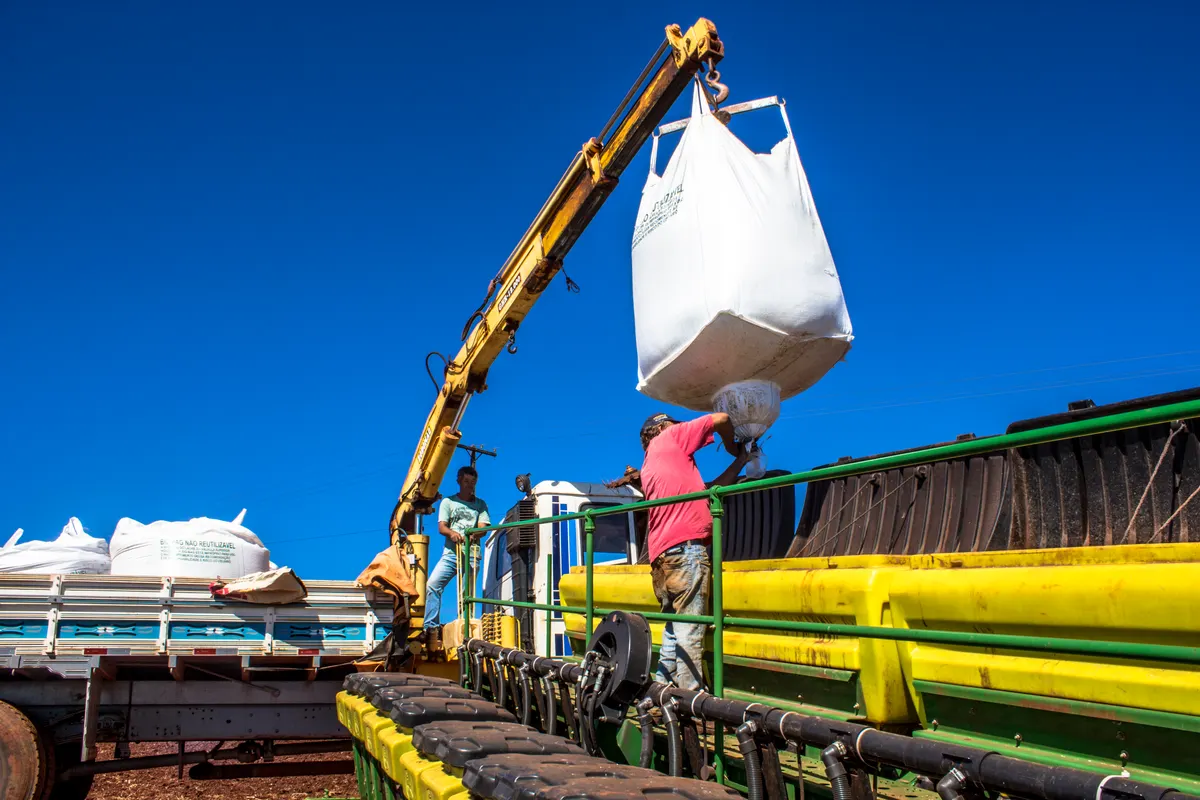
Agricultural supply marketing agency: worker carry an agricultural machine with fertilizer in Parana, Brazil.

How a farm buys its inputs

Farm supply demand is decided by weather and by the calendar of the animals and crops, not by a promotion. Nobody buys calving supplies in July or fencing wire the week after the job is done. When the ground is right or a herd is due, everything is needed at once, and the store that has stock, a price per tonne that makes sense and a way to get it to the yard wins the whole season.

We write growth plans for agricultural supply stores that already sell online. The plan covers product pages that carry analysis, labels and licence requirements as readable text, restricted product handling for the lines you cannot advertise or ship everywhere, freight rules honest enough for pallets and bulk bags, farm tax exemption and account terms at checkout, and campaigns timed to the operations that create demand.

It also covers the hobby and smallholder audience, who buy the same products in far smaller quantities and ask far more questions.

The commercial buyer works to an operation, not a shopping list. Ground conditions, a planting window, a treatment interval, a calving or lambing period or a weight target sets the date, and once that date arrives the inputs have to be on the yard. Being out of stock during a two week window is the same as not selling at all for the year.

Specification is compared closely and in a technical vocabulary. Fertiliser is compared by nutrient analysis and cost per unit of nutrient, feed by protein and energy content and price per tonne, seed by variety, treatment and germination, and animal health products by active ingredient, dose rate and withdrawal period. Buyers are used to reading a label properly and they expect one to be available before they order.

Some products cannot simply be added to a cart. Certain crop protection and animal health items require the buyer to hold a licence or a prescription, are restricted in particular regions, and carry storage and handling rules. That has to be enforced at checkout rather than discovered afterwards.

Delivery is agricultural, not parcel. Bulk bags, pallets of feed and rolls of fencing need a vehicle that can reach a farm track and someone with a loader at the other end. And the smallholder buying two bags behaves nothing like the farm buying twenty tonnes.
Where agricultural supply stores
lose revenue

The four levers, in this niche.

Visitors

Visitors: analysis, variety and machine model searches

The searches are technical and specific. A fertiliser analysis, a feed protein level and species, a seed variety, an active ingredient, a fencing gauge and roll length, or a machinery part by model. Each needs indexable page text carrying the exact terms in the vocabulary farmers use locally. Campaigns split by enterprise, so arable, livestock, dairy, equine and smallholder each carry their own budget, because their seasons and their basket sizes have almost nothing in common.

Conversion rate

Conversion: publish the label, the rate and the delivery reality

A farm buyer converts when the analysis or active ingredient, the application or feeding rate, the pack size and the label are on the page, and when the delivery method is stated plainly for a pallet or a bulk bag rather than left as a parcel estimate. Restricted lines must check licence or prescription details before payment. Farm accounts need their agreed pricing on login, purchase order or account terms at checkout, and a tax exemption certificate held on file.

Average order

Order value: the job needs more than the main input

A fencing job needs posts, staples, strainers, insulators and a tensioner as well as wire. A treatment needs the applicator, the gloves and the disposal route. Job based pages that gather the whole operation raise the order without pushing anything unnecessary. Pallet and tonne price breaks shown as a table let a buyer see where the next tier begins, and a delivery already booked for a farm makes adding a second product genuinely cheaper for them.

Repeat purchases

Repeat purchases: the season repeats every year

This is one of the most predictable reorder patterns in trade retail, because the operations come round annually and treatment intervals are fixed. Build reminders from each account's own history, timed a few weeks before the same point last year, with the previous products and quantities loaded. Feed reorders follow consumption rate and herd size. Weather sensitive prompts, such as before a forecast cold spell or ahead of a housing period, are welcome when they are genuinely useful.

What we do for
agricultural supply stores

Five channels, one plan.

Google Shopping and search

Google Shopping and search ads for agricultural supply

Shopping works for the packaged end of the catalogue, where a bag, a roll or a bottle has a clear price. Titles lead with the specification: the analysis for a fertiliser, the species and protein level for a feed, the gauge and length for a fencing roll, the pack size in every case. Bulk products that are priced per tonne with delivery quoted separately usually belong outside the feed, since the tile cannot represent them honestly.

Some crop protection and animal health products fall under restricted product policies and cannot be advertised, or can only be advertised in some markets, so eligibility is checked before spend rather than after a disapproval. Search ads carry the technical and timing questions, with copy stating pack size, delivery method and stock. Budget follows the season hard, rising weeks before each operation window and dropping to nothing between them, because a fertiliser ad out of season is spend with no purpose.

Meta and TikTok

Meta and TikTok ads for agricultural supply

Farming audiences are active on social, especially in the evening and during quieter periods, and local relevance matters more than clever creative. Meta works for smallholder and equine ranges with broad targeting, and for commercial accounts through custom audiences built from your own customer list ahead of a season.

Creative should be recognisably local and practical: the product in a yard rather than a studio, a job being done properly, a rate or a size on screen. Content that explains a technique, such as tensioning a fence correctly or preparing for a calving period, earns trust with an audience that can spot someone who has never done the work. Restricted product groups must stay out of paid social entirely where policy prohibits them. TikTok reaches younger farmers and smallholders well, and often surfaces the questions that should become reference pages on your site.

Merchant Center and the feed

Merchant Center and the feed for agricultural supply

The feed work here starts with what has to be excluded. Restricted crop protection and animal health items, anything requiring a licence or prescription, and anything you cannot legally ship to a given destination should be kept out rather than left to be disapproved item by item, because problems in those groups can affect the whole account.

What remains needs proper structure. Product_detail holds the nutrient analysis, active ingredient, protein and energy values, seed variety and treatment, gauge and length, and the pack size. Unit_pricing_measure gives a per kilogramme or per litre price so a twenty five kilogramme bag can be compared correctly. Heavy and bulky items need accurate shipping weight and dimensions with shipping settings that reflect pallet delivery, because a parcel estimate on a tonne of feed is a broken promise. Availability should be accurate at branch level where collection is offered.

SEO and AI search

SEO and AI search for agricultural supply

Organic search in this category rewards practical technical content that most retailers never write. Build pages on how to read a fertiliser analysis and work out cost per unit of nutrient, how to calculate feed requirements for a herd size, how to choose a fencing specification for a species and terrain, what a withdrawal period means in practice, and what licence a restricted product requires.

Those are the questions asked of AI assistants by farmers and smallholders planning a job, and the answers rarely exist in a citable form. Write each with the direct answer first and link the products it applies to. Seasonal operation pages that list everything a job needs, published well before the window opens, capture planning traffic and convert later. Publish labels, analysis sheets and application rates as page text alongside the downloadable document, and mark up products with brand, identifier and availability.

Email and SMS

Email and SMS for agricultural supply

Email is unusually effective here because the year repeats. Take each account's history, identify when they bought each input last year, and send a prefilled reminder a few weeks before that point with the same products and quantities ready to confirm. Farmers appreciate the prompt because the operation is already on their mind and ordering is the part that gets forgotten.

Feed reorders follow consumption rather than a date, so calculate the days of cover from the quantity and the herd size where you know it. Weather triggered messages have real value, such as a prompt before a forecast cold spell or ahead of a housing period, provided they are genuinely useful rather than an excuse to sell. Product label changes and supply issues on a critical input deserve a direct email to everyone who buys it. SMS suits delivery windows on farm deliveries, where someone needs to be at the yard with a loader.

First three fixes

What the plan usually starts with for agricultural supply stores.

  1. Bulk products priced as if they ship by parcel

    Pallets of feed, bulk bags and fencing rolls quoted at a parcel rate either lose money or get cancelled. We set weight and dimension based freight, show pallet and full load thresholds, state what access a delivery vehicle needs, and offer branch collection where you have it so the cost is known before checkout.

  2. Restricted products sold without a licence check

    Crop protection and animal health lines that require a licence, prescription or regional eligibility cannot be sold through a normal checkout. We gate those products behind an account that holds the record, verify before payment rather than after, and keep them out of advertising feeds where policy prohibits them.

  3. Campaigns running at the same rate all year

    Steady monthly budgets waste money in the dead weeks and run out during the fortnight that matters. We build a season map from your own order history by enterprise, weight budget toward the weeks before each operation window, and pause categories entirely when their season has passed.

Questions from agricultural supply stores

By operation window, not by month. Work back from when each job is actually done in your region, start spending a few weeks before the window opens so planning searches are captured, and pause that category once the window closes. Your own order history by enterprise gives the dates more reliably than any general calendar.

Some can and some cannot, and the rules vary by market. Restricted product policies cover several of these categories, and licence or prescription requirements apply on top. Audit the catalogue before spending, keep ineligible lines out of advertised feeds, and serve that demand through organic search and account channels instead.

Split the experience. Commercial buyers want analysis, tonne pricing, delivery access details and account terms with minimal explanation. Smallholders want small pack sizes, plain guidance and reassurance. Separate campaigns, landing pages and email programmes so neither audience is reading content written for the other.

The full analysis or nutrient content, the application or feeding rate, the pack size with a per kilogramme price, the label as readable text and as a download, storage requirements, delivery method including pallet and access needs, and any licence requirement, all visible before the buyer reaches the cart.

How to work out cost per unit of nutrient from an analysis, how much feed a herd of a given size needs, what fencing specification suits a species and terrain, what a withdrawal period means, and which product is licensed for a particular use. Pages answering those in text are what an assistant can cite.

Other b2b & industrial stores we work with

Send your agricultural supply store store.

The plan says which lever is leaking and what to fix first, for your store as it is today.

Store, name, email and phone. A person replies from a real inbox. Privacy

Get your free growth plan