Skip to content

Men's grooming marketing agency

Marketing for men's grooming brands that sell online: kit-led Shopping, gift-season campaigns, bundles done right in the feed, and cartridge reorder flows.

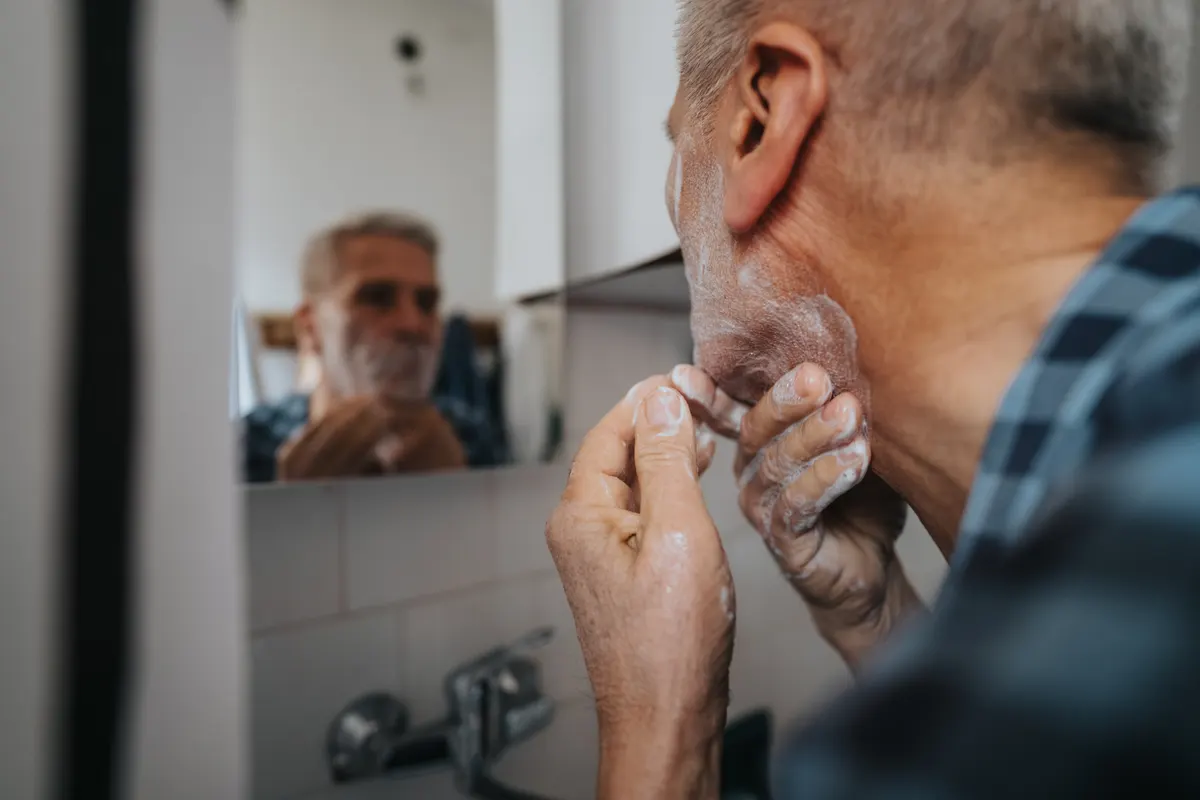
Men's grooming marketing agency: senior man shaving at bathroom mirror, focusing on grooming routine and reflection during morning routine.

Kits, gifts and the second buyer

Men's grooming sells in kits, on gift dates, and to two different buyers. The first is the man building a simple routine who wants one purchase to cover it: wash, shave, moisturise, done. The second is the partner, parent or friend buying for him, who wants a set that looks considered and arrives before the date. The two buyers search differently, respond to different creative and buy at different times of year, and a store that markets to only one of them leaves the other lever idle.

The product logic is replenishment. Razor cartridges, shave cream, deodorant and body wash run out on predictable cycles, which makes subscriptions and reorder flows the core of the repeat lever rather than an add-on. The feed logic is bundles: starter kits and gift sets need to be submitted so Google understands they are sets, priced as sets, and not disapproved as duplicates of the products inside them.

We work with men's grooming brands that already sell online.

A man buying grooming for himself tends to want fewer decisions. He searches for a starter kit or a shave set, wants the routine explained in three steps, and will pay a little more for one box that covers it. Product pages that list six individual products and ask him to build his own routine lose him. Pages that offer the kit, name what is in it, and say how long each item lasts convert.

The gift buyer is different. She or he is searching for gifts for men, grooming gift set, or a specific occasion, and is judging on presentation, on whether it will arrive in time, and on whether it feels like a considered choice rather than a default. Packaging photographs, a delivery cutoff stated on the page, and a gift note option carry that decision. Father's Day, Christmas and, to a lesser degree, birthdays and graduations set the calendar, and the gift buyer starts earlier than the brand expects.

Both buyers meet at the reorder. The gift recipient who liked the kit becomes the self-buyer, if the brand knows who he is. Gift orders shipped to a different name are a signal: a card in the box inviting the recipient to register, and a flow that follows, turns the gift into the first order of a customer rather than the last order of one.

Subscriptions fit this category well because the consumables are predictable, but they should be offered on the second purchase of a consumable, not on the first kit.

What we do for
men's grooming brands

Five channels, one plan.

Google Shopping and search

Kits and gift sets as their own products, priced as sets

Men's grooming Shopping performs when the kit is the product. Starter kit, shave set, travel kit and gift set are submitted as their own offers with the is_bundle attribute set, a title that names the set and its main contents, and an image of the whole box. A brand that only lists the individual wash and balm has no offer to show for the kit queries that dominate this niche.

Search campaigns split by the two buyers. Self-purchase ad groups sit on starter kit, shave kit and product-type queries, with copy that says what is in the box and how many weeks it lasts. Gift ad groups sit on gifts for men, grooming gift set and occasion queries, with copy that states the delivery cutoff and gift wrapping. Budgets move toward the gift groups from about six weeks before Father's Day and Christmas and back afterwards.

Claims are mostly straightforward in this category, but two things still trip reviews: antiperspirant efficacy language that reads as a drug claim in some markets, and any hair-growth or thickening promise, which is treated as a health claim. Keep to what the product does to the skin, the shave and the scent.

Meta and TikTok

Routine-in-a-minute for him, unboxing for the gift buyer

Two audiences, two creative lines. For the self-buyer, short routine videos on TikTok and Meta: the three steps, the products used, the time it takes, no pretence that grooming is complicated. Creative that shows the kit in a bathroom and the box it arrives in performs because it answers the only question he has, which is whether this is easy.

For the gift buyer, unboxing and reaction creative: the box opened, the presentation, the note. This audience skews toward partners and family and is reached with gift-intent creative in the weeks before Father's Day and Christmas, with delivery cutoff dates in the ad text as they approach.

Policy is light here compared with treatment categories, but Meta still rejects copy that implies something about the viewer, so ads that say tired of your rough skin become for skin that feels smoother, and anything about sweat or odour is framed around the product rather than the person. Retargeting is split by purchase type: gift buyers get next-occasion reminders, self-buyers get the consumables they did not include in the first order.

Merchant Center and the feed

Bundles flagged, refills separated, gift sets with their own identifiers

The common feed error in men's grooming is a kit submitted with the GTIN of one of its components, which gets it disapproved as a duplicate or, worse, shown against the single product's price. Kits get their own identifier where the brand has assigned one, or identifier_exists set to false, with is_bundle set to true and a title that begins with the set name. The individual products stay as their own offers.

Refill cartridges, refill deodorant pods and refill pouches are their own products with their own titles and are not variants of the handle or the case. Where a product does come in scent variants, those are grouped by item_group_id with the scent in a product detail pair and in the title, because scent is what the shopper is choosing between.

Gift sets have a short season and the feed should reflect it: availability rules take them out when they sell out, and custom labels mark them so seasonal campaigns can bid on them alone. Images show the full set as it arrives, on a plain background, with no promotional text. Shipping settings must state the delivery days that gift buyers are checking against.

SEO and AI search

Simple routine guides and the questions men actually ask

Men's grooming SEO is built on guides that remove decisions. How often to change a razor cartridge, how to build a three-step routine, what the difference is between a balm and an aftershave, which products to take when travelling. These are the searches, and they are also the questions men put to AI assistants, in exactly those words. Pages that answer in the first sentence, then explain, then link to the kit, are what gets quoted.

Gift search is its own layer. A gift guide for men that is updated each season, with the delivery cutoff stated, ranks for the occasion queries and gives the gift buyer a page that does the choosing for them. Occasion pages for Father's Day and Christmas should exist year-round, so they have authority when the season arrives, rather than being created in November.

Product pages carry what is in the kit, how long each item lasts under normal use, the scent described in plain terms, and the refill or cartridge that fits. Structured data lists the kit as a product with its own offer and the components in the description.

Email and SMS

Consumables on their own timers, and the gift recipient captured

The reorder flow in men's grooming is per consumable, because they run out at different rates. Cartridges on one timer, shave cream on another, deodorant and wash on a third. Each gets a reminder shortly before the expected run-out with a one-tap reorder and a subscription option that saves a little on each delivery. A generic thirty-day reminder is wrong for every one of them.

Gift orders are handled as a separate path. The buyer gets the delivery confirmation and a next-occasion reminder the following year. The recipient, if the brand can reach him through a card in the box and a registration page, gets the routine explained and the consumables offered when they would run out. A brand that only ever emails the gift buyer never meets the man using the products.

Seasonal email starts earlier than most brands think. The Father's Day and Christmas sequences go to past gift buyers about six weeks out, with the cutoff date in the first message. SMS carries the cutoff reminder and the reorder nudge, nothing more.

First three fixes

What the plan usually starts with for men's grooming brands.

  1. Submit kits as bundles with their own identifiers

    We rebuild every kit and gift set as its own offer with is_bundle set, a proper identifier or identifier_exists false, and a title naming the set, so kit queries have something to show and duplicates stop being disapproved.

  2. Build the gift path: cutoff dates, gift note, recipient capture

    Delivery cutoffs on gift pages and ads, a gift note at checkout, and a card in the box that brings the recipient into a flow of his own.

  3. Split the reorder flow by consumable

    Cartridges, cream, deodorant and wash each get a reminder timed to their own run-out, with a subscription offered on the second purchase rather than the first kit.

Questions from men's grooming brands

Both, and separately. The self-buyer searches for kits and product types, wants the routine simplified and buys all year. The gift buyer searches for occasions, judges on presentation and delivery date, and buys in the weeks before Father's Day and Christmas. They need different campaigns, different creative and different emails. The link between them is the card in the box that turns a gift recipient into a customer of his own.

The kit was probably submitted with the GTIN of one of the products inside it, so Google sees two offers for one product at two prices and disapproves one as a duplicate. Give the kit its own identifier, or set identifier_exists to false if it has none, set is_bundle to true, and give it a title that names the set. It then shows for kit queries as a product in its own right.

About six weeks out, earlier than most brands expect. The gift buyer plans ahead and the searches begin well before the date. Start with email to past gift buyers, then gift ad groups and creative, and add the delivery cutoff to ad text as it approaches. The occasion page should exist all year so it already has some authority when the season arrives.

Yes, for the consumables and at the right moment. Cartridges, shave cream, deodorant and wash run out on predictable cycles, which is what subscriptions are for. Offer it on the second purchase of a consumable, when the customer has shown he likes the product, rather than on the first kit, when he has not. Set the interval per product, not one interval for everything.

Yes, as long as the copy is about the product and not about the viewer. Meta's rules stop ads from implying something about the person seeing them, so tired of sweating through your shirt is rejected while a deodorant made for long days is fine. Antiperspirant efficacy claims are treated as drug claims in some markets, so describe the experience rather than making a clinical promise.

Other beauty & skincare stores we work with

Send your men's grooming brand store.

The plan says which lever is leaking and what to fix first, for your store as it is today.

Store, name, email and phone. A person replies from a real inbox. Privacy

Get your free growth plan