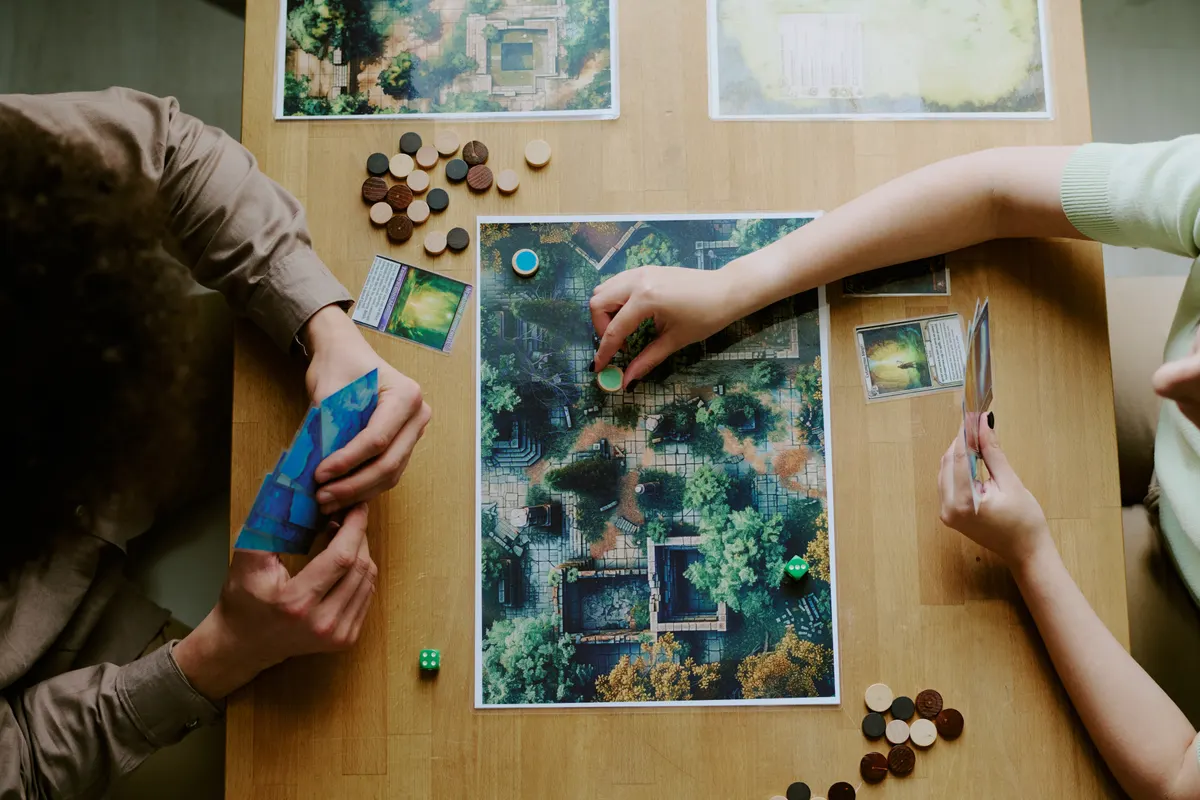
A board game shopper asks one question before any other: who is playing. Two people on a Tuesday, a family of five, eight friends at a party. Player count, playing time and how heavy the rules are decide the sale, and most shoppers filter on those three before they look at theme or price.
The catalogue makes that harder than it sounds. Base games, expansions that need the base box, standalone expansions that do not, deluxe editions from a crowdfunding campaign and retail editions with different components all sit next to each other. Sold wrong, they come straight back. The boxes are heavy and bulky too, so dimensional weight decides whether an order makes money. Sleeves, insert trays and replacement components are the small things that bring people back.
We work with board game stores that already sell online and want visitors, conversion rate, order value and repeat purchases to move together. The growth plan is free and written for your store. If you take it further, the fee is flat and monthly.
The decision usually happens away from your store. Someone watched a playthrough, read a ranking, or had a game taught to them at a friend's table, and they arrive knowing the name. Your job is to answer the practical questions fast: how many can play, how long a game runs, what age it suits, how heavy the rules are, and how much table space it needs.
The next question is which box. A shopper who loved a game comes back for more of it and has to work out whether the expansion needs the base game, whether it plays alone, and whether it is compatible with the edition they own. Editions are the trap: a crowdfunded deluxe version and the retail version share a name but not a component list, and a buyer who wanted the miniatures will return the cardboard one.
Language dependency matters for anyone outside an English-first market, since a card-driven game can be unplayable in the wrong printing.
Price checking is limited by publisher pricing policies, so the store that wins is usually the one that is in stock, ships a heavy box at a sane rate, and can say when a reprint arrives. Gifting drives a large share of the year, and gift buyers know none of the vocabulary.