Skip to content

Sewing & fabric marketing agency

Growth for online fabric stores: cut-to-length ordering, width and yardage maths, thread and zip matching, precuts for quilters, bolt ends and swatches.

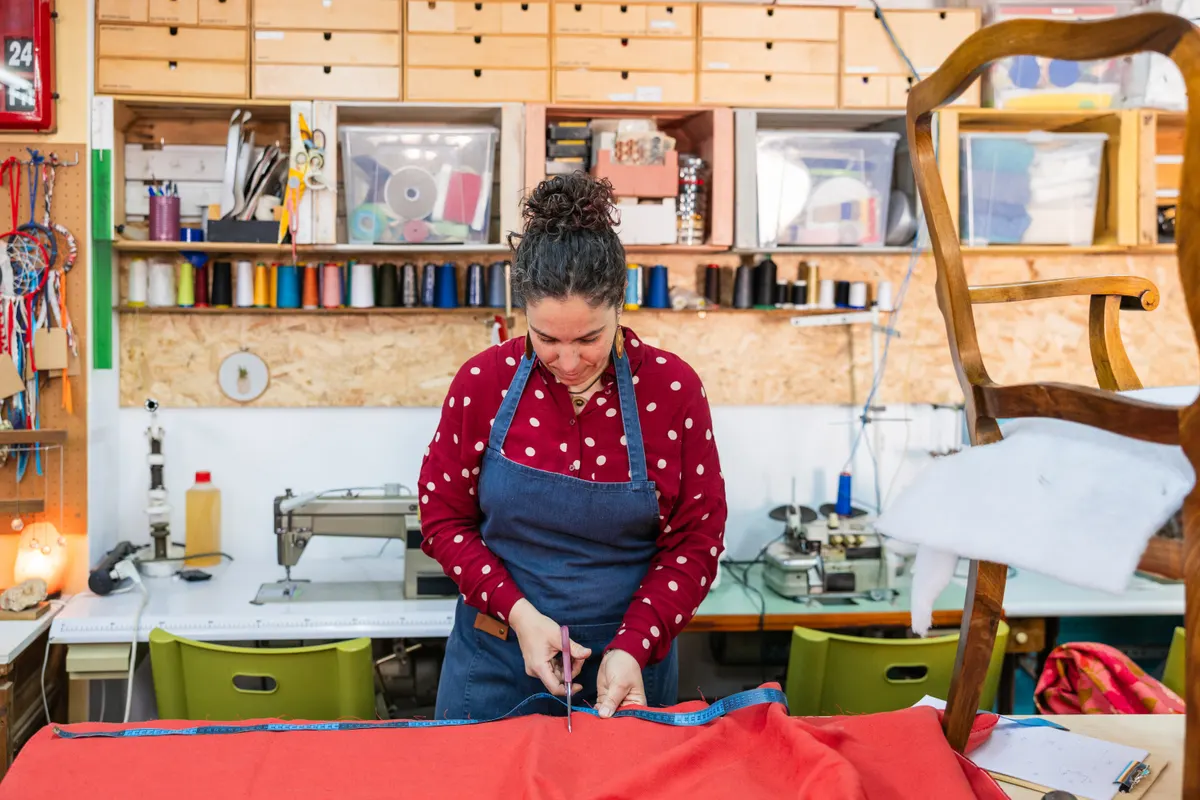
Sewing & fabric marketing agency: woman cutting red fabric for upholstery in workshop.

How a sewist works out what to order from a pattern

A fabric store sells a length, not a unit. The customer orders two and a half metres of one print, and the shop cuts it from a bolt that is either 112 or 150 centimetres wide, which changes how much they needed in the first place. Get the width, the weight and the stretch on the page and the order is right. Leave them off and you get a message, or nothing at all.

The rest of the catalogue hangs off that cut. Thread matches the colour and the fibre, the zip matches the length, interfacing matches the weight, the needle matches the cloth. Quilters buy in their own vocabulary of fat quarters, charm packs and jelly rolls, and need backing wide enough for the finished top. Bolt ends sell the day they are listed.

We work with fabric and sewing stores that already sell online and want visitors, conversion rate, order value and repeat purchases to move together. The growth plan is free and written for your store. If you take it further, the fee is flat and monthly.

The sewist starts with a pattern and a size. The envelope or the PDF gives a yardage table, and that table is split by fabric width, because a narrow cloth needs more length than a wide one. So the first thing they look for on your page is the width in centimetres or inches, then the fibre content, then the weight in grams per square metre, then whether it stretches and by how much.

Direction and repeat come next. A one-way print or a large motif needs extra length to match across seams, and a sewist who buys the table figure for a directional print ends up short with no more of that dye lot available.

Then the notions. Thread to match the colour and the fibre, a zip of the right length and type, interfacing at the right weight, buttons, bias binding and the needle for that cloth. Every one of those is a separate decision the shopper would rather have made for them.

Colour is the risk that cannot be removed entirely. Screens lie, so swatch services and daylight photographs of the fabric draped rather than laid flat are what keep returns down.

Quilters buy differently again: precuts by the pack, backing by the width, and wadding by the finished size.
Where sewing & fabric stores
lose revenue

The four levers, in this niche.

Visitors

Fabric type, weight and the project people name

Sewists search by cloth and by project in roughly equal measure: cotton lawn, ponte roma, four way stretch, or fabric for a summer dress, a winter coat, a quilt backing. We build collections and campaigns on both, split by fibre, weight and stretch, and publish fabric guides for the projects your stock actually suits. Pattern release dates and seasonal makes are used as timing, since demand follows what the sewing world is making that month.

Conversion rate

Width, weight, stretch and how it is cut

Every fabric page should answer the sewist's arithmetic without a message. State width, fibre content, weight in grams per square metre, stretch percentage and recovery, whether the print is directional, the repeat size, and the care and shrinkage advice. Say plainly how the cut works: continuous length on one order, minimum cut, and what happens if the bolt runs short. Show the cloth draped in daylight and offer a swatch before the metres.

Average order

The notions that finish the make

Fabric alone is half an order. We put the matching thread, the right zip length, interfacing at the correct weight, the needle for that cloth and the binding on the fabric page, and pre-select them from the pattern the customer names. Kits that bundle the fabric, notions and pattern for one make raise the average order without a discount, and a free shipping line just above a typical dress length pushes the extra metre.

Repeat purchases

The next make and the bolt end alert

Sewists finish a garment and start another, often within the month, and most of them keep a fabric stash. We follow up timed to the make they bought for, ask what they are sewing next and send the cloth that suits it, and run a bolt end and remnant list that sells one-offs the day they are cut. Quilters get precut releases and backing reminders; dressmakers get new season fabrics as they land.

What we do for
sewing & fabric stores

Five channels, one plan.

Google Shopping and search

Advertising a price per metre

Shopping needs a unit it can compare, so fabric is advertised at the price per metre or yard with the width stated in the title, since the same price on a narrow cloth is a worse deal and a shopper who realises that after clicking bounces. Campaigns are split by fabric family, cottons, knits, linens, wools, linings and specials, because the price bands and the buyer intent are completely different. Precuts and kits are advertised as fixed units, which makes them the easiest part of the catalogue to run profitably. Bolt ends and remnants are single quantity, so they need frequent feed refreshes to leave the ads once cut. Search ads catch pattern names and project phrases and land on a fabric guide rather than a category page. Budgets follow the sewing calendar: costume fabric from late summer, formal and occasion cloth in spring, quilting cottons through the colder months.

Meta and TikTok

Drape, makes and the maker who sewed it

Fabric is judged by movement, so the creative that sells is video: the cloth pulled off the bolt, draped over a hand, swished as a finished skirt. Flat lays undersell every fabric with drape. We build ad sets around what people sew rather than what they buy, dressmaking, quilting, bag making, children's clothes and costume, since a quilter and a coat maker want different weights and never the same print. Finished make content works best when the pattern is named and the fabric is linked, so the viewer can copy the exact result. Retargeting shows the fabric someone measured up with the thread, zip and interfacing already matched. Live cutting events and new arrival drops sell bolt ends quickly because the stock is limited and the audience knows it. Comments asking whether a cloth suits a pattern get a straight answer, and that answer usually converts.

Merchant Center and the feed

Continuous cuts, unit pricing and one-off remnants

The feed has to make a length behave like a product. Fabric sold by the metre uses unit pricing so the price per metre shows correctly, with the base measure set consistently across the catalogue, and the title carries fibre, weight and width. Cut cloth has no barcode, so identifier exists is set to false rather than reusing a mill code as though it were a retail identifier. Inventory is the hard part: the feed quantity should reflect the metres left on the bolt, and remnants and bolt ends are separate single quantity items that go out of stock on sale. Precuts, kits and notions do have barcodes and use them. Colour variants of one base cloth sit under a single item group id with the colour attribute set to the shade name. Custom labels tag fibre family, weight band and whether the item is continuous cut or a fixed unit.

SEO and AI search

Yardage, fabric choice and needle questions

Sewists ask assistants how much fabric a given pattern and size needs at a given width, what fabric suits a beginner, whether a cloth will shrink, which needle and thread to use on jersey, what a fat quarter measures, and how wide quilt backing has to be. Those answers live on pages that show the working, so we build a yardage guide per garment type with the width conversion done, a fabric selection guide keyed to the patterns your customers sew, a shrinkage and pre-washing page by fibre, and a needle and thread chart. Product pages carry width, weight, fibre, stretch and repeat as text so an assistant can read them. Precut and quilting vocabulary gets its own glossary page, since those terms are searched by beginners constantly.

Email and SMS

Make-timed follow ups, cut alerts and swatch nudges

The email programme is timed to how long a make takes. Someone who bought three metres of coating is sewing for weeks; someone who bought a metre of jersey may finish tonight, so the follow up is spaced to the cloth and the quantity rather than a fixed number of days. The welcome flow asks what the customer sews, dressmaking, quilting, bags, costume, and that answer drives everything afterwards. Swatch buyers get a short sequence reminding them the cloth is still in stock, because a swatch order is a strong signal that goes cold quickly. Bolt end and remnant alerts sell one-offs to a list that knows the stock is limited. Quilters get precut releases and backing width reminders. New season arrivals go out as a drop with a date. SMS is used for drops and remnant lists only.

First three fixes

What the plan usually starts with for sewing & fabric stores.

  1. Fix the missing fabric width

    Without the width, a yardage table is unusable and the shopper leaves to look it up. Put width, weight, fibre and stretch on every fabric page in text, and repeat them in the feed title.

  2. Fix the cut that arrives in two pieces

    A customer expecting a continuous length is not happy with joins. State your cutting policy, the minimum cut and what you do when a bolt runs short, before the order is placed.

  3. Fix the unmatched notions

    Thread, zips and interfacing chosen separately go wrong. Match them to the fabric on the page by colour, fibre and weight, and pre-fill the pattern's notions list into the basket.

Questions from sewing & fabric stores

As one item with unit pricing set to the price per metre and a consistent base measure, the width in the title, and identifier exists set to false because cut cloth carries no retail barcode. Feed quantity should track the metres left on the bolt so a sold-out roll leaves the ads.

Yes, for anything where colour or handle decides the purchase. A swatch order is one of the strongest buying signals in this niche, and a short follow up while the cloth is still in stock turns a large share of swatch requests into full cuts. Price them to cover postage, not to profit.

Separately from dressmaking cloth, because the buyer, the vocabulary and the season are all different. Fat quarters, charm packs and jelly rolls are fixed units with barcodes, so they advertise well, and the backing and wadding reminders belong in the same flow as the precut release.

Colour that looked different on screen and weight that turned out wrong for the pattern. Daylight photographs of the cloth draped rather than flat, a stated weight in grams per square metre, a stretch percentage for knits and a cheap swatch option remove most of it.

Costume cloth, felt, satin and novelty prints climb from late summer into the Halloween period, formal and occasion fabrics rise ahead of the spring dance and wedding season, and quilting cottons sell steadily through the colder months. Stock and budget should be set against those dates rather than spread evenly.

Other hobby & specialty stores we work with

Send your sewing & fabric store store.

The plan says which lever is leaking and what to fix first, for your store as it is today.

Store, name, email and phone. A person replies from a real inbox. Privacy

Get your free growth plan