Skip to content

Sneaker resale marketing agency

Growth work for sneaker resale stores: style code feeds, size-run variants, deadstock condition rules, drop-day campaigns and restock alerts by size.

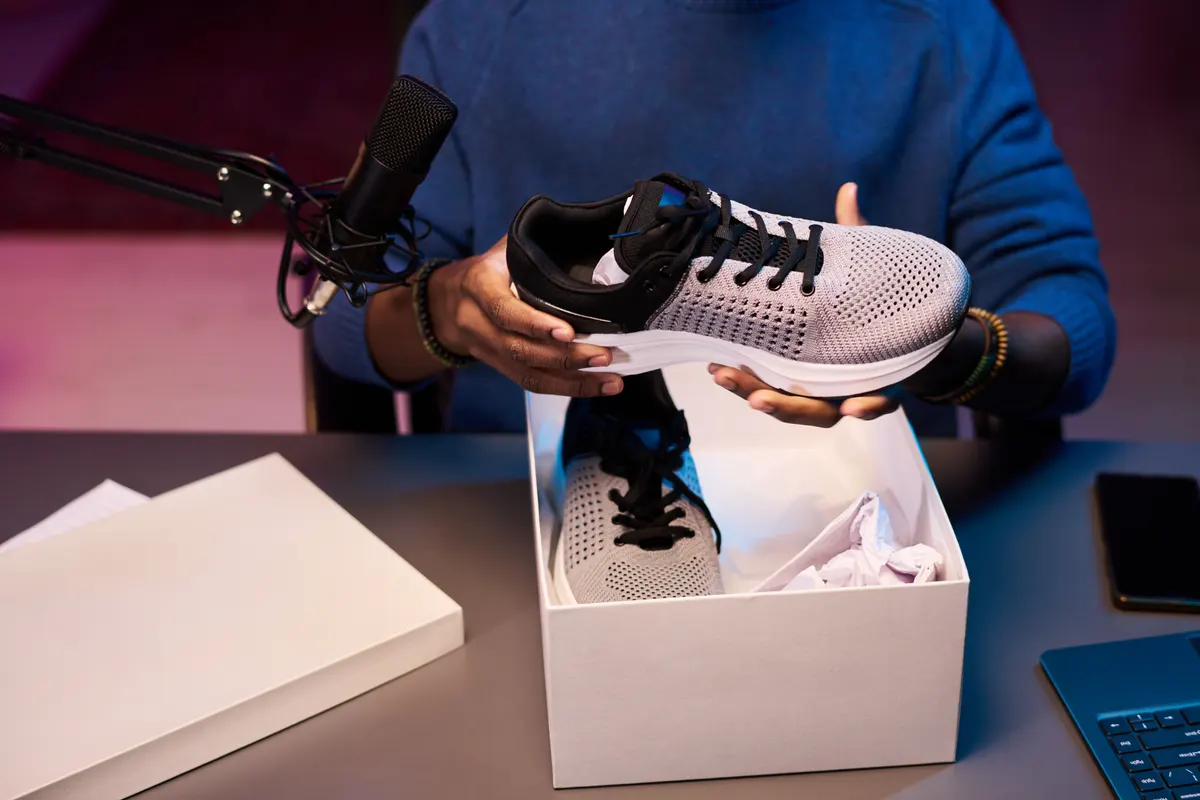
Sneaker resale marketing agency: unboxing New Sneakers During Online Review Session.

How a sneaker buyer decides which pair to buy

Sneaker resale runs on two identifiers that almost nothing else in resale has: a style code printed inside the shoe, and a size. That changes the whole shape of the business. A pair is not truly one of a kind, it is one of a size run, and the same colourway can sit in your stock in four sizes at four different prices. Buyers know the code, they know the nickname of the colourway, and they know roughly what the pair trades for that week, so your listing is competing on condition, box, shipping speed and whether you have their size, not on description writing. Demand also arrives in spikes around release dates rather than spreading evenly through the month.

We grow sneaker resale stores that already sell online by working visitors, conversion rate, average order value and repeat purchases. It starts with a free written growth plan built on your own size curve, sell-through and sourcing costs, then a base fee plus growth share scoped in that plan.

The first filter is size, and it is absolute. A buyer with a rare size will pay more and wait longer, and a buyer with a common size has many options and will pick on price and delivery. So the size has to be visible before anything else, and a page that shows a sold out size selector with no restock option loses that visitor permanently.

The second filter is condition, and sneaker condition has its own vocabulary. Deadstock means never worn with all original parts. Very near deadstock means tried on, maybe walked in indoors. Used has a wear level attached to it. Buyers also want the box, because the original box with the correct label and the style code on it is part of what they are buying, and a pair shipped in a replacement box is worth less. Yellowed midsoles, creasing across the toe box, heel drag, insole wear and any yellowing of icy or translucent outsoles all need photographs rather than adjectives.

The third filter is trust. Buyers ask whether the pair is real, what checks you run, whether the receipt or tag is included, and what happens if a marketplace or a third party later disagrees with your call. Many of them ask an assistant whether your shop is safe before they ever open a product page, so those answers need to be written down on your own site.
Where sneaker resale stores
lose revenue

The four levers, in this niche.

Visitors

Visitors: style codes, colourway nicknames and size queries

Sneaker search is specific. People type the style code, the colourway nickname, or the model with a size attached. We build search and Shopping around all three, and we make sure the code and the nickname both appear in titles, because half the audience uses the official name and half uses the street name. Around release dates we shift budget onto the pairs that are actually landing in your stock, and we keep a standing campaign on sell my sneakers and consignment terms, because sourcing is where margin is made.

Conversion rate

Conversion: size in stock, condition proven, delivery clear

The page converts when the buyer sees their size available, a condition grade they understand, photographs of the exact pair including the soles and the box label, and a delivery date. We add a size selector that shows what is genuinely in stock, a restock alert on every size that is out, condition definitions on the page rather than in a policy tab, photos of creasing and midsole colour, and a plain statement of what your check involves and what protection the buyer has.

Average order

Order value: care products, laces and the second pair

Sneaker orders grow with things that cost the buyer little and carry good margin: cleaning kits, protector sprays, crease guards, replacement laces in the right colour, sole shields, storage boxes and display cases. Restoration services such as sole whitening or a deep clean sell well to buyers who already own pairs. A second pair from the same silhouette or a matching size in a related colourway raises the order more than any discount would, because these buyers rotate rather than replace.

Repeat purchases

Repeat purchases: the size is on file and the calendar repeats

A sneaker buyer's size never changes, which makes repeat marketing unusually easy. We store size on the customer record and send every restock, new intake and price movement filtered to it, so nobody receives a pair they cannot wear. Release calendars give a natural rhythm for messaging, and post purchase flows cover cleaning, storage and when to sell. A sell to us prompt a few months after delivery brings the pair back to you as stock you already know.

What we do for
sneaker resale stores

Five channels, one plan.

Google Shopping and search

Google Shopping and search ads across a size run

The feed here is bigger than most resale feeds because every size is its own offer with its own price and its own stock number. Titles need the model, colourway, official name, style code and size, since a buyer searching a code with a size wants exactly one row of your inventory. Sizes group under one item_group_id with size, size_system and size_type filled in, which is the opposite of how single-object resale is fed and the source of most of the errors we find. Stock has to sync fast because a common size can sell three times in a day. Campaigns are split by silhouette and price band, with hyped pairs given their own budget so a single release does not swallow the account for a week. Negatives are heavy on replica, rep, unauthorised, batch, and on the cleaning, restock date and how to spot queries that never buy. A separate campaign runs on sell and consign terms with a quote form behind it.

Meta and TikTok

Meta and TikTok ads timed to the release calendar

This is the most video native audience in resale, and the creative that performs is short, close and unedited. On foot shots from several angles, a sole and midsole check under good light, the box label being read out with the style code, a crease and clean comparison, a size run laid out so a buyer can see you actually hold their size, and a stock drop reel on the day the pairs land. Catalogue ads run from the live feed at size level so a sold size stops being shown. Retargeting is filtered by the sizes a visitor viewed, which is the single change that most improves return on this spend. Around a release, spend goes up before the pairs arrive and comes down quickly once the resale price settles, because interest falls faster here than in any other luxury category. Ad copy avoids any claim about authenticity that positions you against other sellers, because that framing attracts review problems.

Merchant Center and the feed

Merchant Center rules that differ from other resale feeds

Sneakers usually do have identifiers, so the GTIN goes in where the pair carries one and the style code goes in as the MPN, with brand exactly as printed. Condition is where stores get this wrong. A pair that has never been worn and is complete can be fed as new even though you are not the brand, while any pair that has been worn is used, and a factory second or a restored pair is refurbished. Guessing here causes suspensions, so the rule is applied per pair at intake. Sizes are variants under a shared item_group_id, with size, size_system, size_type, colour, age_group and gender all populated, because footwear in the main markets is checked for those attributes. Images must show the actual pair for used stock, and stock photos are only acceptable on sealed deadstock where the pair is identical. Prices must match the page, including when a size is priced above or below the rest of the run.

SEO and AI search

SEO and AI search around codes, sizing and legitimacy

Every silhouette and colourway deserves a page that survives being out of stock, carrying the style code, the release date, the retail price at launch, the materials, how the model fits against a standard size, and a stock and alert block. Fit content earns a lot of traffic on its own, because sizing varies by silhouette and buyers search for whether a model runs large or small before they buy anywhere. Sold listings stay live with links to the same pair in other sizes. On the assistant side, people ask how to tell a pair is real, what deadstock actually means, whether yellowing can be reversed, how much a pair is worth now, and whether a given store is reliable. Write those as pages in your own words with your process on them, and keep the wording consistent with your listings, because an assistant that finds two different answers on your site will cite neither.

Email and SMS

Email and SMS filtered by size and release date

Nothing in this niche beats a size filtered alert. A subscriber gives their size once, and every message they get afterwards contains only pairs they can wear, which turns an unremarkable list into the best performing channel in the account. Restock alerts on a specific size and colourway are the highest converting message you will send. SMS earns its place on drop days, where minutes matter and inboxes are slow, so a short message goes out when the pairs go live rather than the night before. After delivery, a care sequence covers cleaning, unlacing, storage away from heat and how to slow yellowing, which is genuinely useful and keeps you present until the next purchase. Later, a sell or trade prompt brings pairs back in. Discount emails are rare, because a price cut on a hyped pair reads as a signal that something is wrong with it.

First three fixes

What the plan usually starts with for sneaker resale stores.

  1. Sizes fed as separate unlinked products

    Group the size run under one item_group_id with size, size system and size type set on each offer. Unlinked sizes compete against each other in the same auction, split performance data across a dozen rows and stop Shopping from showing the right size to the right search.

  2. Out of stock sizes that are a dead end

    Put a restock alert on every unavailable size instead of greying it out. A buyer with a size you do not hold is still a buyer, and capturing the size turns a lost visit into the most targeted message you can send when the pair comes back in.

  3. Condition words used loosely

    Define deadstock, very near deadstock and each used grade on the page, and apply them at intake with photographs of the soles, toe box and box label. Loose grading is the main cause of returns and disputes here, and it costs more than the pair it saved.

Questions from sneaker resale stores

A variant. Sizes belong under one item_group_id with size, size system and size type populated. Feeding them as unrelated products makes them bid against each other, spreads the data too thin to read, and stops Google matching a size specific search to the size you actually hold.

A pair that has never been worn and is complete can be listed as new even though you are not the brand. Anything worn, including tried on more than briefly, is used. Restored or factory second pairs are refurbished. Decide this at intake and record it, because getting it wrong at scale is what triggers account reviews.

Not on price. Your own store wins on the things a marketplace cannot do: photographs of the exact pair, a named person answering questions, faster dispatch, care products in the same order and a size alert list. We usually put budget behind those advantages rather than trying to undercut a market price everyone can see.

Plan the spend to land when the stock does, not before. Budgets go up the day pairs are listed, SMS goes out at the moment they are live, and spend comes down once the resale price settles, which is usually fast. We also make sure the site can take the traffic and that stock syncs in near real time on those days.

Photograph them clearly, grade them honestly, and price them for what they are. Yellowing is normal ageing on certain materials and buyers who understand that will still buy. Offering a sole restoration as a paid option on the same page turns a weak listing into a higher value order.

Other luxury & resale stores we work with

Send your sneaker resale store store.

The plan says which lever is leaking and what to fix first, for your store as it is today.

Store, name, email and phone. A person replies from a real inbox. Privacy

Get your free growth plan