Skip to content

Outdoor play equipment marketing agency

Marketing for outdoor play brands: assembled footprint in the feed, freight and kerbside delivery, spring demand, assembly answers and spare parts.

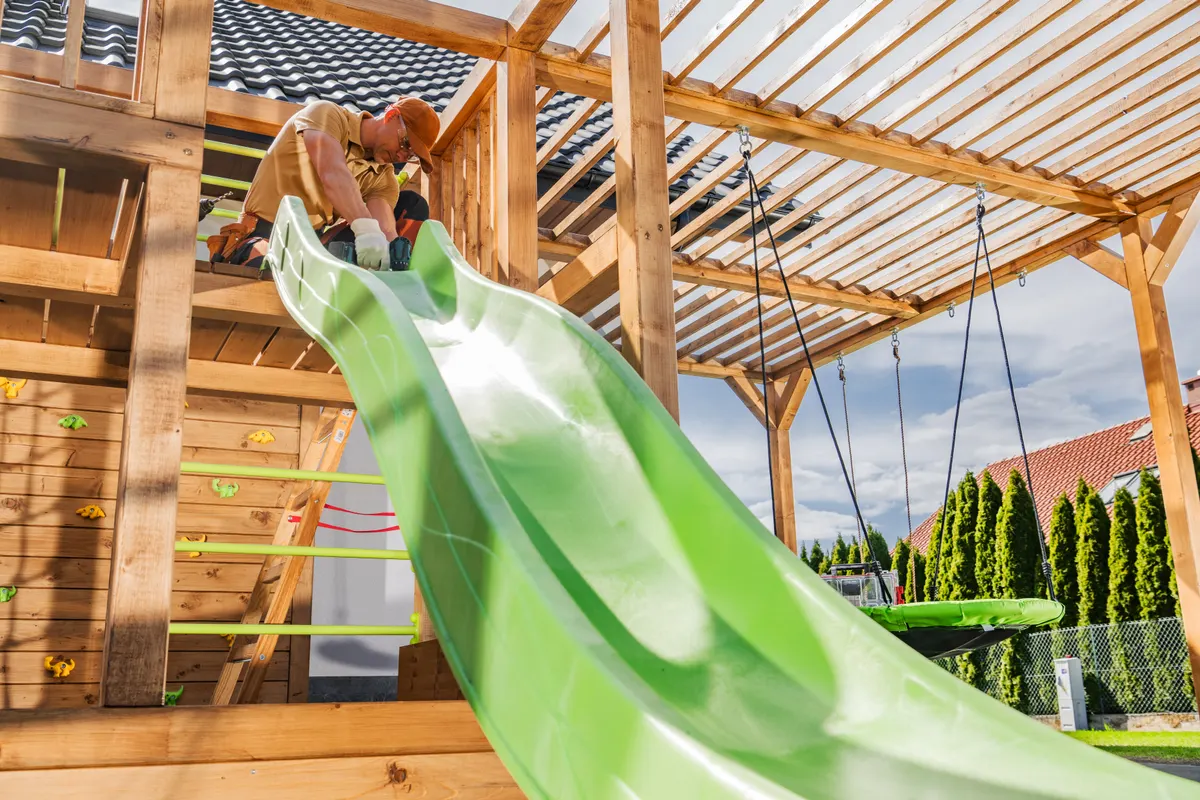
Outdoor play equipment marketing agency: construction of a Vibrant Green Slide on a Wooden Play Structure in a Backyard During Sunny Weather With Partially Cloudy Skies.

How a garden decides the purchase

Outdoor play equipment is the toy category that arrives on a pallet. A climbing frame, a trampoline, a playhouse or a swing set is a small construction project as much as a purchase, and the buyer knows it. Before clicking they are pacing out the garden, working out whether a lorry can reach the drive, and asking how many hours and how many adults the build takes.

That changes the shape of the marketing. Demand follows the weather rather than the calendar, freight decides which orders are worth winning, and a missing bolt three weeks after delivery is the difference between a customer who recommends you and one who charges back.

We write growth plans for outdoor play brands that already sell online. The plan covers feeds that carry the assembled footprint and the delivery method, product pages that answer the space and ground questions before the basket, spare parts sold as a real range, and budgets timed to the first warm weekend rather than a fixed date.

Two measurements settle most outdoor play sales: the assembled footprint plus the clearance around it, and the space the family actually has. A frame listed at three metres wide needs more than three metres of garden, and the buyer who finds that out after delivery is returning a pallet, which nobody wants. The second question is access. Flat-pack sections come on a pallet to the kerb unless you offer something else, and a shopper on a terraced street with no drive needs to know that before paying.

After space comes ground. Grass, bark, patio, slope, anchoring, and whether the family needs to level anything first. Then the build: how many boxes, how many hours, how many people, and whether a drill is required. Then the numbers on the product itself, the age range and the user weight limit, which parents compare across models more carefully than in any other toy category.

Grandparents often pay for the big item while parents choose it, so the page has to work for someone who will never see the garden. Demand starts in late winter as families plan, runs hard through spring, and thins once school holidays end. December sells the smaller items, the sandpits and water tables and playhouses that fit under a tree, while the frames and trampolines wait for March.
Where outdoor play equipment brands
lose revenue

The four levers, in this niche.

Visitors

Visitors: match the search to the garden, not the catalogue

Outdoor play searches carry a size, a material and a constraint: climbing frame for small garden, wooden swing set with slide, trampoline with net for ages three and up, playhouse under two metres. Titles and collections built on footprint, material and age range appear for those searches. A title built from a model name appears for nobody. We map the range by assembled size, material and age band, build collections around small gardens and flat sites, and set budgets to rise with the first dry weekends rather than a fixed date.

Conversion rate

Conversion: answer space, access and assembly above the basket

These pages convert when the assembled footprint and the recommended clearance sit at the top, next to a diagram, and when the page states how the item ships, how many boxes there are, whether delivery is to the kerb or through a gate, how many hours the build takes and how many adults it needs. Age range, user weight limit and ground requirements belong in the same block. We rebuild the template around those answers, add a build-time video, and put the delivery method into the basket so nothing surprises anyone at checkout.

Average order

Order value: anchors, covers, accessories and the second item

A frame order grows with ground anchors, a weather cover, a slide or swing accessory, bark or matting, and the wood treatment the timber will want next year. Trampolines take a ladder and a cover. Playhouses take the kitchen set that goes inside. Because freight is already paid on a pallet, an accessory added at the same time costs you almost nothing to ship. We build accessory modules on the product page and a basket prompt that only appears while the order is still going on one delivery.

Repeat purchases

Repeat purchases: spares, seasons and the second child

Nobody buys two climbing frames, so repeat revenue in this category is spares and seasons. Covers and replacement mats, swing seats, ropes, netting, timber treatment, and the sand a sandpit runs out of. A spring flow reaches every past buyer before the equipment comes out of winter, and a spare parts catalogue keyed to the model they own makes reordering a two-click job. Families also come back years later for the next stage, and a stage-by-age path gives them a reason to come back to you.

What we do for
outdoor play equipment brands

Five channels, one plan.

Google Shopping and search

Google Shopping and search ads for outdoor play equipment

The title carries the footprint. Wooden Climbing Frame with Slide, 2.4 m x 2.1 m, Ages 3 to 10 tells a shopper standing in their garden whether to click, which a model name never does. We split campaigns by material and by size band, because a sandpit and a two-metre frame carry different freight and are worth very different clicks.

Shipping is the attribute that decides whether these campaigns work. Bulky items need real shipping values in the feed, and where you charge freight it should be visible in the tile rather than discovered at checkout, since surprise freight on a large item is one of the biggest sources of abandoned baskets here.

Search ads answer the questions a tile cannot: climbing frames for a small garden, do I need to anchor a trampoline, how long does a swing set take to build. Budgets follow the weather. We build the seasonal curve from your own order dates, push hard from late winter into spring, and keep a smaller December budget for sandpits, playhouses and water tables that fit indoors as gifts.

Meta and TikTok

Meta and TikTok ads for outdoor play equipment

The creative that sells a frame is the build and the first afternoon on it. A time lapse of two adults assembling a swing set, filmed in a normal garden with a fence and a washing line in shot, does more than a rendered product shot on white, because the buyer is trying to picture it in their own space. Show the boxes on the drive, then the finished frame with children on it.

Targeting is adults only, since both platforms restrict interest targeting for minors. Parents of young children, homeowners with gardens, and grandparents are reachable through your own buyer lists and broad prospecting in the spring window. Copy should describe the equipment, the size and the weight limit, and stay away from telling parents it is safe. Say what standard it is tested to and what the limits are, then let the specification speak.

Retargeting is where this category earns its money, because the decision cycle runs weeks. Move a viewer from the build video to the footprint diagram to a delivery explainer, and hold the budget through the whole consideration period rather than a seven day window.

Merchant Center and the feed

Merchant Center and the feed for outdoor play equipment

These products sit in Toys & Games under Outdoor Play Equipment in google_product_category, with subcategories for swing sets, trampolines, playhouses and sandboxes. Age_group is kids, and the real age range goes in the title and in a product_detail line. The user weight limit belongs in product_detail too, because parents filter on it.

Shipping attributes matter more here than anywhere else in toys. Set shipping_weight and the shipping length, width and height for each item so that Google can calculate freight rather than guess, and set shipping_label so oversized items can be given their own rules. Where you offer kerbside delivery only, say so in the description and in the shipping settings.

Multipack covers items sold as a pair, and is_bundle covers a frame sold with its accessories. Every item needs a GTIN, and identifier_exists is set to no for anything you manufacture without one. Images should show the assembled item in a garden rather than a flat-pack render, since a shopper cannot judge scale from a box.

SEO and AI search

SEO and AI search for outdoor play equipment

Parents ask assistants what size garden a climbing frame needs, whether a trampoline can sit on a slope, how long a swing set takes to build, and what to put under a frame. Those are exactly the questions your product pages half answer, so we publish them properly: a garden sizing guide with worked footprints, a ground and surfacing page, a build-time page per product family, and a delivery page that explains pallet and kerbside delivery in plain words.

Collections are organised by garden size, material and age band with real copy, so Climbing Frames for Small Gardens is a page rather than a filter. Product pages carry the footprint, clearance, weight limit, age range, box count and build time as text a crawler can read, not only inside an image or a PDF.

A spare parts section indexed by model catches searches that arrive years after the sale, which is traffic nobody else is competing for. Product and FAQ structured data lets assistants quote your measurements instead of a marketplace listing that got them wrong.

Email and SMS

Email and SMS for outdoor play equipment

The programme is built on the season and the model owned. Before delivery, a pre-arrival sequence sets expectations: how many boxes, when the pallet arrives, what to have ready, and how many people to line up for the build. After delivery, a build support flow arrives at the point most customers open the boxes, with the instructions, a parts list and a way to report a missing fixing before it becomes a review.

The spring send is the big one. Every past buyer hears from you in late winter with covers, anchors, replacement parts and treatment for the model they own, timed before the first weekend anyone thinks about the garden. An autumn send covers winter storage and covers.

Browse abandonment matters more than usual because the decision takes weeks, so a viewer who left on a footprint page gets the sizing guide rather than a discount. SMS is limited to delivery windows, since a pallet needs someone at home, which is a message people genuinely want.

First three fixes

What the plan usually starts with for outdoor play equipment brands.

  1. Freight discovered at the checkout

    A shopper picks a frame, reaches payment and finds a large delivery charge, so the basket dies. We put the delivery method and cost on the product page and in the feed, set shipping labels for oversized items, and price freight into the item where the numbers work better that way.

  2. Footprint missing while box size is given

    The listing gives the packed dimensions and leaves the assembled size in a PDF, so buyers guess and returns follow. We put the assembled footprint and the clearance needed at the top of every page, in the title and in product_detail, with a scale diagram.

  3. No spare parts and no way to find them

    A customer with a torn net or a broken swing seat cannot buy the part, so they buy a whole new unit somewhere else. We build a spares catalogue indexed by model and year, link it from the order confirmation, and email it every spring.

Questions from outdoor play equipment brands

Give every item real shipping_weight and shipping dimensions so Google calculates freight rather than guessing, and add a shipping_label for oversized goods so you can attach a separate rate. State kerbside delivery in the description if that is what you offer. Guessing here produces either lost clicks or orders you lose money on.

Earlier than most brands plan for. Families start researching in late winter and buy on the first stretch of dry weather, so campaigns need to be live before the weather turns rather than after. Your own order dates over the past two years will show the week it starts in your market, and that week moves.

The number of boxes, the build time in hours, how many adults it needs, what tools are required and whether the boxes may arrive on separate days. Put it above the basket. Buyers who know what they are taking on complete more often and complain less, and support tickets about missing steps drop when the page is honest.

Keep to facts rather than reassurance. Name the standard the product is tested to, the age range and the user weight limit, and let those speak. Broad safety promises invite scrutiny you do not need, and specifications are what a comparing parent is actually reading.

Spares and seasonal upkeep. Covers, nets, swing seats, anchors, matting, sand and timber treatment, sold against the model the customer owns. A spring email to past buyers with parts for their exact unit, plus a spares catalogue on the site, turns a one-off purchase into a customer you hear from every year.

Other toys & games stores we work with

Send your outdoor play equipment brand store.

The plan says which lever is leaking and what to fix first, for your store as it is today.

Store, name, email and phone. A person replies from a real inbox. Privacy

Get your free growth plan