Skip to content

Janitorial supply marketing agency

Marketing for janitorial supply stores: dilution ratios, liner sizing, safety data sheets, dispenser programmes and route based reordering for contractors.

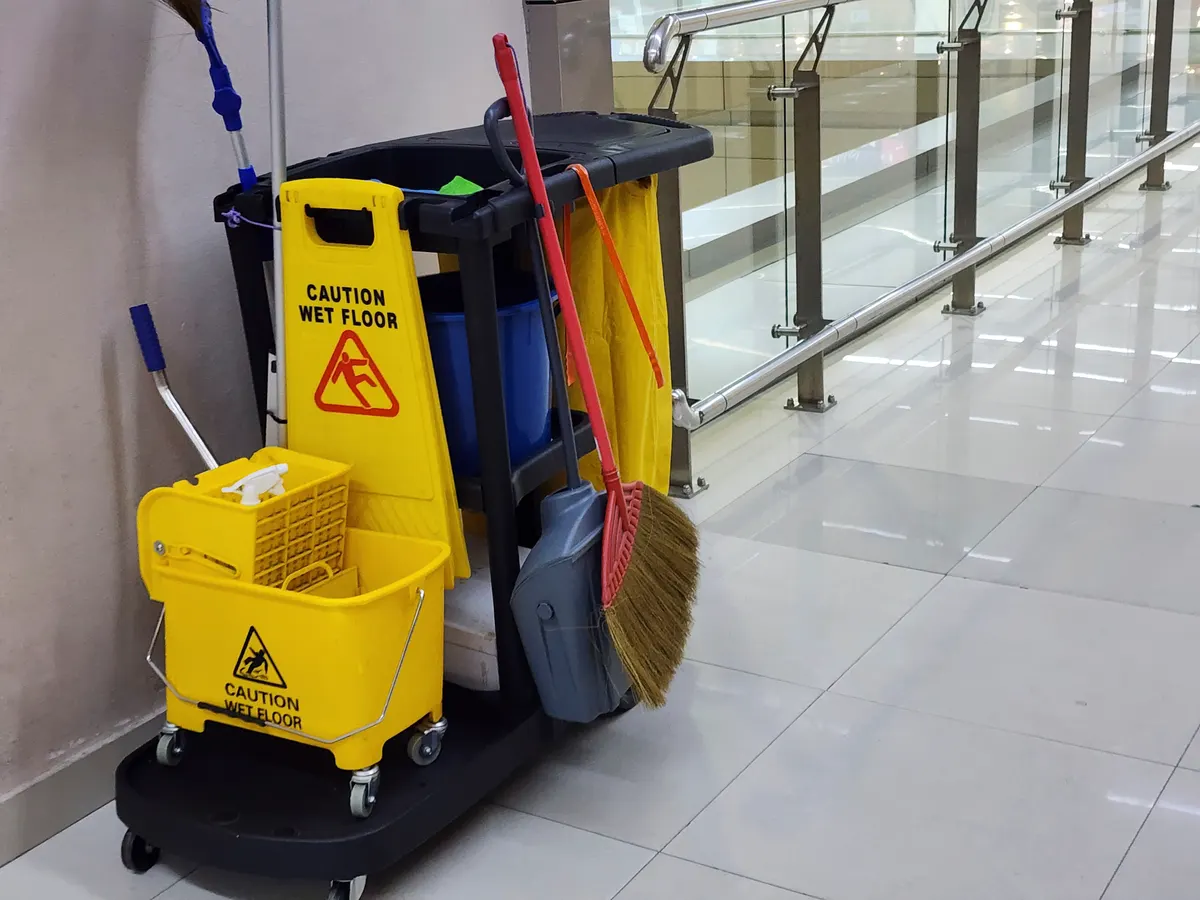
Janitorial supply marketing agency: janitorial and mop bucket on cleaning in process with copy space indoor.

How a cleaning contractor restocks a route

Janitorial supply is a restocking business, not a shopping one. A building service contractor is refilling a route: the same neutral floor cleaner in the same concentrate, liners that fit the cans in that building, a pad colour the scrubber crew already knows, and paper that fits the dispensers already screwed to the wall. Nobody is browsing. They want the reorder to take two minutes and arrive before the crew runs out.

We write growth plans for janitorial and sanitation suppliers that already sell online. The plan covers a feed that handles case counts and dilution properly, product pages that carry the safety data sheet and the registration number as readable text, dispenser and chemical pairing so nobody buys a concentrate they cannot dose, and reorder flows built on each account's cleaning schedule rather than a generic calendar.

It also covers the two categories that need a policy check before you advertise them, and the winter weeks when matting and ice melt outsell everything else in the catalogue.

The buyer is usually an owner or an operations manager with a handful of buildings and a crew who will phone at seven in the morning if something has run out. Stock is judged by cases on the shelf against nights worked, not by a system. The reorder is the same list as last time, adjusted for whichever building added a floor or lost a contract.

Compatibility decides the brand. Once a dispenser is mounted, the paper and soap that fit it are locked in, and once a crew is trained on a dilution station, the concentrate that fits those tips is locked in too. That is why a dispenser placement is worth more than the dispenser. It sets years of consumable orders.

Chemicals are bought on dilution, not on bottle price. An experienced buyer converts the case price into cost per ready to use gallon before comparing anything, and wants the ratio, the yield and the dwell time stated plainly. Products with registration numbers get checked, and the safety data sheet has to be available because it goes in a binder the crew and any inspector can reach.

Seasons move the mix. Ice melt, matting and wet floor equipment take over in winter, and building schedules shift around school terms, deep clean periods and the months tenants move.
Where janitorial supply stores
lose revenue

The four levers, in this niche.

Visitors

Visitors: sizes, ratios and pad colours are the query

Contractors search in supply room language: a liner size and gauge, a floor pad colour and diameter, a concentrate at a given dilution, a paper roll width and core size. Product titles that lead with those values are found. Shopping campaigns split chemicals, paper, liners, floor care equipment and parts, and matting into separate budgets, because liners and paper are priced like commodities on thin margins while specialty chemicals and equipment can carry a much higher bid.

Conversion rate

Conversion: do the dilution maths on the page

A buyer comparing a case of concentrate with a case of ready to use needs the yield spelled out, so we publish the dilution ratio, the ready to use gallons per case and the cost per diluted gallon on the product page. Dispenser compatibility is stated for every consumable, with a can size to liner size chart on the liner pages. The safety data sheet, the registration number and the wet dwell time sit in text near the add button. Accounts see contract pricing on login and can order against a purchase order.

Average order

Order value: restock the building, not the item

A single case of liners is a low value order; a building's monthly supply is not. Saved building lists let a contractor rebuild an order in one action, and product pages prompt the items that always go with the one on screen, such as the pad that suits the finish, the doodlebug that fits the handle, or the soap that fits the dispenser. Case to pallet price breaks are shown as a table for the high volume paper and liner lines where a delivery of a pallet is realistic.

Repeat purchases

Repeat purchases: cadence follows the cleaning schedule

Consumption is driven by square footage and nights cleaned, so each account has its own rhythm and the order history shows it. Send a prefilled reorder just before the usual gap closes, grouped by building rather than by product type. Wear items get their own timing: pads, squeegee blades, mop heads and vacuum filters all fail on a known interval. A dispenser programme is the strongest retention tool you have, so onboarding for a new placement should schedule the first three refills automatically.

What we do for
janitorial supply stores

Five channels, one plan.

Google Shopping and search

Google Shopping and search ads for janitorial supply

Shopping suits this catalogue because the query is usually a size and a spec. Titles lead with the measurement and the pack: 38 x 58 Can Liner, 1.5 Mil, Case of 100, or 20 in Red Floor Pad, Case of 5. Campaigns are separated by category so paper and liners, which compete on price per case, do not drain budget from floor care chemicals and equipment where the margin sits.

Search ads cover the questions the tile cannot answer, such as which liner fits a given can, what pad colour a scrubbing job needs and what dilution a task calls for. Disinfectants and sanitisers deserve a policy check before they run, because health related claims are restricted, so copy states the registration status and the product type without promising an outcome. Negatives strip consumer cleaning intent, which is enormous in this category and rarely turns into a trade account. Budget lifts in winter for matting and ice melt and around the deep clean windows in the school and office calendar.

Meta and TikTok

Meta and TikTok ads for janitorial supply

The audience is small and specific: contract cleaning owners, facility managers, school and property maintenance leads. Broad interest targeting wastes money, so Meta is used for retargeting and for custom audiences built from your own account list and enquiry forms. Creative that works shows the job being done, a scrubber stripping a floor, a dilution station being set, a dispenser being mounted, with the ratio or the size on screen.

Cleaning content performs enormously on TikTok, but most of that audience is domestic and will never open a trade account, so treat views as a poor signal and judge the channel on account applications instead. Where you serve a defined region, local video with a delivery promise and a same week onboarding offer converts better than product ads. Keep claims factual, since disinfectant messaging is scrutinised on social platforms as well as search.

Merchant Center and the feed

Merchant Center and the feed for janitorial supply

Most janitorial feed problems come from pack quantity and from missing chemical data. Use multipack for case counts and unit_pricing_measure so a case of gallons shows a per gallon price, otherwise your listing looks expensive against a single bottle. Put the dilution ratio, the yield, the registration number, the pH and any certification into product_detail as name and value pairs so the data is structured rather than buried in prose.

Liners and paper are sized ranges, so group each family under one item_group_id with the size and gauge in the title and its own availability per row. Some chemicals cannot ship by air or to every destination, and shipping settings need to reflect that rather than promising a delivery date you cannot meet. Sanitiser and disinfectant listings should be reviewed against current policy before they go live, because health related product rules change and a disapproval in that group can affect the wider account.

SEO and AI search

SEO and AI search for janitorial supply

The reference content in this category is genuinely useful and almost nobody writes it well. Build pages on which liner size fits which can, what each floor pad colour is for, how to read a dilution ratio and convert it to cost per gallon, how many coats of finish a floor needs, and what dwell time means on a label. Each opens with the direct answer, then links to the products that match.

Those are exactly the questions put to AI assistants at the start of a shift, so the answer needs to exist as page text rather than as a chart inside a supplier PDF. Publish a safety data sheet library as pages, with the document attached and the key handling facts written out. Category pages are organised by surface and by task, not only by product type, so a page exists for restroom care, hard floor care and carpet care. Product structured data carries brand, identifier and availability.

Email and SMS

Email and SMS for janitorial supply

Email is the reorder engine here because the same list repeats forever. Work out each account's usual interval from the order history and send a prefilled cart grouped by building, timed to land before the crew runs out rather than after. Keep it usable on a phone, because the person approving it is often standing in a supply cupboard.

A dispenser programme flow follows any new placement, scheduling the first refills and checking that the crew is dosing correctly. Winter flows go out before the first freeze with matting, ice melt and wet floor signage in the quantities that building needs. When a formulation or a label changes, email every account that bought it with the updated safety data sheet, because they have to swap the copy in their binder. A quiet account flow flags a contractor who has missed two cycles so someone can call before the route moves elsewhere. SMS is reserved for delivery windows and backorder arrivals.

First three fixes

What the plan usually starts with for janitorial supply stores.

  1. Safety data sheets that are hard to find

    Contractors need the current sheet for every chemical on site and will buy from whoever makes that easy. We publish a sheet per product with the key handling facts written into the page, link it from the product and the order history, and email the update automatically when a formulation changes.

  2. Liner and dispenser sizing left to guesswork

    Wrong liner sizes and incompatible refills are the most common returns in this category. We add a can size to liner size chart, state dispenser compatibility on every consumable page and in the feed, and put the fit data into search filters so a buyer can start from the container they already have.

  3. Concentrates sold without the dilution maths

    A case of concentrate looks expensive next to ready to use product until someone does the division. We publish the dilution ratio, the ready to use yield per case and the cost per diluted gallon on the page, and use the same figures in ad copy so the comparison is made before the click.

Questions from janitorial supply stores

Win the parts of the order the route handles badly: urgent top ups between delivery days, odd sizes, equipment parts and anything outside the contracted list. Make repeat ordering faster than a phone call with saved building lists and prefilled reorders, and use dispenser placements to lock the consumables that follow.

They need a policy check first. Health related products and claims are restricted across the major ad platforms, and rules have changed more than once. Keep copy factual about the product type and registration status, avoid promising outcomes, and keep those items in their own campaigns so a disapproval does not affect the rest of the account.

The dilution ratio and the ready to use yield per case, the cost per diluted gallon, the dwell time from the label, the registration number where one applies, dispenser and tip compatibility, pack and case counts, and the safety data sheet both attached and summarised in text so it can be read and quoted.

On each account's own interval, not a fixed schedule. Consumption follows square footage and nights cleaned, so a contractor with four buildings orders on a different rhythm to one with forty. Take the gap between their last few orders, send just before it closes, and group the cart by building.

Which liner size fits a given can, what a particular floor pad colour is used for, how to dilute a concentrate to a target ratio, how long a disinfectant must stay wet, and how many coats of finish a floor needs. Pages that answer those in plain text are what an assistant can cite.

Other b2b & industrial stores we work with

Send your janitorial supply store store.

The plan says which lever is leaking and what to fix first, for your store as it is today.

Store, name, email and phone. A person replies from a real inbox. Privacy

Get your free growth plan