Skip to content

Restaurant supply marketing agency

Marketing for restaurant supply stores: NSF listings, gas and electrical specs, pan sizing, liftgate freight, case pack disposables and par level reordering.

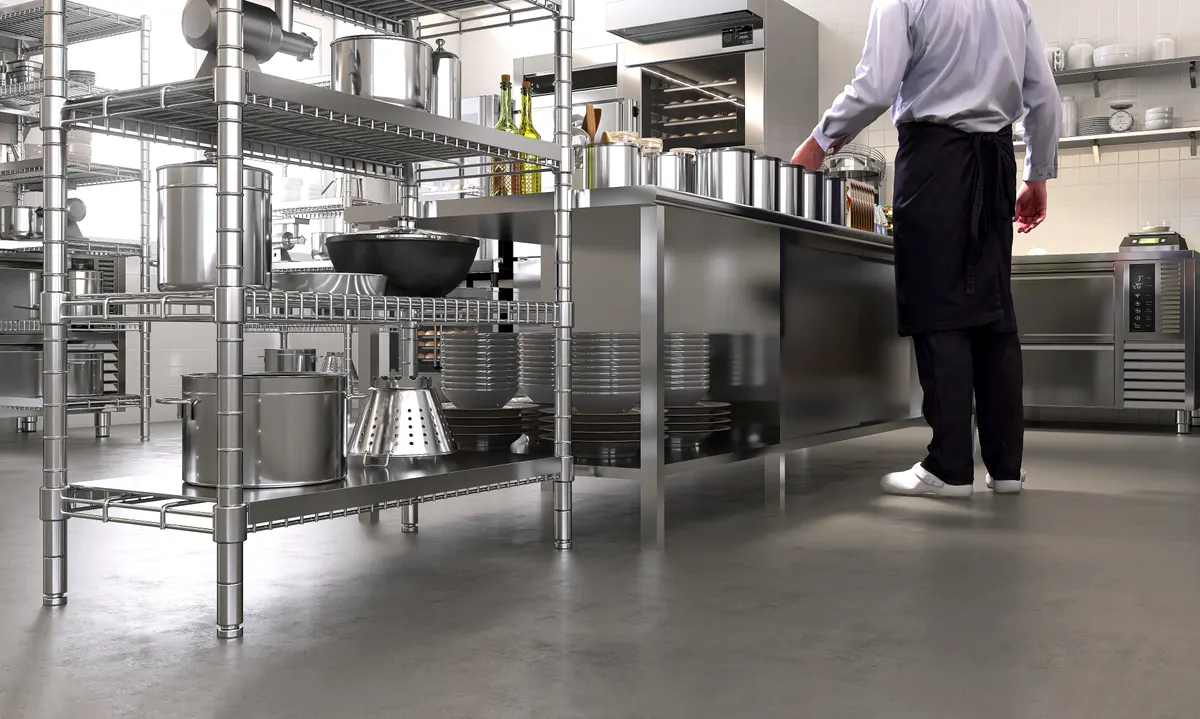
Restaurant supply marketing agency: male professional chef baker working in commercial bakery kitchen on stainless steel table counter, shelf with machine, equipment in sunlight from window on vinyl floor.

How a kitchen buys equipment and smallwares

A restaurant supply store serves two customers wearing the same apron. One is buying a sixth size pan or a case of gloves because the kitchen ran out mid service. The other is fitting out a new site and needs a fryer that runs on the gas supply they have, arrives on a liftgate because there is no dock, and carries the NSF listing the health inspector will look for.

We write growth plans for restaurant supply stores that already sell online. The plan covers product pages that put utility requirements, dimensions and NSF status where a chef can see them, freight options priced honestly for kerbside delivery, case and each pricing on the same page, quick reordering against a par list, and campaigns timed to patio season, holiday catering and the months new sites open.

It also covers the questions a chef puts to an AI assistant at eleven at night, such as which mixer size a dough batch needs.

Smallwares and disposables are bought on a par. Someone counts the shelf, sees the gloves, foil pans, deli cups or sanitiser buckets running low, and reorders the same things they always order, usually in cases. Speed matters more than price. A kitchen that runs out of a size of pan on a Friday will pay more to have it Saturday, and will keep buying from whoever solved that problem.

Equipment is a slower and more nervous purchase. The buyer has a space, a utility supply and a budget. They need to know the footprint, whether it runs on natural gas or propane, whether it needs single phase or three phase power and which plug, whether it needs a hood, what the warranty covers and who services it locally. Anything that does not fit through the door or match the panel becomes a return that costs both sides real money.

Delivery is its own decision. Most restaurants have no loading dock and no forklift, so a heavy item needs a liftgate and often an inside placement, and someone has to be there to receive it during service hours.

New openings change everything. A single site build orders in one burst across dozens of categories, and a multi unit group that likes your store will repeat that burst at every new location.
Where restaurant supply stores
lose revenue

The four levers, in this niche.

Visitors

Visitors: capacity, size and NSF are the query

Chefs and kitchen managers search in kitchen language: sixth size steam table pan four inch deep, sixty quart planetary mixer, forty eight inch refrigerated prep table, half sheet pan case. Titles that lead with capacity or pan size and state NSF where it applies get matched; titles that lead with a model code do not. Shopping campaigns are grouped so heavy equipment, smallwares and disposables hold separate budgets, because a case of lids and a walk in cooler need entirely different bids and landing experiences.

Conversion rate

Conversion: publish the spec block a kitchen actually checks

Equipment converts when one block answers everything: exterior dimensions, cutout or clearance needs, gas type and BTU or voltage, phase and plug configuration, whether a hood is required, NSF listing, warranty length and lead time from the factory. Freight options with a liftgate price and an inside delivery price sit beside it, not in a policy page. For smallwares, the case count and the each price are both visible. Trade accounts see their pricing on login and can pay against a purchase order with a resale certificate on file.

Average order

Order value: sell the station, not the appliance

A fryer needs baskets, a filter, a cover and oil. A prep table needs pans, lids and cutting boards sized to it. Build station pages that group what a line actually needs and let a buyer add the set in one action, and put the accessory list on the equipment page with quantities that match the unit. For disposables, show the price break between a case and a pallet and let a buyer save a par list so a repeat order covers the whole shelf rather than a single item.

Repeat purchases

Repeat purchases: par levels, service parts and second sites

Disposables and chemicals reorder on a weekly or fortnightly rhythm that the order history reveals per account. Send a prefilled par order just before it runs out, addressed to whoever places it. Equipment produces a different loop: register the warranty, then follow up with wear parts, gaskets, filters and thermostats at the interval that item usually needs them. Multi unit groups get an opening flow, because a group that fitted one kitchen with you will fit the next one the same way if you ask at the right time.

What we do for
restaurant supply stores

Five channels, one plan.

Google Shopping and search

Google Shopping and search ads for restaurant supply

Shopping does the heavy lifting for smallwares and disposables, where the query is a size and a quantity and the decision is fast. Titles lead with the size or capacity, then the material and the pack: Sixth Size Steam Table Pan, 4 in Deep, Stainless, Case of 12. Equipment needs its own campaigns with much lower volume and much higher value, bid separately, because a single cook line order can be worth hundreds of small ones.

Search ads answer the sizing and fitment questions a tile cannot: which pan sizes fit a given table, what size mixer a dough batch needs, whether an item requires a hood. Copy states NSF status, the utility requirement and the delivery method, since a kerbside freight delivery is a genuine decision point. Negatives strip home cooking and hobby baking intent, which is heavy across pans, mixers and food containers. Budget rises before patio season, before the holiday catering run and in the months when local openings cluster.

Meta and TikTok

Meta and TikTok ads for restaurant supply

Chefs and owners are reachable on social in a way most trade buyers are not, because the work is visual and the audience is already there. Meta retargeting brings back people who priced equipment, showing the freight options and the lead time rather than a discount. Geographic and interest audiences around independent hospitality work for opening season campaigns, especially where you can deliver and service locally.

TikTok reaches line cooks and chef owners with short demonstrations: how a pan set fits a table, how a slicer strips down for cleaning, how much a given mixer bowl actually holds. That content earns saves and comments full of sizing questions, which then become page content. Creative should show the item in a working kitchen rather than a studio, and should name the size on screen. Avoid claims about food safety outcomes you cannot support; state the NSF listing and let it speak.

Merchant Center and the feed

Merchant Center and the feed for restaurant supply

The feed splits cleanly in two. Smallwares and disposables behave like normal retail rows, with multipack for case quantities and unit_pricing_measure so a case of a thousand cups shows a sensible per unit price. Equipment rows need product_detail entries for the specification a buyer filters on: exterior dimensions, capacity, gas type or voltage and phase, and NSF listing.

Heavy items need accurate shipping weight and dimensions plus shipping settings that reflect freight rather than parcel, otherwise the delivery estimate on the tile is fiction. Availability should reflect factory lead time honestly for items you do not stock, because a four week lead advertised as in stock produces cancellations. Variants of the same model, such as gas and electric or left and right hinge, sit under one item_group_id with the distinguishing attribute in the title. Images should show scale, since a chef judging a table from a photo is guessing at size.

SEO and AI search

SEO and AI search for restaurant supply

Kitchens ask practical sizing questions, and assistants answer them from whoever wrote the answer down. Build reference pages on how steam table and gastronorm pan sizes fit together, how to size a mixer to a dough batch, how many covers a fryer of a given capacity supports, what a hood requirement means in practice, and what NSF listing does and does not cover. Each opens with the direct answer and links to the products it applies to.

Category pages are organised the way a kitchen is organised, by station and by task, so a page exists for the prep line, the cook line, the dish pit and front of house. Model specific parts pages matter, because a broken thermostat is searched by the equipment model number. Publish the full specification as page text rather than only a spec sheet download, and mark up products with brand, identifier and availability so an assistant can quote your listing with a price and a lead time attached.

Email and SMS

Email and SMS for restaurant supply

The consumables programme runs on par. Take each account's ordering interval from the history, group the items they buy together, and send a prefilled order shortly before the shelf empties. Time the send to when a kitchen manager does admin, which is rarely during service. Keep it short and make one tap reorder work on a phone in a walk in.

Equipment buyers get a different sequence. After delivery, confirm the warranty registration, then follow up with the wear parts and cleaning supplies that item consumes, at the interval it consumes them. Before patio season and before the holiday catering run, send category prompts for the things kitchens always scramble for, such as outdoor heating, disposable serviceware and chafing fuel. Multi unit groups get an opening enquiry flow that asks about the next site. SMS is used for freight delivery windows, since someone has to be at the kerb to take a pallet, and for backorder arrivals on a part holding a line down.

First three fixes

What the plan usually starts with for restaurant supply stores.

  1. Equipment specs buried in a PDF

    A chef who cannot find the gas type, plug configuration or footprint on the page leaves to check a manufacturer site and buys wherever they land. We lift the full specification into page text and structured feed attributes, so the answer is on the page, in the search result and available to an assistant.

  2. Flat rate shipping on freight items

    Heavy equipment sold under a parcel shipping rule either loses money or gets cancelled after the fact. We set freight rates by weight and dimensions, price the liftgate and inside delivery options separately, and state clearly that a kerbside delivery needs someone there to receive it.

  3. Case and each pricing that confuse the buyer

    Listings that show a case price without a case count, or an each price on a product that only ships by the case, cost you the sale on the first screen. We display both prices with the count everywhere the product appears, including the feed, and set a minimum that matches how the item is actually packed.

Questions from restaurant supply stores

Exterior dimensions and clearances, gas type or voltage and phase with the plug configuration, whether a hood is required, capacity, NSF listing, warranty length, lead time and the freight options with a liftgate price. Missing any one of those sends the buyer to a manufacturer site, and they often buy from wherever that search lands.

Compete on the gaps distributors leave: odd sizes, urgent top ups between delivery days and items outside the contracted list. Make repeat ordering faster than a phone call with saved par lists, a one tap reorder that works on a phone, and clear case counts, then let the delivery route keep the bulk staples.

Yes, if the lead time is stated honestly on the page and in the feed availability. Advertising a four week special order as in stock produces cancellations, refunds and item disapprovals. A realistic ship date loses a few clicks and keeps the orders that matter.

Around patio and outdoor service before warm weather, around the holiday catering run, around back to school for institutional kitchens, and in whichever months new sites open in your area. Your own order history by account will show the pattern, and campaigns and emails should run ahead of it rather than during it.

Which pan sizes fit a particular table, what size mixer a dough batch needs, how many covers a fryer capacity supports, whether a countertop item needs a hood, and which part fits a specific equipment model. Pages that answer those in text, with the matching products named, are the ones an assistant can cite.

Other b2b & industrial stores we work with

Send your restaurant supply store store.

The plan says which lever is leaking and what to fix first, for your store as it is today.

Store, name, email and phone. A person replies from a real inbox. Privacy

Get your free growth plan