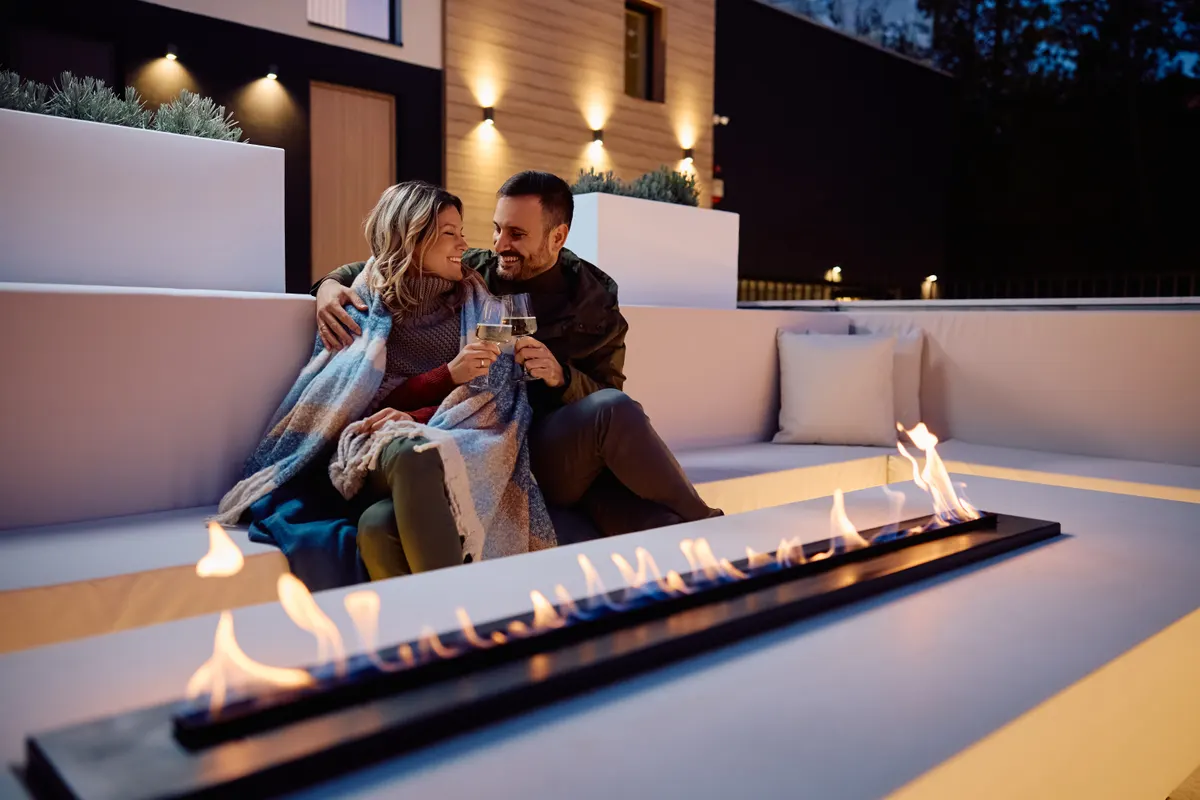
This is the one garden niche whose season runs backwards. While the rest of the category is winding down in September, patio heaters and fire pits are entering their strongest weeks, and demand is triggered by the first genuinely cold evening rather than by a date. A cold snap can empty your warehouse in four days, and a mild autumn can leave you holding stock until spring.
We write growth plans for patio heater and fire pit brands that already sell online. The plan is built around weather triggered demand and how to spend against it, the heat output and coverage questions buyers cannot answer for themselves, the fuel decision between gas, wood, ethanol and electric, and the local burn restrictions that decide whether a wood fire pit is even usable where the customer lives.
It also covers the hospitality side, since pubs, restaurants and event companies buy in quantity on a different cycle and rarely get a page written for them.
The trigger is nearly always a specific evening. It got cold, the guests went inside, and the next morning someone searches for a patio heater. That makes this an impulse purchase with a technical middle, and the store that can answer the technical part quickly gets the order while the memory of the cold evening is fresh.
The technical part is heat and fuel. Buyers want to know how large an area a heater warms, which is a function of output and of how exposed the space is, and they compare that number across products without much idea of what it means. Gas heaters need a cylinder, a regulator and hose, and somewhere to hide the bottle. Electric infrared works under a covered area and needs a socket or a fitted circuit. Wood burning fire pits produce smoke and embers, which is where local rules bite.
Fire pits split further. A wood pit is a bowl and a fire. A gas fire pit is a burner, a pan, a supply and a media layer of lava rock or fire glass, and customers often do not know the media is bought separately. Table style pits are furniture as well as heaters and are judged on how they look unlit.
Safety certification, tip over protection and stability come up in every serious comparison, and covered patio use raises a ventilation question that has to be answered clearly.