Skip to content

RC vehicle marketing agency

Growth for online RC stores: ready to run versus kits, exploded view part numbers, lithium battery shipping rules, hop-ups and breakage-driven reorders.

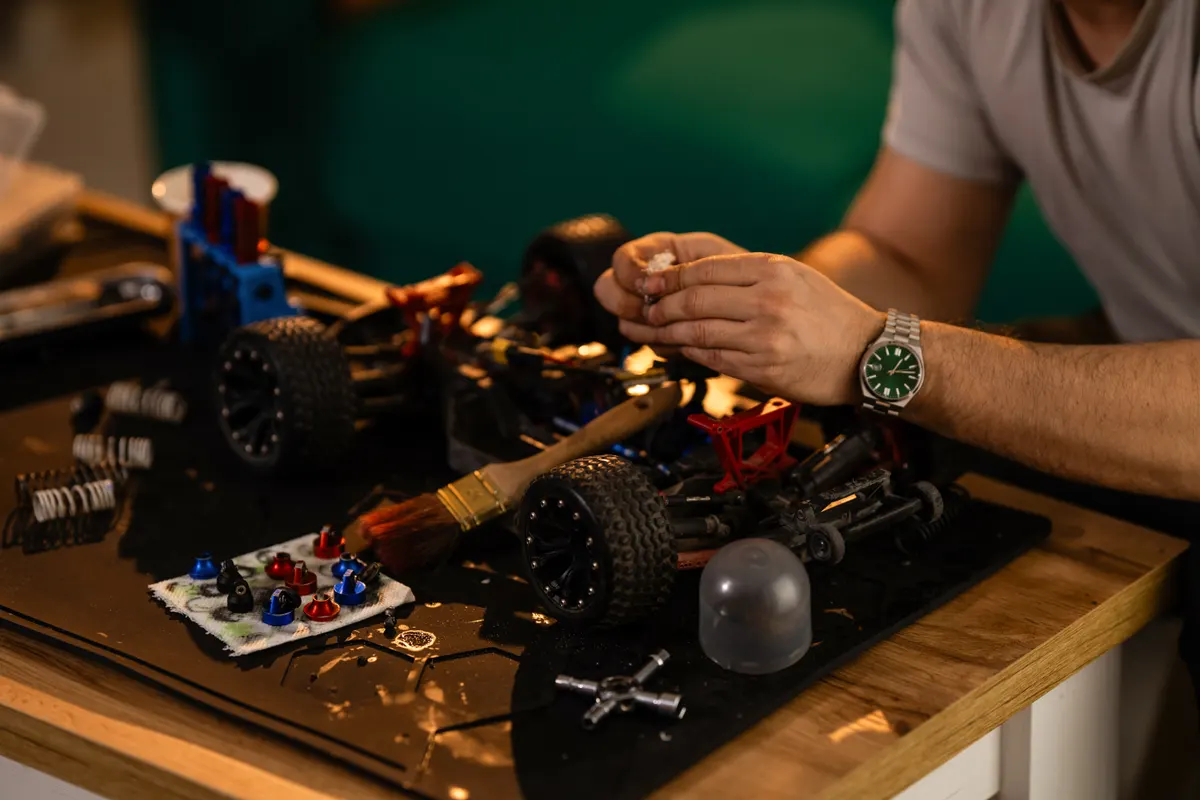
RC vehicle marketing agency: man repairing radio-controlled car, hobby and engineering.

How drivers buy a car, then buy it again in pieces

An RC store has two catalogues pretending to be one. The first is vehicles: trucks, buggies, crawlers and touring cars, sold by scale and by whether the electronics are included. The second is spares, and it is enormous. Every chassis has an exploded diagram with a number against each arm, hub and driveshaft, and those numbers are what customers search.

Breakage drives the business. A crawler off a rock and a buggy that lands badly both create an order that evening, and the store with that part in stock takes it. Hop-up parts sit next to the stock ones and sell to the same customer for different reasons.

Batteries complicate it. Lithium packs cannot travel by air, need packaging and a charge state that meet dangerous goods rules, and must be handled properly at checkout.

We work with RC stores that already sell online and want visitors, conversion rate, order value and repeat purchases to move together. The growth plan is free and written for your store. If you take it further, the fee is flat and monthly.

A first vehicle is bought on questions about what is included. Ready to run means the electronics, radio and often a battery are in the box, a kit means building it and choosing a motor, speed controller and servo, and a roller means neither. A beginner who buys a kit expecting to drive it that afternoon becomes a refund, so the page has to say which one it is in the first line.

After that the decisions are technical. Scale and class decide where it can be driven, brushed or brushless decides speed and price, waterproofing decides whether it can go out after rain, and the parts availability decides whether the vehicle is a good idea at all. Experienced buyers check the spares list before they buy the car.

Then the breakage cycle begins. Something snaps, the driver identifies the part from the exploded diagram, searches the part number, and wants it dispatched today. Speed and stock accuracy win these orders outright.

Hop-ups are the discretionary layer. Aluminium arms, harder driveshafts, better shocks, different gearing and tyre compounds are bought to fix a weakness the driver has felt.

Battery buyers care about capacity, discharge rating, connector type and whether the pack fits the chassis tray.
Where RC vehicle stores
lose revenue

The four levers, in this niche.

Visitors

Part numbers are the highest intent search you have

A driver searching a part number is going to buy in the next few minutes from whoever has it. We make every spare its own indexed page with the manufacturer number in the title, text and feed, build a parts finder by chassis so people who do not know the number can get there, and run vehicle campaigns by scale and class. Race meeting and track season timing shapes when the budget goes up.

Conversion rate

Say what is in the box and what fits what

State ready to run, kit or roller in the first line, then list exactly what is included and what still has to be bought. Every spare shows the vehicles it fits and its position on the exploded diagram. Battery listings state capacity, cell count, discharge rating, connector and physical dimensions so the pack fits the tray. Stock levels are shown honestly, because a driver with a broken car will simply buy from whoever admits to having it.

Average order

The spares kit nobody regrets buying

Anyone who breaks a part will break it again. We build a spares kit per chassis with the parts that fail most, offer it on the vehicle page and again after a repair order, and pair every battery with the right connector, charger and safe storage bag. Hop-up bundles are grouped by what they fix, so a driver dealing with broken arms sees the aluminium set and the harder driveshafts together rather than one at a time.

Repeat purchases

Breakage, tyres and the next battery

The reorder here is caused by use, so the timing follows how hard someone drives. Bashers break things weekly, racers wear tyres and rebuild shocks on a schedule, and both replace batteries as packs age. We record the chassis a customer owns, send parts and upgrades that fit it and nothing else, prompt tyre and bearing replacement by running time, and mail new release parts for their vehicle when the manufacturer adds them.

What we do for
RC vehicle stores

Five channels, one plan.

Google Shopping and search

Long tail part numbers and short list vehicles

This is one of the few niches where thousands of cheap items are worth advertising, because a part number search converts almost immediately. Spares run in a broad campaign with the manufacturer part number and the chassis in every title, so the query and the item match exactly. Vehicles run separately, split by scale and class, with ready to run stated in the title since that is the deciding fact. Batteries and chargers have their own campaign with capacity and connector in the title. Hop-ups are grouped by the vehicles they fit rather than by brand. The whole account depends on stock accuracy: a part advertised and out of stock loses a customer who needed it today, so feed refreshes run frequently and out of stock items are dropped rather than left running at a good position.

Meta and TikTok

Runs, crashes, repairs and builds

RC content is video by nature, and the honest version performs best: a run in real terrain, a crash, then the repair with the part number on screen. That format sells vehicles and spares in the same clip. We split ad sets by discipline, crawling, bashing, racing, drift and short course, because those audiences want completely different vehicles and rarely cross over. Build series on kits work for the experienced audience, while beginner creative concentrates on what comes in the box and what else is needed. Retargeting shows the spares kit to anyone who viewed a vehicle, and the upgrade set to anyone who bought a part twice. Track and club events give the calendar its shape. Claims about speed and durability stay to what the manufacturer states, since drivers test these things immediately and say so publicly.

Merchant Center and the feed

Part numbers, fitment and lithium battery rules

The feed is a fitment database as much as a product list. Every spare carries the manufacturer as brand, the part number as MPN, and identifier exists set to false where small parts have no barcode, with the chassis names in the title and description so matching works. Vehicles carry barcodes, scale, class and whether they are ready to run. Lithium packs are the compliance problem: they are dangerous goods, cannot go by air, need compliant packaging and a state of charge within the rules, and some carriers refuse them entirely, so they are flagged in the feed, restricted in the shipping rules, and given delivery estimates and destinations that are actually achievable. Custom labels tag chassis family, part type and price band so a broad spares campaign can still bid sensibly across items worth a few coins and items worth a hundred.

SEO and AI search

Fitment, setup and battery safety questions

Drivers ask assistants which part number fits their chassis, what ready to run includes, whether brushless is worth it for a beginner, what gearing to run for a given track, how to store lithium packs safely, what tyre compound suits loose dirt, and why a servo is stripping. We answer those with a parts finder page per chassis built from the exploded diagrams, setup guides for gearing and shock oil by discipline, a battery safety and storage page, and a beginner page that lists exactly what a first vehicle needs beyond the box. Product pages carry part numbers, fitment lists and specifications in text. Repair guides that name the parts they use are the most useful pages in the store and the ones assistants quote most.

Email and SMS

Post-repair spares, chassis-matched parts and pack care

Email is built around the vehicle a customer owns. The welcome flow asks for the chassis, and after that every message is filtered by it, so nobody receives an arm for a car they do not have. A repair order triggers a short sequence offering the spares kit for that chassis and the reinforced version of the part that just broke. Battery buyers get a storage and charging care sequence, which reduces both accidents and warranty claims, then a replacement prompt as packs reach the age where capacity drops. Racers get event reminders with tyres, bearings and shock rebuild parts before a meeting. New release parts and upgrades for a chassis go only to owners of it. SMS is reserved for back in stock notices on parts a customer asked about.

First three fixes

What the plan usually starts with for RC vehicle stores.

  1. Fix the kit sold as ready to run

    A beginner who unpacks a kit expecting to drive it asks for a refund. Put ready to run, kit or roller in the first line and the title, and list what still needs to be bought.

  2. Fix the spares nobody can find

    Parts hidden in a flat list do not sell. Publish a finder per chassis built from the exploded diagram, with the part number, position and fitment on every page and in the feed.

  3. Fix the battery that cannot ship

    Lithium packs cannot fly and some carriers will not carry them at all. Flag them in the feed, restrict the shipping methods and destinations, and show the real delivery options before checkout.

Questions from RC vehicle stores

Yes, which is unusual for low priced items. A part number search comes from someone with a broken vehicle who will order within minutes, so a broad spares campaign with exact part numbers in the titles can pay even on cheap items, provided stock data is accurate and out of stock parts leave the ads quickly.

As dangerous goods. They cannot travel by air, they need compliant packaging and a charge state within the rules, and carrier acceptance varies. Restrict the shipping methods and destinations at the product level, flag them in the feed, and state the real delivery options and any storage advice on the page.

From the manufacturers' exploded diagrams. Each chassis gets a page with the diagram, the numbered positions and a link to every part, and each part page lists the vehicles it fits. That structure serves customers who know the number and those who only know what broke.

Racers buy on setup, consistency and class legality, so they respond to setup guides, tyre and gearing information and event timing. Bashers buy on durability and fun and reorder after breakages, so they respond to run and crash content, spares kits and reinforced upgrade parts.

By recording which chassis each customer owns and filtering everything they see by it, in email and on the site. Fitment lists on every part page, a finder built from the diagrams, and a compatibility warning at the basket stage remove most of the wrong orders.

Other hobby & specialty stores we work with

Send your RC vehicle store store.

The plan says which lever is leaking and what to fix first, for your store as it is today.

Store, name, email and phone. A person replies from a real inbox. Privacy

Get your free growth plan