Skip to content

Engagement ring marketing agency

Marketing for online engagement ring stores: ring builder feeds, grading report pages, proposal-season ads, secret sizing help and the wedding band follow-on.

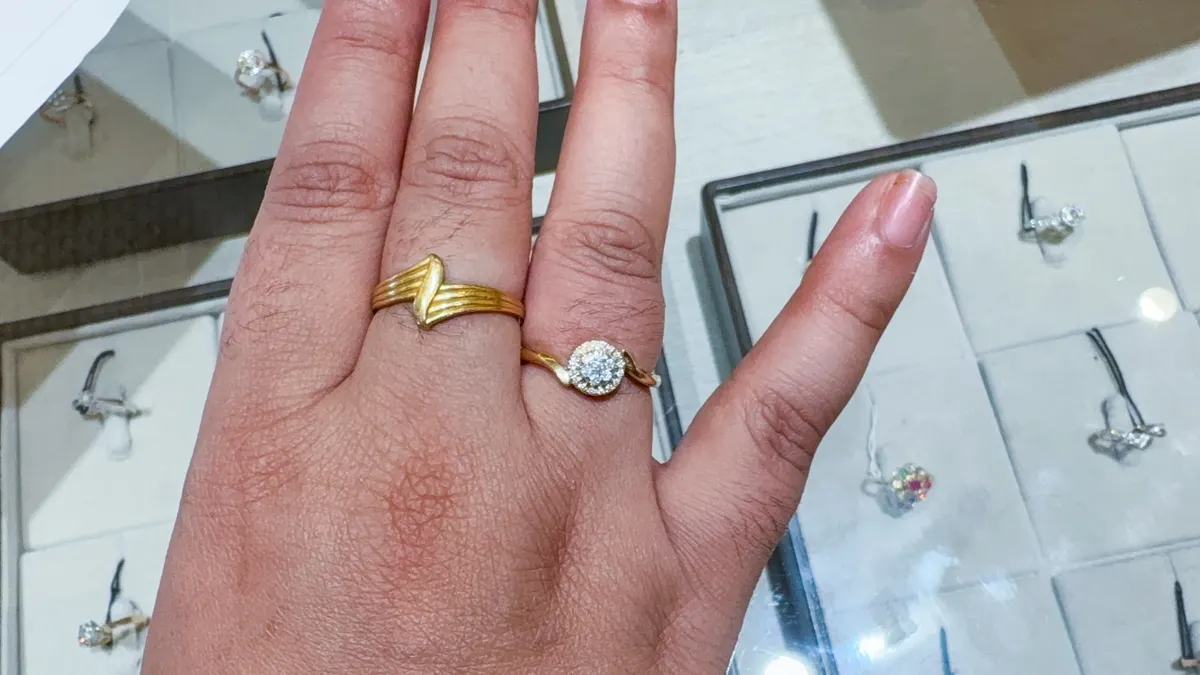
Engagement ring marketing agency: female customer testing engagement and fashion gold rings at indoor.

The engagement ring purchase, from first search to proposal

An engagement ring is bought once, researched for months, and paid for with more money than the buyer has ever spent on a single object online. Most of the people searching are buying for someone else, in secret, without a ring size, with a proposal date in mind and a lot of questions about carats, cut, colour, clarity and grading reports. Orders cluster ahead of Christmas Eve, New Year's Eve and Valentine's Day, and a store that gets its ring builder, its report pages and its sizing policy right in October has a very different December from one that does not.

We grow engagement ring stores that already sell online by working the four numbers behind revenue: visitors, conversion rate, average order value and repeat purchases, which for this niche means the wedding band and the anniversary gift. The work starts with a free written growth plan built on your own order and builder data, then a base fee plus growth share scoped in that plan.

The buyer usually starts with a shape. They have seen a ring they like, or been shown one, and they search for 'oval solitaire engagement ring' or 'cushion halo' rather than 'engagement ring'. From there they learn the vocabulary: carat weight, colour grade, clarity grade, cut, and the grading report from GIA or IGI that backs it up. They open a ring builder, pick a setting, pick a centre stone, watch the price move, and leave. They come back four or five times over several weeks, often on a different device, sometimes with a friend or sibling looking over their shoulder.

The secret nature of the purchase shapes everything. They cannot ask the recipient the ring size, so they want a resize policy they can trust, a way to guess the size from an existing ring, and a delivery that will not be seen. They have a proposal date, so they need to know the total lead time for a made-to-order setting and a stone that has to be called in. They are spending a large sum, so they want to see the exact stone rather than a stock image, and they want financing or instalments explained without a sales call.

A store that answers those questions in the builder itself, and stays in touch during the weeks of deciding, wins the order. The one that hides the lead time until checkout loses it.
Where engagement ring stores
lose revenue

The four levers, in this niche.

Visitors

Visitors: own the shape and setting searches, not the generic term

The generic 'engagement rings' query is expensive and undecided. The searches that convert name a shape, a setting style and often a carat range. We build search and Shopping campaigns around those combinations, feed pre-configured rings so Shopping has something to show, and raise budgets from late October through the second week of February with a separate push before Valentine's Day.

Conversion rate

Conversion: a builder that shows the real stone and the real date

Ring builders lose people when the price jumps without explanation, the stone is a stock render, or the delivery date appears only at checkout. We show the actual stone with its report, explain each price change in the builder, print the delivery date for a chosen proposal date, and make the resize and return terms visible before the size selector. Saved configurations let a buyer come back without starting again.

Average order

Order value: the stone upgrade and the matching band

Order value in engagement rings moves with the centre stone and the setting metal, and a builder that shows the next step up with its price and report makes that choice easy. We also present the matching wedding band, engraving and an appraisal document for insurance as options with the ring, since buying the pair at once suits many couples and a curved contour band is easier to size against the ring it will sit with.

Repeat purchases

Repeat purchases: the wedding band is the second order

The buyer returns for a wedding band, often two, within a year of the proposal, and then for anniversary pieces. We build the post-purchase flow around that: a check-in after the proposal, a band invitation timed to the wedding planning period, and an anniversary reminder that knows the ring's metal and stone so the suggestion matches.

What we do for
engagement ring stores

Five channels, one plan.

Google Shopping and search

Google Shopping and search ads for a product with a thousand configurations

A builder store has a Shopping problem: every configured ring is unique, so the feed has to carry pre-configured rings at real prices or nothing shows. We publish a set of popular configurations for each setting, with the centre stone specification and the grading lab in the title, so a search for 'one carat oval solitaire platinum' finds a real product with a real price. Settings are listed separately with a starting price that is honest about what it includes. Search campaigns are built by shape and setting style, with the generic term kept to a small exact-match budget, and with negatives for costume, fake, cheap and rental. Bids rise from late October and hold until the last made-to-order cut-off before Christmas, then again for a fortnight before Valentine's Day. Each campaign is read on a window of several weeks, because a click in November is often an order in January.

Meta and TikTok

Meta and TikTok ads for people who are not ready yet

Social is where engagement ring buyers learn the vocabulary before they search, and where their partners hint. The creative that works shows the ring on a real hand in daylight, the stone under a loupe, a proposal that actually happened with the customer's permission, and short explainers on the four Cs and grading reports. We build catalogue ads from the pre-configured rings so a viewer sees a shape they can buy, and we retarget builder visitors for the whole length of the decision with the configuration they left, its price and its delivery date for the next proposal season. Two audiences run side by side: the buyer, who needs reassurance about sizing, reports and lead times, and the partner, who saves rings and sends them. Creative for the partner audience can be softer and brand-led; creative for the buyer answers questions. In November, ads shift from education to cut-off dates, and in January they shift to Valentine's Day timing.

Merchant Center and the feed

Merchant Center for settings, stones and made-to-order rings

Engagement rings need careful feed structure. Each pre-configured ring is an item with product_detail entries for shape, carat weight, colour, clarity, cut and the grading laboratory, and material carrying the metal, such as platinum or 18k white gold. Ring sizes belong under one item_group_id with size as the variant, and made-to-order sizes use availability set to preorder with a real availability date rather than in stock. Own-made rings have no GTIN, so identifier_exists is false with brand and MPN filled. The price on the feed must match the page for that exact configuration, and settings listed at a starting price must land on a page that shows that price first. Images should show the ring alone on a clean background with the on-hand image as an additional image. Shipping and return policies are set in Merchant Center so the resize and return terms appear in the listing, and we fix all of this in the store's product data so the next builder update does not break it.

SEO and AI search

SEO and AI search: the questions people ask before they spend this much

Engagement ring search is a learning process, so the store needs pages that teach without leaving the catalogue. A guide per shape, a plain explanation of colour and clarity grades, a page on reading a GIA or IGI report, and a page on finding a ring size in secret all sit next to the rings they concern. AI assistants are asked how much to spend on an engagement ring, whether VS1 is worth it over VS2, what a good carat size is for a given budget, and whether to buy online at all. We answer those questions on the store in plain text, with worked examples in the reader's own numbers rather than industry rules, and we mark up pre-configured rings with price, availability and material so assistants can cite a real product. Configured rings that sell keep a page with a link to the same setting so the search value is not lost with the stone.

Email and SMS

Email and SMS from saved configuration to wedding band

The engagement ring email sequence follows the decision rather than a promotion calendar. A saved builder configuration triggers a series that answers one question at a time: the report, the sizing, the delivery date, financing, the return terms. Timing is generous, because the decision runs for weeks, and each message links back to the exact configuration. Once the order ships, the flow changes to the proposal: a discreet delivery note, a care card, an appraisal document for insurance, and a check-in after the likely proposal date. Three to six months later the wedding band invitation goes out, timed to the wedding planning period, with bands that fit the ring's profile. A year on, the anniversary reminder knows the ring's metal and stone. SMS is used for the delivery and the last cut-off before a proposal season, and never for the partner, who may share a phone.

First three fixes

What the plan usually starts with for engagement ring stores.

  1. Builder visitors leaving before they see a delivery date

    Put a proposal date field in the builder and print the delivery date for the chosen setting, stone and size next to the price. Save the configuration to email without asking for a sign-up, so the buyer can return to it across devices.

  2. Stock renders where the shopper expects the real stone

    Show a photo or 360 video of the actual stone with its report number, and link the number to the laboratory's lookup. Buyers spending this much want to see what they are paying for, and a render reads as a hedge.

  3. The generic keyword eating the budget

    'Engagement rings' on broad match brings early researchers and browsers. Cap it at a small exact-match budget and move the spend to shape and setting queries, where the buyer already knows what they want and the ads can show it.

Questions from engagement ring stores

Yes, if the feed carries pre-configured rings at real prices. We publish popular combinations of setting, metal and centre stone as products with the stone details in the feed, so a specific search finds a real ring rather than a settings page with a starting price.

Give them three routes: a guide to measuring a ring the partner already wears, a printable sizer they can use discreetly, and a resize policy that is visible before the size selector. Most buyers want to know the mistake is fixable more than they want a perfect first guess.

Late October, holding through the last made-to-order cut-off before Christmas, then a second rise for the two weeks before Valentine's Day. Orders in those windows come from clicks weeks earlier, so the budget moves before the searches peak.

The wedding band, usually within a year, then anniversary pieces. We time the band invitation to the wedding planning period and match it to the ring's profile, since a curved or contour band has to sit against the ring it was bought for.

If you offer it, yes, with the terms stated plainly next to the price rather than at checkout. Buyers at this price want to know how they will pay before they invest time in the builder, and the terms in ads have to match the terms on the page.

Other jewelry & accessories stores we work with

Send your engagement ring store store.

The plan says which lever is leaking and what to fix first, for your store as it is today.

Store, name, email and phone. A person replies from a real inbox. Privacy

Get your free growth plan