Skip to content

Watch marketing agency

Growth work for watch brands selling online: feeds with movement and case data, wrist-size photos, pre-order and limited edition launches, strap reorders.

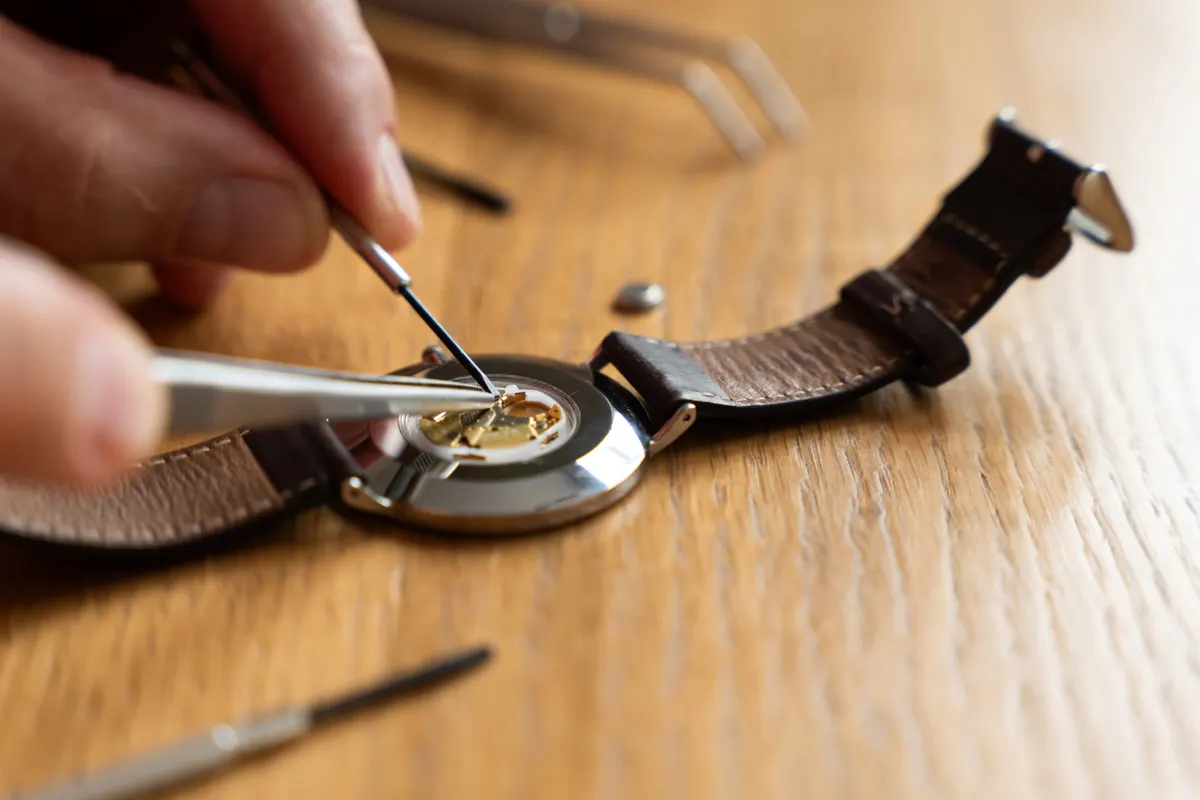
Watch marketing agency: close-up of a person using tweezers to repair a watch movement on a wooden workbench, with tools visible in the background.

How a watch is chosen online

A watch is bought by someone who has already read the specification. They know whether they want an automatic or a quartz movement, they have a case diameter in mind, they care about water resistance, crystal, lug-to-lug and what the movement inside is, and they will compare your model against your other models before they compare it against anyone else's. Orders arrive as self-purchases through the year and as gifts before Father's Day, graduation season and December, and for independent brands they arrive in bursts around pre-orders and limited editions.

We grow watch brands that already sell online by working visitors, conversion rate, average order value and repeat purchases, which in this niche means straps, the second watch and the next limited run. The work starts with a free written growth plan built on your own order and launch data, then a base fee plus growth share scoped in that plan.

The watch buyer arrives with a shortlist. They have seen the model on a wrist in a video or a forum, they know the case size they can wear, and they want the specification confirmed: movement and its maker, case diameter and thickness, lug-to-lug, water resistance rating, crystal, strap or bracelet options, and the warranty term. If the page does not give all of that in one place, they open another tab and ask an AI assistant, which will answer from whichever site has the details written down.

Fit is the doubt that stops the order. A 40mm case on a page looks the same as a 38mm, and the shopper wants to see both on a wrist the size of theirs. Wrist-size photos and a lug-to-lug figure settle it faster than any chart.

For independent and microbrands the purchase is often a pre-order for a limited run, and the buyer is weighing delivery date, edition size and whether a strap change is included. For established brands it is the model choice within a family, and the buyer wants the differences between the three references laid out plainly.

Gift buyers are a different case. They are choosing a size and style for someone else, they need to know the return and resizing terms for a bracelet, and they care about the box. The store has to serve all three without making any of them scroll past the others.
Where watch brands
lose revenue

The four levers, in this niche.

Visitors

Visitors: model and specification searches, plus the wrist shot on social

Watch demand searches by reference, movement type, case size and style: 'automatic dive watch 40mm', 'field watch quartz', your model names. We build Shopping and search campaigns on that vocabulary with the specification in the titles, keep brand and model terms in their own campaign, and use social for wrist shots, dial macro and movement views that a listing cannot show. Launches get a pre-order push with a countdown.

Conversion rate

Conversion: the full specification and the wrist photo in the first screen

A watch page converts when the specification table sits in the first screen with the price and the wrist photos by wrist size sit beside it. We add lug-to-lug and thickness where they are missing, show the same model on three wrist sizes, state the warranty and the bracelet sizing terms, and make the pre-order delivery date unmissable on launch products.

Average order

Order value: the second strap, the bracelet and the engraved caseback

Watch orders grow through the strap. We offer a second strap or the bracelet as an add-on with the watch at a small saving, present caseback engraving and a watch roll as options, and show the next model up in the family with its differences. On limited editions, the numbered edition and the full set of straps are the natural upgrade.

Repeat purchases

Repeat purchases: straps every season, a second watch in a year or two

Watch owners buy straps often and watches occasionally. We build a strap programme timed to seasons and new colours, give owners first access to limited runs, remind them about service intervals, and use purchase history to suggest a second watch that fills a gap, such as a dress watch for a dive watch owner.

What we do for
watch brands

Five channels, one plan.

Google Shopping and search

Google Shopping and search ads for specification-led buyers

Watch Shopping campaigns work when the feed reads like the specification the buyer is looking for. Titles carry the model name, movement type, case diameter and style, such as 'Model name automatic field watch, 38mm, sapphire crystal', so the listing matches a precise query. We split campaigns by product family and price band, keep a branded campaign for model names and references, and run a limited generic campaign on style-plus-size terms with negatives for replica, fake, repair and battery. Strap-only campaigns run separately with a lower target because the order is smaller and the buyer often already owns the watch. Pre-orders are listed with availability set to preorder and a real date, and the ad copy says so. Budgets rise before Father's Day, graduation season in late spring, and from mid-November, and each launch gets a short, concentrated push. Watches are considered for days rather than weeks, so campaigns are read on a two to three week window.

Meta and TikTok

Meta and TikTok ads built on the wrist shot and the movement

Watch buyers on social want to see the watch on a wrist and the movement through the caseback. The creative that works is the wrist shot in daylight with the case size and the wrist size on screen, a macro of the dial texture, the rotor turning, a strap change in ten seconds, and for launches a countdown with the edition size and the delivery date. We build catalogue ads from the current models with the price shown, retarget product page visitors for two to three weeks with the model they viewed and its wrist photos, and run a separate gift audience before Father's Day and December with creative that speaks to the buyer about sizing, returns and the box. For independent brands, the founder explaining a design choice in a short video works as well as any studio piece. Community matters here, so we answer specification questions in the comments with facts and keep the claims about movements, water resistance and materials exactly as accurate as the product page.

Merchant Center and the feed

Merchant Center for watches with GTINs, variants and pre-orders

Watch feeds are stricter than most jewelry feeds because watches usually have GTINs. If your brand assigns barcodes, the gtin attribute is required for each variant and a missing or reused one gets the item disapproved, so we audit every SKU before anything else. Strap and dial variants belong under one item_group_id, with color for the dial and material or a custom attribute for the strap, each with its own image and availability. Product_detail carries movement type and calibre, case diameter, thickness, lug-to-lug, water resistance and crystal, which lets Google match specification queries. Pre-orders use availability set to preorder with availability_date, and the price must match the page. Limited editions that sell out are set to out of stock rather than removed, so the listing does not lose its history when the next batch lands. Return and warranty terms are set in Merchant Center so they appear in the listing. We fix all of it in the store's product data so a new reference uploads clean.

SEO and AI search

SEO and AI search: the specification written where it can be read

Watch search is reference-led and question-led. Each model needs a page whose specification is text rather than an image, with movement, case size, thickness, lug-to-lug, water resistance, crystal, strap width and warranty term written out, because that is what search engines index and AI assistants quote. Family pages compare your own references side by side, which is the comparison a buyer actually makes. AI assistants are asked whether a quartz watch is worth buying, what case size suits a 6.5 inch wrist, whether an automatic needs servicing, what water resistance means in practice and whether microbrand watches are reliable. We write those answers on the store in plain language, close to the models they concern, with the brand's own figures rather than industry claims. Sold-out limited editions keep their pages with the edition history and a link to the current model, because the searches for them continue for years.

Email and SMS

Email and SMS for owners, from strap season to the next edition

The watch email programme treats owners as members. After delivery the flow covers setting the watch, sizing the bracelet, water resistance in practice and the service interval, which reduces support tickets and builds the trust the second order needs. Straps go out as a seasonal programme with new colours and materials, sent to owners of the models they fit. Limited editions are announced to owners first, with a short early-access window, then to the wider list, and the pre-order confirmation flow keeps buyers informed of the delivery date so the wait does not become a refund. Browse and cart flows are short and specification-led: the wrist photos, the movement, the warranty, the delivery date. Gift flows before Father's Day, graduation season and December speak to the buyer about sizing and returns and link to a gift guide by wrist size and style. A service reminder a few years after purchase brings owners back to the store and often to a second watch.

First three fixes

What the plan usually starts with for watch brands.

  1. No way to judge the case size on a wrist

    Photograph each model on three wrist sizes and label them, print lug-to-lug and thickness beside the diameter, and add a line that says which wrist sizes the model suits. This one change usually moves conversion more than any campaign setting.

  2. GTIN disapprovals stalling the feed

    Watches with barcodes need the correct gtin on every variant. Audit the SKU list, fix reused and missing codes in the store's product data, and set identifier_exists to false only for pieces that truly have no barcode.

  3. Pre-orders with a vague delivery date

    A pre-order that says 'shipping soon' becomes a chargeback. Put the expected month on the product page, in the feed's availability_date and in the confirmation email, and send an update if it moves.

Questions from watch brands

Owners first, by email and SMS with a short early-access window, then a concentrated social and search push with the edition size and the delivery date on screen. The feed lists the watch as a pre-order with a real date so Shopping can show it.

Movement and its maker, case diameter, thickness, lug-to-lug, water resistance, crystal, strap width and the warranty term, all as text in the first screen. Buyers compare these across tabs, and AI assistants quote whichever store writes them down.

To owners, yes, through email and SMS. In paid search they need a separate campaign with a lower target, because the order is small. Straps matter more as the repeat purchase than as the first one.

Usually missing or reused GTINs, or a pre-order listed as in stock. We audit barcodes per variant, set pre-orders with a date, and fix the data in the store so it does not recur.

Two to three weeks for regular models, because the decision takes days rather than weeks, and the whole launch window for a pre-order. We set the review window in the plan from your own order timing.

Other jewelry & accessories stores we work with

Send your watch brand store.

The plan says which lever is leaking and what to fix first, for your store as it is today.

Store, name, email and phone. A person replies from a real inbox. Privacy

Get your free growth plan