Skip to content

Dog food marketing agency

Growth for dog food brands selling online: bag-size economics, feeding-guide conversion, subscription timing and Merchant Center unit pricing. growth-based fee.

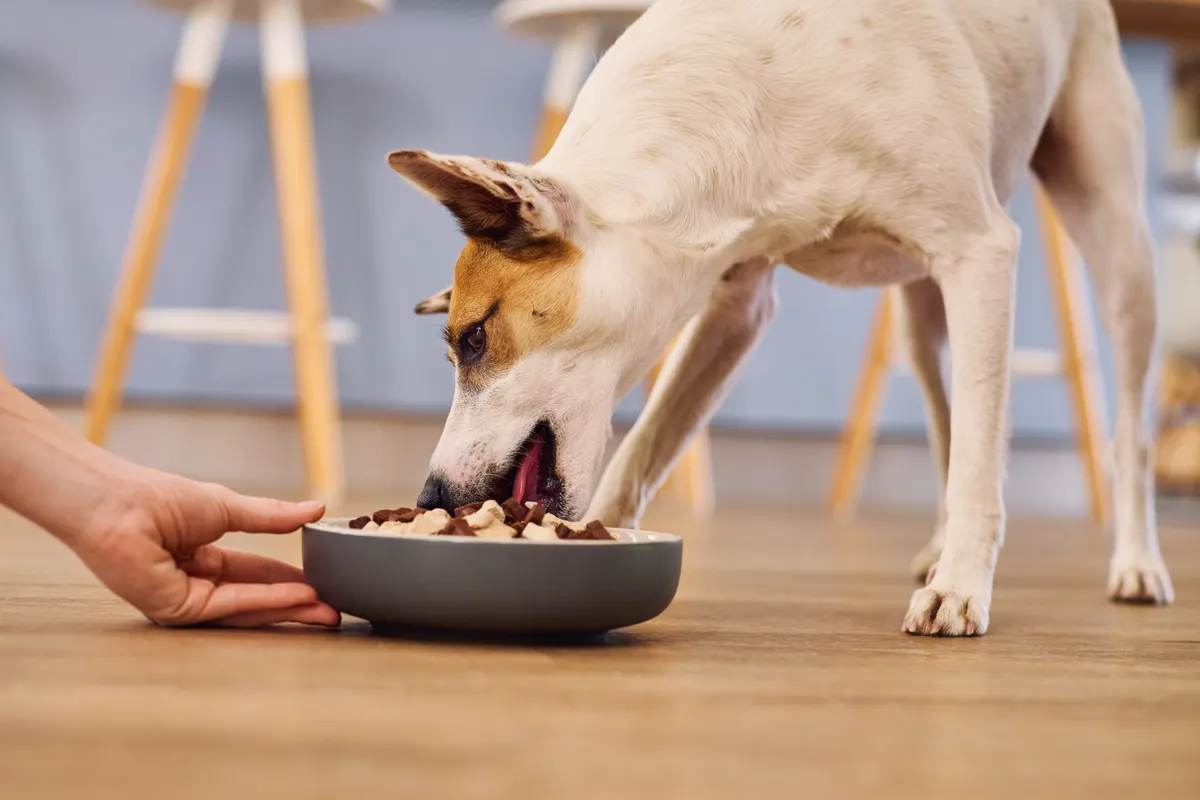
Dog food marketing agency: feeding hungry dog with a bowl of dry food.

How dog owners choose and reorder food online

A dog food brand sells the same product to the same customer every few weeks, so the business is decided by three things: whether a new owner switches to you, whether the bag size they pick matches their dog, and whether the next bag arrives before the current one runs out.

The hard part is weight. A 12 kg bag of kibble costs real money to ship, and that cost sits inside the price the shopper compares against the supermarket shelf. Wet food in trays and pouches is heavier still per calorie. So growth in dog food is never just more traffic. It is traffic that arrives with a specific dog in mind, a product page that turns a feeding guide into a bag-size choice, and a reorder cycle you can predict from the label.

We work with dog food brands that already sell online and want visitors, conversion rate, order value and repeat purchases to move together. The growth plan is free and written for your store. If you take it further, the fee is flat and monthly.

Owners rarely browse for dog food. They switch. The trigger is a new puppy, a vet comment about weight or a sensitive stomach, a recall they read about, or a slow realisation that the current food is not agreeing with the dog. They arrive with constraints already set: the dog's weight, age, breed size, any allergy, and a budget per month rather than per bag.

The first thing they look for is the feeding guide, because it tells them how long a bag lasts and therefore what the food really costs. Then they check the nutritional adequacy statement, the ingredient list and whether the recipe is for puppies, adults, seniors or all life stages. Large-breed owners look for a large-breed formula. Owners of dogs with itchy skin look for a limited-ingredient or single-protein recipe.

Only then do they compare price, and they compare per kilo and per day, not per bag. A brand that shows the cost per day for a 20 kg dog wins that comparison against a bag price that looks high on its own.

The last question is switching. Owners know a sudden change upsets the stomach, so they want a transition schedule and a small bag to try before committing to a large one. Once the dog is settled, most owners stop shopping and simply reorder. The first two orders decide whether you get that customer.
Where dog food brands
lose revenue

The four levers, in this niche.

Visitors

Win the searches that happen when the bag runs low

Dog food search has two shapes: a switching search, specific to a problem or life stage, and a reorder search, usually your brand name plus a bag size. We build campaigns for the switching queries around your recipes, such as puppy food for large breeds or food for sensitive stomachs, and protect brand queries so a reorder does not leak to a reseller. Organic content targets the problem language owners use.

Conversion rate

Turn a feeding guide into a size choice

A feeding guide in a table is information. A feeding guide that asks for the dog's weight and answers with cups per day, days per bag and cost per day is a conversion tool. We put that calculation above the size selector, so a shopper with a 30 kg dog sees why the larger bag makes sense and how long it lasts, with the transition schedule beside it so the switching worry is answered before checkout.

Average order

Sell the bag size that matches the dog

Order value in dog food is mostly bag size. Margin per kilo improves with the larger bag and shipping cost per kilo falls, so the biggest lever is defaulting shoppers with medium and large dogs to the bag their dog actually needs. We also pair kibble with a wet topper or a treat in the same protein, and set free-shipping thresholds that a single large bag can reach.

Repeat purchases

Replenishment timed to the last cup

Bag weight divided by daily feeding amount gives an estimated reorder date. We use that estimate, corrected by the customer's own order history, to time reorder emails and SMS a few days before the bag runs out, and to set the default subscription interval per bag size rather than one interval for every product. Subscribers are offered the next size up when their dog's weight changes.

What we do for
dog food brands

Five channels, one plan.

Google Shopping and search

Shopping ads by bag size, not just by recipe

Dog food Shopping ads work when each bag size is judged on its own. A 2 kg bag competes on trial and convenience, a 12 kg bag on price per kilo, and they should not share a bid or a headline. We split campaigns by bag size and by recipe purpose, so puppy, senior and sensitive-stomach recipes each carry their own search terms and budget. Search ads cover the problem queries Shopping cannot match well, such as what to feed a dog with a chicken allergy, and send them to a collection filtered to the right recipes. Brand terms get their own campaign with a cost cap, because those clicks are mostly reorders. We exclude regions where the delivered cost of a heavy bag erases margin, and we judge the small bag on the subscribers it creates rather than first-order profit.

Meta and TikTok

Meta and TikTok for a brand people have never fed

Social ads for dog food have one job: convince an owner to try a first small bag. Nobody switches a dog's diet because of a lifestyle image. The creative that works shows the kibble itself, the ingredient list, a dog eating it and the transition schedule, in that order, with the feeding cost per day stated plainly for a common weight. We build separate ad sets for puppy owners, large-breed owners and sensitive-stomach searchers, using the language of each, and send them to a page with the trial size as the default. On TikTok the honest formats are the unboxing, the bowl test and the vet-question answer, filmed by the brand. Retargeting is short: people who used the feeding calculator see the trial bag; people who bought the trial bag see the transition schedule and then the full bag.

Merchant Center and the feed

Feed attributes for kibble and wet food

A dog food feed needs more than a title and a price. Each bag size is its own variant with its own GTIN, and the title should carry recipe, life stage and weight in that order, because that is how a shopper scans a Shopping result. We set unit pricing measure and base measure so Google can show the price per kilo, which is the number the shopper is really comparing. The Google product category is the dog food node of the pet supplies taxonomy, and product type carries your own structure such as puppy, adult, senior or grain-free. Wet food cases need the multipack attribute with the correct count so twelve trays are not priced as one. Custom labels mark bag size tier and margin band so campaigns split cleanly, and product highlights carry the plain facts owners look for, such as the adequacy statement and the main protein.

SEO and AI search

What dog owners ask AI assistants about food

Dog owners now ask assistants the questions they used to ask a forum: how much should I feed a 25 kg dog, is grain-free safe, how do I switch foods without an upset stomach, what does the adequacy statement mean, which protein suits a dog with itchy skin. Assistants answer from pages that state those things in plain text, so we write them on your site. Each recipe page gets a feeding table by weight, a transition schedule, an ingredient list with a one-line reason for each main ingredient, and answers to the three most common questions about that recipe. Collection pages are organised the way owners search, by life stage, breed size and dietary need, not by internal line names. We keep the language literal so an assistant can quote it, and avoid outcome claims the label does not support.

Email and SMS

Email and SMS timed to the feeding guide

The reorder flow for dog food is a calculation, not a guess. Bag weight divided by daily feeding amount gives days of supply, and the customer's order history refines it. We send the reminder a few days before the estimated run-out date, with a one-tap reorder and an offer to move to a subscription at the same bag size. The first-order flow is different: day one covers the transition schedule, the end of week one checks how the dog is doing and links to the feeding table, and just before the trial bag runs out the message offers the full-size bag. Subscribers get a message before each shipment with the option to change size or skip, which prevents cancellations caused by a bag arriving too early. SMS is reserved for the run-out reminder and the shipment notice.

First three fixes

What the plan usually starts with for dog food brands.

  1. Fix the price-per-kilo view first

    If your product page shows a bag price and nothing else, the shopper does the maths against the supermarket and leaves. Show price per kilo and cost per day for the dog's weight on every size, and let the larger bag win that comparison visibly. This usually lifts both conversion and the average bag size.

  2. Fix the switch-over week

    Most first orders that do not become second orders fail during the transition, when the dog has a loose stool and the owner blames the food. A printed schedule in the box, a day-one email that repeats it and a day-seven check-in that explains what is normal turn that week into a habit instead of a refund.

  3. Fix the free-shipping threshold on heavy bags

    A threshold set for light products will either lose money on a single large bag or sit out of reach of the small bag. Set thresholds by weight band, or price shipping into the large bag and say it is included, so the delivered cost per kilo makes sense for the shopper and for you.

Questions from dog food brands

We treat shipping as part of the cost per bag size and per region. Campaigns are split by bag size so the large bag, which carries shipping best per kilo, gets the switching budget, while the trial size is judged on the subscribers it creates.

Usually not as the default. Owners want to know the dog will eat the food before committing. We offer the trial bag first, then move the customer to a subscription at the right bag size once the transition week is done. Subscriptions taken after a successful first bag last longer.

Yes. We turn your feeding guide into a weight-based calculator on each recipe page and write plain-text answers to the questions owners ask about switching, life stage and ingredients, structured so search engines and AI assistants can quote them.

Unit pricing measure and base measure so the price per kilo shows, a separate GTIN per bag size, the multipack attribute for wet food cases, accurate availability per size, and product type that mirrors life stage and dietary need. Titles should state recipe, life stage and bag weight.

Yes, with adjustments. Fresh food has a shorter shelf life and a cold-chain shipping cost, so the reorder cycle is shorter and the delivery calendar matters more. Raw and frozen brands have their own page on this site.

Other pets stores we work with

Send your dog food brand store.

The plan says which lever is leaking and what to fix first, for your store as it is today.

Store, name, email and phone. A person replies from a real inbox. Privacy

Get your free growth plan