Skip to content

Photo book & print marketing agency

Marketing for photo book and photo print services: finishing the builder, page count pricing in the feed, low resolution uploads and the annual book habit.

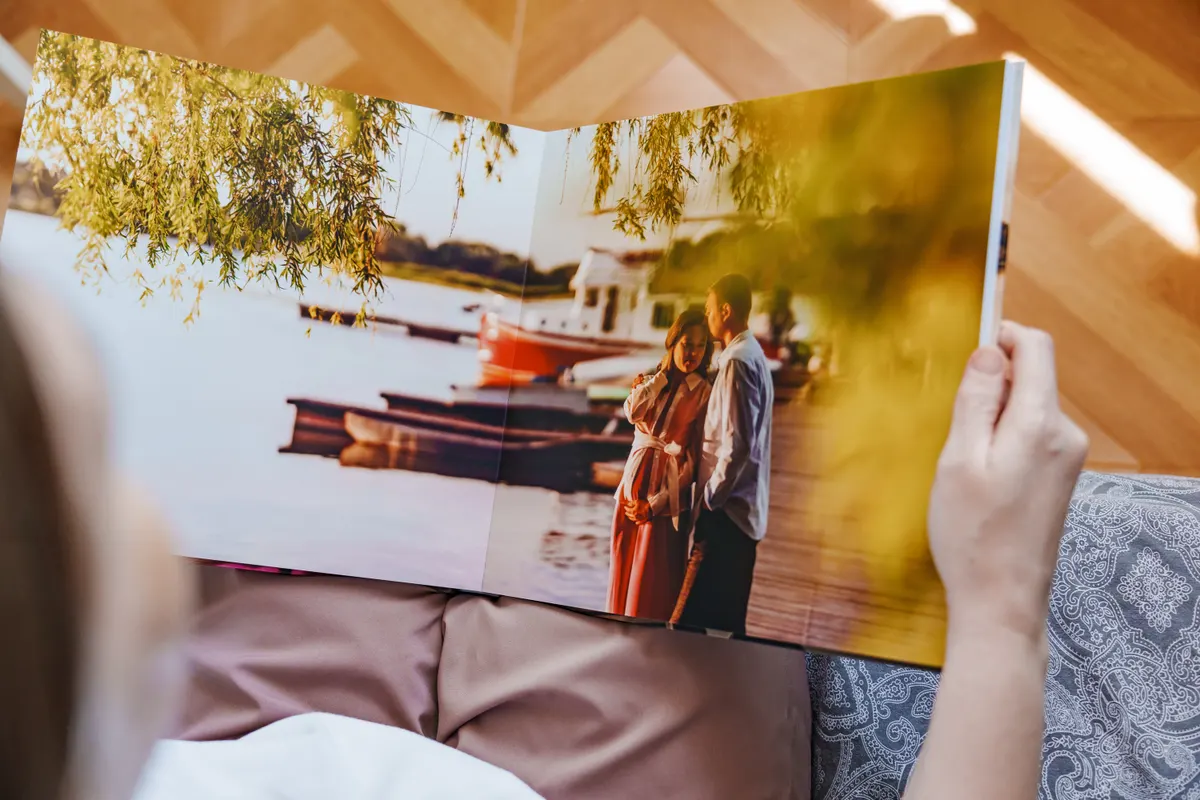
Photo book & print marketing agency: woman is holding and flipping through a photo book with a pregnancy photo shoot.

How a photo book order actually happens

A photo book is the only product in ecommerce where the customer has to do an hour of work between wanting it and paying for it. They create an account, connect a phone gallery, wait for two hundred images to upload, accept or fight an autofill layout, then decide whether page eighteen is worth another two pounds. Almost every store in this niche has more unfinished projects sitting in its database than it has orders in a year, and that is where the growth is.

We write growth plans for photo book and photo print services that already sell online. The plan covers the builder as a funnel with measurable steps, the pricing structure that decides what you can put in a product feed, the upload quality problem that generates most of your support tickets, and the seasonal wall in November and December when everything arrives at once.

It also covers the habit. A family that makes one book usually makes another, but only if you ask them at the point where they have new photographs and no plan for them, which is not the same week you last emailed them about a sale.

The decision and the purchase are separated by days. Someone decides they want a book of the trip, the baby's first year or the wedding, and then they wait until they have a free evening. That gap is where the store either stays present or disappears.

The project itself is a series of drop off points. Account creation before any value has been shown. Upload, which on a phone over patchy wifi is where the most people leave. Autofill, which either delights or annoys depending on how well it handled the twelve near identical photos of the same sunset. Then the long edit, then the checkout, where extra pages, cover upgrade and delivery are finally added to a price the customer thought they knew.

Quality anxiety runs through all of it. Customers worry that a phone photo will print blurry, that faces will land in the gutter of a spread, and that colours will come out darker than the screen. A resolution warning that explains itself, a spread preview that shows the fold, and one honest sentence about screen and print colour do more for conversion than another banner.

Photo prints behave differently from books. They are an impulse job, often ordered in bulk from a phone, and the buyer wants speed and a low unit price rather than a design session.
Where photo book & print services
lose revenue

The four levers, in this niche.

Visitors

Visitors: catch the occasion and the format

Demand splits between occasions and formats. Occasion searches are things like wedding photo album, baby first year book and holiday photo book, and each deserves a landing page with the right sample spreads rather than a generic builder link. Format searches are hardcover, layflat, square, A4, and the cheap end, which is people looking for a price on a set number of prints. We match campaigns and pages to both, and time budget around the two moments people have new photographs, the end of summer and the end of the year.

Conversion rate

Conversion: measure the builder as a funnel

Treat the builder like a checkout with eight steps and instrument every one. How many start a project, finish uploading, accept autofill, reach the preview, reach the basket. Once you can see the drop off you can fix the right thing, which is usually upload on mobile, a resolution warning nobody understands, or a forced account before any value is visible. We also move price transparency earlier, so extra pages and cover upgrades are not a surprise at the end of an hour's work.

Average order

Order value: pages, cover and the second copy

Three upgrades carry this niche. Extra pages, which are pure margin once the book is being made, sell themselves if the builder shows what the layout could look like with more space rather than just charging for it. The cover upgrade to layflat, linen or a dust jacket lands best at the preview stage. And the second copy for a parent or grandparent costs you almost nothing to produce and is the easiest yes in the store, offered once at checkout and again in the confirmation email.

Repeat purchases

Repeat purchases: build the annual habit

The strongest repeat pattern here is yearly. Someone who made a book of last year will make one of this year if you reach them when they have photographs and a reason. Keep projects saved and easy to duplicate, so year two starts from year one's template rather than from an empty page. Then run the anniversary prompt from their own order date, plus a print top up flow for people who only ever ordered loose prints, since they reorder far more often than book customers do.

What we do for
photo book & print services

Five channels, one plan.

Google Shopping and search

Google Shopping and search ads for photo books and prints

Photo books sit awkwardly in Shopping because the price depends on choices made later. Submit the base configuration as the item, with the page count, size and cover in the title, and make sure the landing page shows that same price before any option is changed. If a larger size or a layflat cover costs more, it is a separate item with its own id rather than a from price, because a mismatch between feed and landing page is a disapproval waiting to happen.

Loose photo prints work better as straightforward listings by size and quantity, and they attract a very different searcher, one comparing unit price. Search ads should cover the intent queries a tile cannot serve, such as best photo book for a wedding or where to print photos from an iPhone, and the copy can name the turnaround. Budget needs a plan for October to mid December, when this category takes most of its year in a few weeks.

Meta and TikTok

Meta and TikTok ads for photo book services

The creative that works is the finished object being opened. Hands turning a layflat spread, a grandparent seeing the book for the first time, the thickness of the paper against a table. Renders of a book floating on a gradient look like software; a real book on a real kitchen table looks like a present.

The second creative angle is the builder itself, sped up. Showing a phone gallery becoming a laid out book in twenty seconds removes the fear that this will take all night, which is the main objection. On TikTok, memory content performs on its own merits, so briefing creators to make a book of a specific trip or year and film the reaction works better than a discount led ad. Retarget people who started a project but never ordered, using the cover image from their own project where your platform allows it, and keep a separate audience for print only buyers who do not want a book at all.

Merchant Center and the feed

Merchant Center and the feed for photo products

Photo books, prints and canvases are personalized goods, which Google allows as long as the item you submit is the base product at the price shown before customization. Each size, page count and cover combination that carries a different price is its own item, grouped with item_group_id. Put the finished dimensions in the size attribute and the binding and paper in product_detail, since those are the specifics buyers compare.

Images are the common failure. The main image must show the product itself without price flashes, discount badges or added borders, which is tempting in a category that advertises on promotion. Lifestyle shots of the book being held belong in additional images. If you sell a voucher or credit rather than a physical item, that is not eligible as a product listing. Availability and delivery estimates should reflect the real production queue in December rather than the one you run in June, because delivery date accuracy is checked.

SEO and AI search

SEO and AI search for photo books and printing

People ask assistants questions with a right answer: what resolution do I need for an A4 photo book page, is layflat worth it, how many photos fit in a 40 page book, how do I print photos from my phone, what is the difference between a photo book and an album. A store that answers those with real numbers from its own printing specification is what gets cited, and the visitor arrives already qualified.

Build pages by occasion, wedding, baby, travel, memorial, each with sample spreads and a realistic page count, and pages by format with the actual dimensions. A resolution guide that explains megapixels against print size in plain terms belongs on the site and inside the builder. Structured data on products and FAQs helps, and so does keeping delivery and cut-off information as text on the page rather than in an image, because that is exactly what an assistant is asked to check in December.

Email and SMS

Email and SMS for photo book services

The unfinished project email is the single highest value flow in this niche. Someone with eighty photographs uploaded and no order is worth chasing properly: remind them the project is saved, show the cover they built, tell them how long it will take to finish, and give a real deadline if one exists. Space it over days, not hours, because the barrier is an evening they have not found yet.

After delivery, ask for a photograph of the book rather than a star rating, because that becomes your best creative. Then run the annual prompt from the order date, with the previous project ready to duplicate. Loose print buyers get a separate top up cadence tied to how often they actually reorder. SMS earns its place for one thing only in this category, the last order date for Christmas delivery, sent to people with a saved unfinished project.

First three fixes

What the plan usually starts with for photo book & print services.

  1. An account wall before the builder

    Forcing registration before anyone can see how the builder works loses people who were only exploring. We let a project start anonymously, save it against a browser or an emailed link, and ask for the account at the point the customer has something worth keeping.

  2. Resolution warnings nobody can act on

    A yellow triangle that says low resolution tells the customer they have a problem and not how to solve it, so they either ignore it and complain later or abandon the project. We rewrite the warning to say which photo, how large it can safely print, and what to do instead, and repeat it in the pre-order summary.

  3. A December promise the factory cannot keep

    Selling next day delivery into a queue that is running five days long produces refunds, chargebacks and a bad first Christmas with a new customer. We build the cut-off calendar with production, publish it on the product page and in the cart, and switch delivery options off as each one closes.

Questions from photo book & print services

Instrument each step first: project started, upload finished, autofill accepted, preview reached, basket reached. Most stores find the loss is concentrated in mobile upload and in the moment a price change appears. Fix those two, save projects reliably, let people leave and return on another device, and email them the link. Nothing else in this niche moves conversion as much.

The price of the base configuration exactly as it appears on the landing page before the customer changes anything, with the page count and size stated in the title. Charging for extra pages later is fine because the customer chooses that after the click, but a feed price that no configuration can produce will be disapproved and will annoy the shopper who clicked.

Warn early, be specific, and offer a way out. Say which image, what the largest safe print size is, and whether moving it to a smaller frame on the page solves it. Silent auto upscaling causes returns you cannot resell, and a vague warning gets ignored. Put a summary of any remaining low resolution images in the final review step so approval is informed.

Awareness well before the rush, because a book takes the customer an evening to make, and hard deadlines published as soon as production can commit to them. Work backwards from the courier's last dates, add your real production queue at peak rather than your quiet season time, and show the resulting order-by date on the product page, in the builder and in the basket.

Usually yes. Print buyers order more often, decide in minutes, compare on unit price and delivery, and rarely want a design session. Books are a project bought once or twice a year at a much higher order value. Mixing them in one campaign and one email cadence means each message is wrong for half the list.

It changes where the work happens. If most photographs live on a phone, an app or a strong mobile upload path removes the biggest drop off in the funnel, and your ads should send people to the flow that actually works on the device they are holding. If the site upload is poor on mobile, no amount of traffic will fix conversion.

Other print & personalized stores we work with

Send your photo book & print service store.

The plan says which lever is leaking and what to fix first, for your store as it is today.

Store, name, email and phone. A person replies from a real inbox. Privacy

Get your free growth plan