Skip to content

Print-on-demand art marketing agency

Marketing for print-on-demand art stores: size and frame variants in the feed, mockups that show real scale, licensing risk, and gallery wall order value.

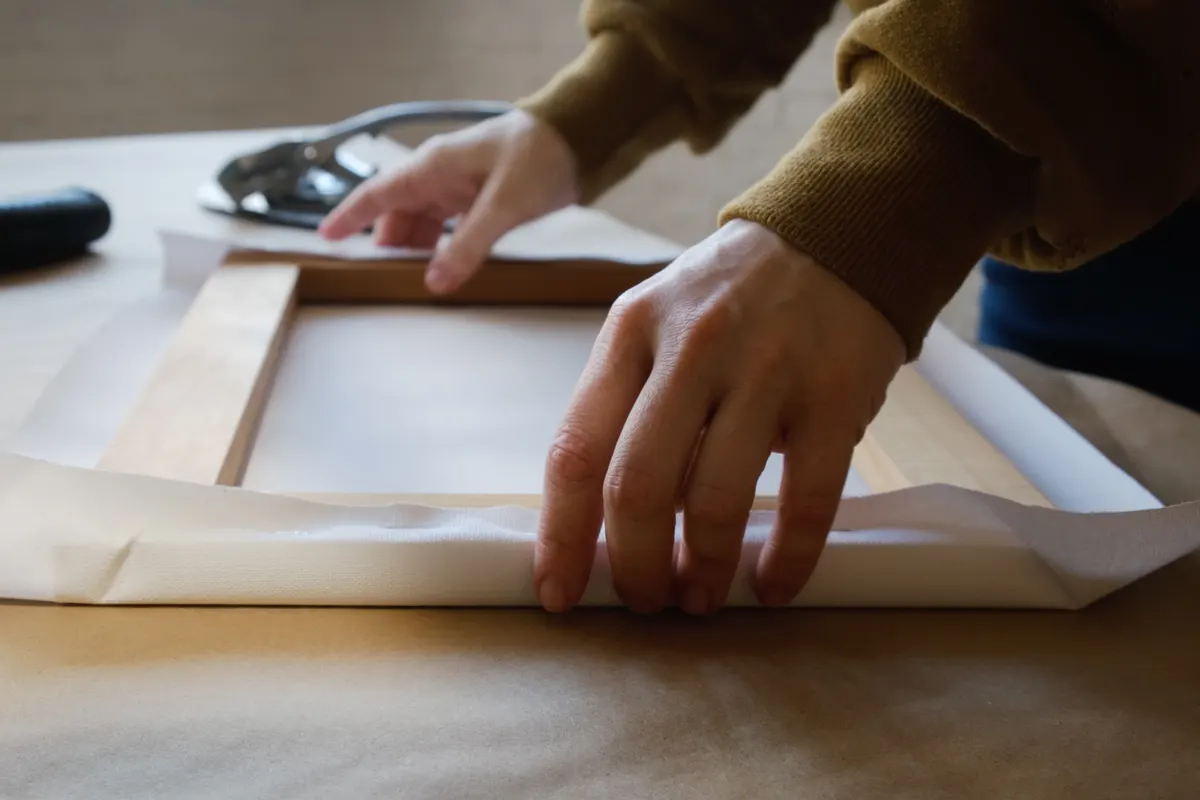
Print-on-demand art marketing agency: stretching canvas on stretcher bars. Gallery wrap. Print on canvas.

How wall art is chosen when it is printed to order

A print-on-demand art store sells the same image at eight sizes, in three paper stocks and with or without a frame, which means one artwork can be forty listings before you have sold anything. Nothing is stocked, so the constraint is not inventory. The constraints are scale, aspect ratio and time: a shopper cannot tell how big 50 by 70 centimetres is on their wall, a 3:4 image does not fit a 2:3 frame without cropping, and your fulfilment partner adds production days on top of the courier.

We write growth plans for art stores that already sell online, whether you print your own work, license artists or run a curated catalog through a fulfilment partner. The plan covers feed structure across size and frame variants, mockups that make scale obvious, the copyright rules that decide whether your account survives, and the merchandising that turns one print into a set of three.

It also covers the part most art stores get wrong: the delivery promise. Rolled prints, framed prints and canvases leave on different days from different facilities, and a single site wide shipping estimate hides that until the customer is disappointed.

Art is bought for a wall, not for a catalog. The shopper already has a space in mind, usually above a sofa, a bed or a desk, and they are trying to answer three questions in order: does this suit the room, will it fit, and does it look cheap in real life.

The suits the room question is settled by style and subject. People search the way they decorate: botanical, mid century, line drawing, moody abstract, black and white photography, and increasingly by room, such as nursery prints or kitchen wall art. A catalog organized by artist alone hides all of that.

Will it fit is a scale problem your photography either solves or creates. If every size uses the same room mockup, the shopper learns nothing, and the most common regret in this category is buying too small. A print shown next to a sofa or a doorway of known height, plus dimensions in both centimetres and inches, is worth more than another lifestyle shot.

Does it look cheap is answered by material detail. Paper weight in gsm, whether the ink is pigment based, whether the finish is matte or lustre, and whether a frame is real wood or moulded plastic all matter to the buyer spending more than a token amount. Say them plainly.

Then there is the set. Very few people hang one print, so the matched pair or trio in the same size and frame is often the real order.
Where print-on-demand art stores
lose revenue

The four levers, in this niche.

Visitors

Visitors: sell the style, the room and the size

Art traffic arrives through style, subject, room and size queries rather than through artist names, unless the artist is already known. Large abstract canvas, set of three botanical prints, nursery animal art and a literal size like 24x36 poster are all separate demand pools. We build collections and feed titles that carry the subject, the style and the size, split campaigns by format because a framed print and a rolled print behave differently, and put the artist name where it earns clicks rather than everywhere by default.

Conversion rate

Conversion: make scale and material impossible to misjudge

Two things stop the sale: not knowing how big the print will look, and not trusting the print quality from a screen. We fix the first with per size mockups against a known reference such as a sofa or a door, dimensions in both units, and a simple scale guide on the product page. We fix the second with a close crop of the actual paper texture, the gsm and finish written out, and a clear line on aspect ratio so nobody expects a 3:4 image to fill a 2:3 frame. Production and shipping days are shown separately.

Average order

Order value: sell the wall, not the print

One print is a small order. A pair above a bed, a trio across a hallway or a nine piece gallery grid is a real one. We build set modules that match size, orientation and frame across the pieces, offer a curated gallery wall as a single product with a hanging template, and put the frame upgrade next to the choice rather than three clicks later. A larger size at a better margin is often an easier upsell than a second item, so the size selector should show the price step honestly.

Repeat purchases

Repeat purchases: new drops, new rooms and gifting

People who hang art hang more of it. The repeat cycle follows new releases from an artist or style they already bought, a second room being decorated, a house move, and gifting, because framed art is a common wedding and housewarming present. We segment the list by style and room bought, announce drops to the matching segment first, and send a hanging guide after delivery that quietly introduces the companion piece in the same size and frame.

What we do for
print-on-demand art stores

Five channels, one plan.

Google Shopping and search

Google Shopping and search ads for art prints

Shopping works here when the title reads like the search rather than like a gallery label. Botanical Leaf Print, Set of 3, A3, Black Frame beats Untitled No. 4 every time, and the size belongs in the title because size is a query. We separate rolled prints, framed prints and canvases into their own campaigns, since their prices, margins and return risk are different, and we let the best selling sizes carry the budget instead of spreading it evenly across forty variants of the same image.

Search ads pick up the queries a tile cannot answer, such as what size print above a sofa or where to buy large canvas art, and the copy can carry the useful facts: sizes available, framing options, production time. Claims about archival life or museum quality have to be true and traceable to your printer's specification, because Google's misrepresentation policy applies to product claims as much as to offers.

Meta and TikTok

Meta and TikTok ads for art stores

Art is one of the few categories where the product photo is genuinely the creative, but a flat render of an image on a white wall stops working quickly. What performs is the room: the print going up, the frame being opened, the wall before and after, the trio being spaced out with a tape measure. On TikTok the packing and unboxing of a rolled print, and the artist actually drawing, both work as native content.

Audiences are built from interior and home renovation behaviour and from your own buyers by style, so the person who bought a line drawing is not shown a neon abstract. Retargeting should show the exact print viewed at the size viewed, because someone who left at 30 by 40 has already made a decision you should not reopen. Where you license artwork, check that your rights cover paid advertising and not only resale, since some artist agreements separate the two.

Merchant Center and the feed

Merchant Center and the feed for print-on-demand art

Art sits under Home & Garden, Decor, Posters, Prints & Visual Artwork. Every size, paper and frame combination is its own item with its own id, tied together by item_group_id so Google understands they are one artwork. Size goes in the size attribute and in the title, and the material attribute takes the substrate, such as matte fine art paper or stretched canvas.

The image rules matter more here than in most categories. The main image has to show the product, not a heavily styled room where the artwork is a quarter of the frame, and it cannot carry watermarks, borders or promotional text. Room mockups belong in additional_image_link. Copyright is the real risk: selling prints of characters, film stills, band logos or another artist's work is counterfeit or infringing under Google's policies, and a takedown can suspend the whole account. If you run a large licensed or user uploaded catalog, the feed needs a rights check before it ever reaches Merchant Center.

SEO and AI search

SEO and AI search for art prints

Shoppers ask assistants practical decorating questions before they shop: what size art should go above a 3 seat sofa, how high to hang a picture, what is the difference between giclee and a standard poster print, will a 3:4 photo fit an A3 frame. Those are answerable pages, and a store that publishes the direct answer with real measurements is what gets quoted.

Collections should be real pages with copy, organized by style, by subject, by room and by size, so Large Wall Art and Nursery Prints exist rather than being filter states. Product pages carry the dimensions, paper specification, aspect ratio and framing details as text, not only inside an image. An artist page per contributor gives the catalog depth and picks up name searches. Product and FAQ structured data lets an assistant answer with your sizes and your production time instead of a marketplace's.

Email and SMS

Email and SMS for art stores

The abandoned browse email is the workhorse here, because art shoppers look many times before buying. It should return them to the exact print at the exact size they were looking at, with the room mockup for that size.

After delivery, a hanging guide with the spacing measurements for a pair or a trio is genuinely useful and is the natural place to show the companion pieces. A drop calendar keeps the list alive: new work from an artist or in a style someone already bought, sent to that segment first. Seasonal decorating moments, the new year refresh and the run up to Christmas and housewarming season, get their own campaigns aimed at gifting, with framing and a gift note offered. Keep SMS for limited edition drops with a real edition size and for a shipping cut-off before Christmas, since those are the two messages worth interrupting someone for.

First three fixes

What the plan usually starts with for print-on-demand art stores.

  1. One mockup used for every size

    When the 30 by 40 and the 100 by 140 are shown in the same room at the same apparent scale, the shopper cannot choose and often buys too small, then feels let down. We produce a mockup per size against a known reference object and put the dimensions in both centimetres and inches next to the selector.

  2. Licensed or fan artwork sitting in the feed

    Characters, film stills, logos and copied artwork are infringing goods under Google and Meta policy, and one complaint can cost the whole account rather than the listing. We audit the catalog for rights, remove what cannot be evidenced, and set a check on new uploads before they reach the feed.

  3. A single delivery estimate across rolled, framed and canvas

    Framed pieces and canvases usually take longer and often ship from a different facility, so a site wide estimate makes half your orders late. We put production days and shipping days separately on each format and expose the real delivery date in the cart.

Questions from print-on-demand art stores

Each size, paper and frame combination is a separate item with its own id and price, grouped by item_group_id so Google treats them as one artwork. Put the size in both the size attribute and the title, because shoppers search by dimension. Do not submit a single item at a from price with the size chosen after the click, since the price shown on the landing page has to match the feed.

No, not without documented rights. Selling reproductions of copyrighted artwork, film and TV characters, band logos or photographs you do not own is infringing, and both Google and Meta treat it as counterfeit rather than as a listing error. Enforcement is usually at the account level, so a small corner of the catalog can take the rest of it down with it.

Whatever your printer actually takes plus your own handling, stated as production days, with the courier time added on top and shown as a delivery date. Rolled paper prints usually clear fastest, framed pieces and canvases take longer and are more fragile in transit. If a fulfilment partner batches orders on certain days, that queue is part of your production time and belongs in the promise.

Offer the set as a product in its own right, with the pieces matched in size, orientation and frame, and show them hung together with the spacing measurements. A gallery wall bundle with a paper hanging template removes the part people find hard. Sets also protect you from the too small mistake, because the wall is filled by the group rather than by one undersized print.

Yes, and they are avoidable. A 3:4 image placed in a 2:3 frame either crops or leaves a border, and customers read that as a printing error. State the aspect ratio of each artwork, say which standard frame sizes it fits without cropping, and where you crop for a size, show the cropped version in the preview rather than the original.

Other print & personalized stores we work with

Send your print-on-demand art store store.

The plan says which lever is leaking and what to fix first, for your store as it is today.

Store, name, email and phone. A person replies from a real inbox. Privacy

Get your free growth plan