Signage is sold by the square metre to buyers who know their deadline and not much else. A shop fitter needs a fascia panel before an opening, a site manager needs hoarding boards before an inspection, an events team needs a mesh banner that will not act like a sail on a fence, and an estate agent needs forty correx boards on a Tuesday. None of them want a lesson in substrates. They want a price for their size, a material that will survive where it is going, and a date.
That makes your size calculator the most important page on the site, and the material guide the second. Everything else, including the design work, follows a decision they have already half made.
We write growth plans for sign and banner printers that sell online. The plan covers pricing a product with no fixed dimensions, presenting materials and fixings in language a customer actually uses, the delivery limits that come with large rigid boards, and the multi site and replacement cycles that make business signage a repeat purchase rather than a one off.
The buyer starts with a place and a purpose. A banner across railings, a board on a fence, a panel above a shopfront, a poster in a light box, a sign that has to survive two winters outdoors. From that, three decisions follow, and most customers can only make one of them alone.
Size they know, roughly. They will measure the gap and want a price for that exact dimension, which is why a fixed catalogue of sizes loses to a calculator that prices any width and height.
Material they do not know. The difference between a PVC banner, a mesh banner, correx, foam PVC, aluminium composite and acrylic is obvious to you and invisible to them. They are really asking two questions: will it survive outdoors, and how long for. A material guide written around where a sign is going, rather than around what it is made of, converts far better.
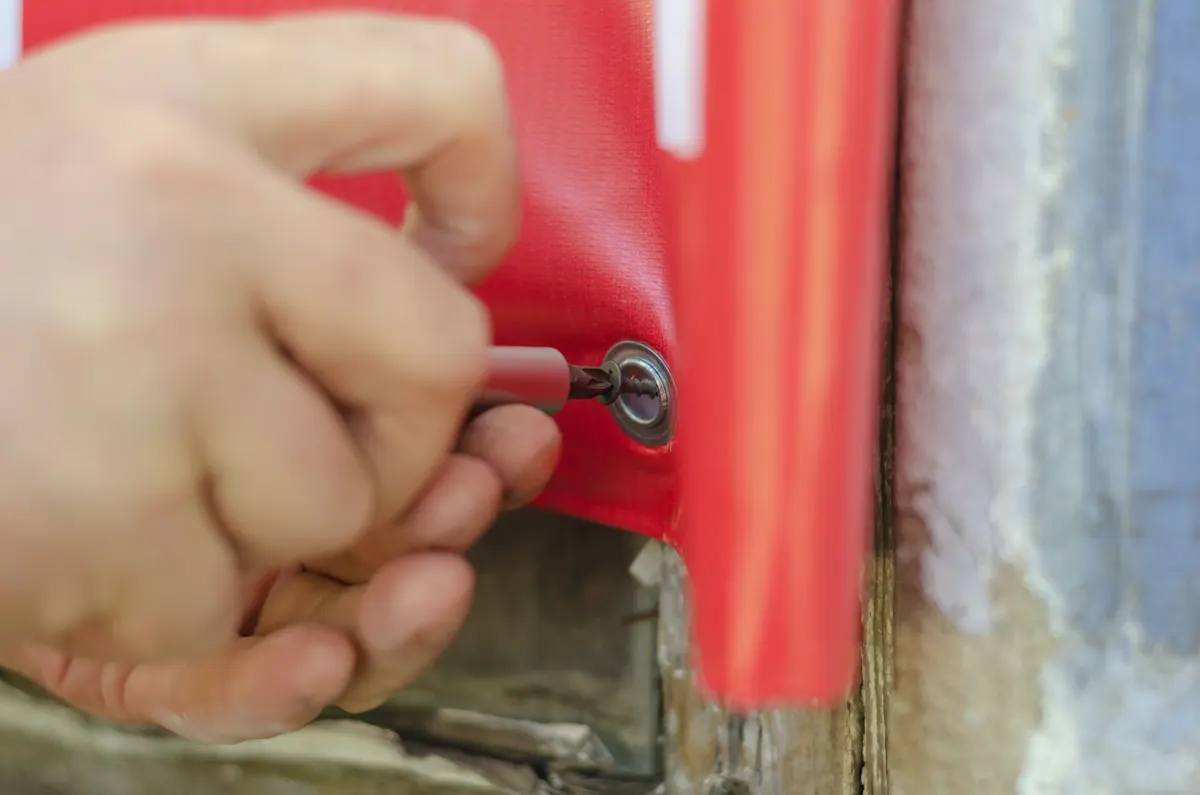
Fixing they have not thought about at all. Eyelets and their spacing, hemmed edges, pole pockets, D rings, drilled corner holes, standoff fixings and whether anything is supplied to hang it with. This is the most common cause of a delivered sign that cannot be installed.
The deadline sits over all of it. Signage is almost always tied to an opening, an event, an inspection or a campaign date, so turnaround and delivery method decide who gets the order.