Skip to content

Sticker & label marketing agency

Marketing for sticker and label printers: sample packs, roll and die specs, steep quantity curves, and reorders timed to a customer's production run.

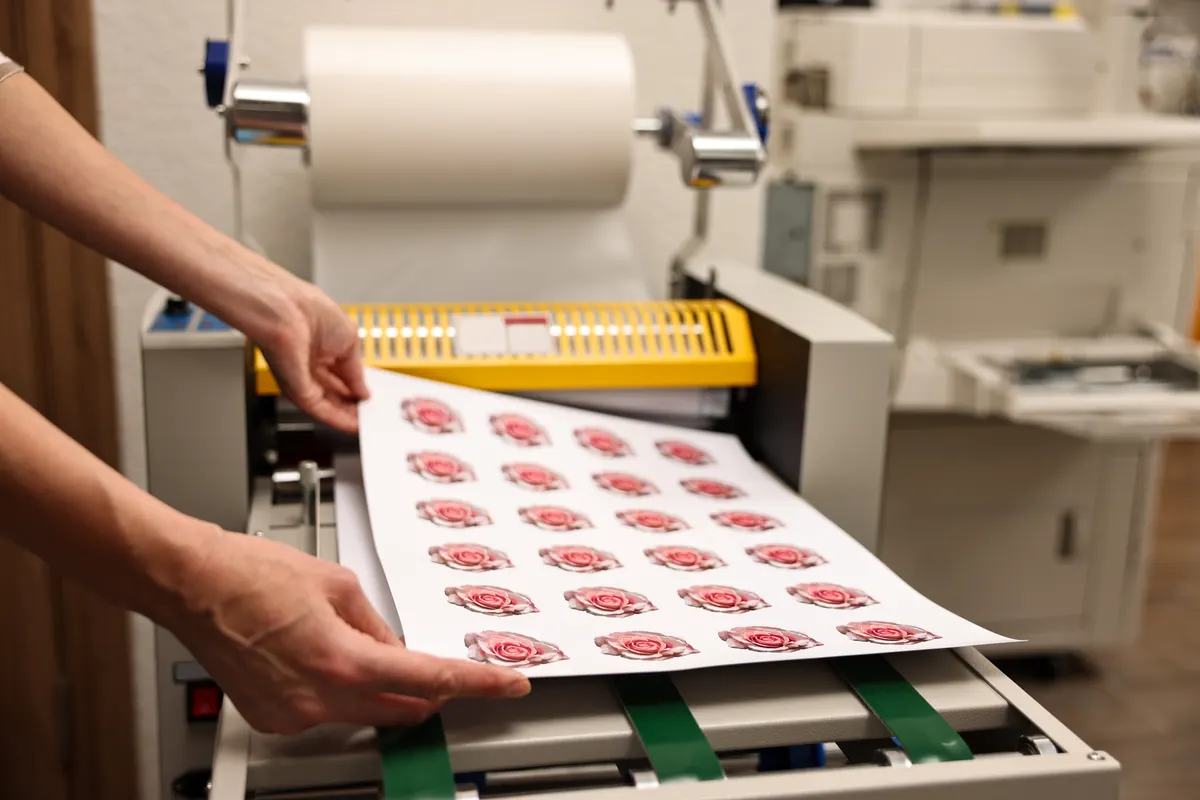
Sticker & label marketing agency: woman with printed flower stickers indoors, closeup. Printing house.

How stickers and labels are bought

Sticker and label printing is two businesses wearing one website. On one side are consumers buying a pack of die cut vinyl stickers for a laptop or a water bottle, deciding in ninety seconds on a phone, paying under twenty pounds. On the other are small brands ordering two thousand waterproof labels on a roll for candle jars, who need to know the core size, the wind direction, the material and whether the adhesive survives a fridge.

Those two customers want different pages, different ads and different emails. They also behave differently after the first order: the consumer may never return, while the brand reorders every time it runs a production batch, which makes them worth several times more over a year.

We write growth plans for sticker and label businesses that already sell online. The plan covers how to serve both audiences without confusing either, how to price and present a quantity curve that gets steep fast, how sample packs convert cautious label buyers, and what your feed and ad accounts can and cannot carry when your customers include regulated categories.

Consumer sticker buying is impulsive and design led. The customer sees a design, imagines it on a laptop lid or a bottle, and checks two things: is it waterproof, and how big is it. Size is misjudged constantly, so a sticker photographed next to a coin, a phone or a laptop corner sells better than one shown flat with a dimension label. Because the item is cheap and light, the order grows through packs and bundles rather than through upgrades.

Label buying is a specification exercise with a deadline attached. A small brand is bottling next week and needs labels that fit a curved jar, survive a bathroom shelf or a chiller, and peel off the roll into an applicator the right way round. They ask about material, laminate, adhesive strength, core size and roll direction, and they will order a sample before committing to a run of thousands.

Quantity dominates the price. The unit cost between fifty and five hundred is dramatic, and a buyer who sees that curve usually orders more than they planned. Setup and die considerations push the same way.

The deciding factor for a first label order is confidence in the material. Sending real printed samples, on the actual stocks, does more than any amount of description, and it is one of the few places where posting something free is clearly worth the cost.
Where sticker & label brands
lose revenue

The four levers, in this niche.

Visitors

Visitors: separate sticker demand from label demand

The two audiences search differently and should never share a campaign. Consumers type vinyl sticker pack, holographic laptop stickers, waterproof water bottle stickers. Brands type custom roll labels, waterproof product labels for jars, kraft label printing, BOPP labels. We build separate campaign structures, separate landing pages and separate budgets, then let the label side carry more cost per click because its customers reorder, while the sticker side is judged on immediate order value.

Conversion rate

Conversion: kill the size and material doubt

Most abandoned sticker orders come down to not picturing the size, and most abandoned label orders come down to not trusting the material. We fix the first with scale photography against everyday objects and a printable size guide. We fix the second with a sample pack that is easy to order, honest material descriptions covering waterproofing, adhesive strength and where each stock fails, and an artwork upload that shows the cut line over the design before anything is committed.

Average order

Order value: show the quantity curve

Unit price falls steeply with run length in this niche, so display it. A quantity selector that shows price per sticker at each tier moves orders up a step without a discount, because the customer does the maths and decides they may as well. On the consumer side, packs, mystery bundles and free shipping thresholds do the same job on a low value basket. Finishing options such as laminate, holographic stock and rounded corners are all decided in the same moment and belong beside the quantity choice.

Repeat purchases

Repeat purchases: follow the customer's production run

A label customer reorders when their own stock runs out, which follows their production schedule rather than a marketing calendar. Ask how many units a run covers, store it, and prompt before they run dry, with the previous artwork and specification ready to go. New flavour, new scent and seasonal variants create extra orders in between. Consumer sticker buyers repeat on new designs and collections, so a drop cadence and a collection completion prompt work better than a replenishment reminder.

What we do for
sticker & label brands

Five channels, one plan.

Google Shopping and search

Google Shopping and search ads for stickers and labels

Shopping suits the consumer side well when the title carries the design, the finish and the size, such as Holographic Die Cut Sticker Pack, 10 Designs, 7cm. Waterproof and dishwasher safe are searched terms and belong in the title where they are true. Custom label orders are harder to feed because the price moves with quantity, size and material, so submit the configurations that sell, each at the price the calculator returns, rather than one item at a starting price.

Search is where the label money is. Queries like custom roll labels for jars, waterproof labels for bath products and printed labels with my logo carry clear intent and a real budget behind them. Point them at a page with a quote or calculator and a sample pack offer, not at a general homepage. Keep sample pack terms in their own group, because that is a different, earlier moment in the same buying process.

Meta and TikTok

Meta and TikTok ads for sticker and label brands

Stickers are made for short video. Peeling from a sheet, the cut line separating, a laptop lid being decorated, a bottle going through a dishwasher and coming out intact. The waterproof test is the single most useful piece of creative a sticker brand can make, because it answers the objection and looks satisfying at the same time.

On the label side, the winning content is a small brand's product going from blank jar to finished shelf ready item. That is aspirational for exactly the audience you want, and it puts your material in the shot. Target by small business and maker behaviour rather than by broad interests, and retarget sample pack requesters with a first order prompt, since that is the natural next step. Be careful with customer categories that platform policies restrict, such as vape, cannabis or alcohol brands, since showing their finished product in your ad can pull your account into a policy you did not intend to advertise under.

Merchant Center and the feed

Merchant Center and the feed for printed labels

Stickers and labels sit in office and craft categories rather than in decor, and the useful attributes are size, material and quantity. Every quantity tier that carries a different price is its own item with its own id, joined by item_group_id, with the pack size in the title because that is how people compare. Put the material, adhesive type, laminate and whether the item is waterproof into product_detail and product_highlight.

Images must show the sticker or label itself clearly, without price badges or promotional overlays, and a photograph applied to a real jar or bottle belongs in the additional images. Two policy points matter here. Designs using copyrighted characters, logos or artwork you do not own are counterfeit goods, and enforcement is at account level. Products intended for restricted categories, such as labels sold specifically for vape or cannabis packaging, can also fall foul of policy, so keep those out of the feed even if you print them.

SEO and AI search

SEO and AI search for sticker and label printing

Label buyers ask assistants questions with concrete answers: what material for labels on bath products, will paper labels survive in a fridge, what core size do roll labels need for my applicator, what is the difference between BOPP and vinyl, how do I set up a cut line in my artwork. A printer that publishes those answers with its own stocks named is what gets quoted, and picks up buyers while they are still specifying.

Build a material guide with a page per stock explaining where it works and where it fails, an application guide by product type covering jars, bottles, candles, food and cosmetics, and an artwork guide covering bleed, cut lines and safe area. On the consumer side, collection pages by theme and by surface, such as water bottle stickers or laptop decals, deserve real copy. Keep sizes, materials and turnaround as text on the page so an assistant can read them accurately.

Email and SMS

Email and SMS for sticker and label businesses

Split the list on the first order and never merge it again. Label customers get a sample pack follow up, an artwork help sequence, and a reorder prompt timed from their own run size and interval rather than from a fixed number of weeks. Ask at the first order roughly how many units a batch covers, then use it. A quiet label customer is usually a lost one, so a check in before their expected reorder is worth more than any promotion.

Sticker customers get a drop calendar. New designs, seasonal collections and restocks of sold out sheets, sent to the people who bought that theme. Collection completion works well because sticker buying is collecting behaviour. Post purchase, an application guide covering surface prep and how to remove a sticker cleanly reduces complaints. Keep SMS for label reorder reminders where a delay would hold up a customer's own production.

First three fixes

What the plan usually starts with for sticker & label brands.

  1. Stickers photographed without a size reference

    A flat image with a dimension in millimetres underneath does not tell anyone how big the sticker really is, and undersized deliveries are the most common complaint in this category. We reshoot the range against everyday objects at a fixed distance and add a printable actual size sheet to the product page.

  2. Label specification hidden behind a quote form

    Making a small brand fill in a form to find out whether you can print on their jar loses the ones who are comparing three suppliers on a Tuesday night. We publish materials, sizes, core options and turnaround openly, put a working calculator in front of them, and keep the quote form for genuinely bespoke work.

  3. One shipping and turnaround promise for both sides of the business

    A small sticker pack and a five thousand run on a custom die do not leave the building at the same speed, and a shared estimate makes one look slow and the other look unreliable. We set turnaround by product type and show the resulting date at the point of choice.

Questions from sticker & label brands

They can share a site but not a funnel. Give each its own entry point, navigation, campaigns and email track. A consumer buying a five pound sticker pack does not need material specifications, and a brand ordering three thousand labels for a production run does not want to browse designs. Reporting should also be split, because the value of a label customer only appears once you count their reorders.

Because material is the whole decision and it cannot be judged on a screen. A buyer needs to feel whether the laminate is matt or gloss, test whether the adhesive holds on a curved bottle, and see how their colours sit on kraft. Sending real printed samples on the actual stocks converts hesitant buyers, and it also filters out enquiries that were never going to fit your capabilities.

Core diameter, roll outer diameter, how many labels per roll, and the wind direction, which decides how the label comes off the roll into an applicator. Getting the wind wrong means a run that cannot be applied. Ask for the applicator or machine at the point of order, show a simple diagram of the wind options, and confirm it on the proof.

From their production cycle, not from your calendar. At the first order ask roughly how many units a batch covers and how often they bottle, fill or pack. Then prompt shortly before that stock would run out, with the artwork and specification ready to reprint. Customers switch suppliers when they are caught short, so being early is the entire point.

The restriction follows the product shown, not your press. Advertising creative that features vape, cannabis, alcohol or supplement packaging can be judged against those categories' policies even though you are selling printing. Keep restricted end products out of ads and out of the feed, and market that side of the business through search and direct relationships instead.

Other print & personalized stores we work with

Send your sticker & label brand store.

The plan says which lever is leaking and what to fix first, for your store as it is today.

Store, name, email and phone. A person replies from a real inbox. Privacy

Get your free growth plan