Skip to content

Kids' activity marketing agency

Growth for kids' activity box subscriptions: age band pages, safety labelling, grandparent gift flows, sibling add-ons and a path out of the outgrown band.

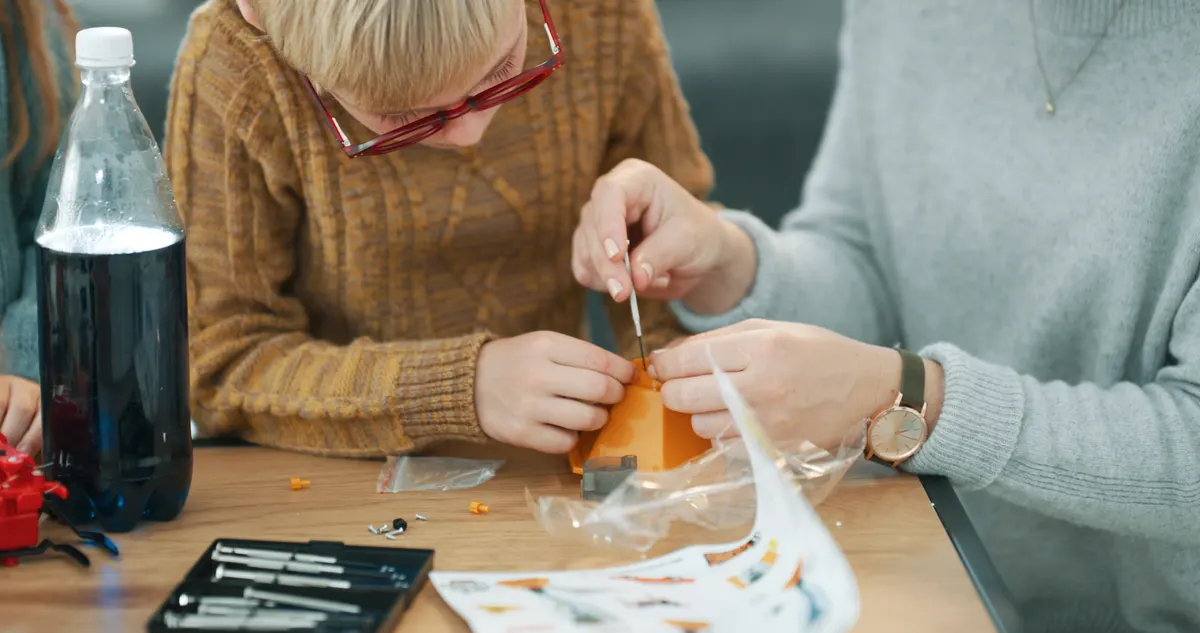
Kids' activity marketing agency: mother, son and building toys in house with tools, science project and bonding for child development. Mom, boy and kids robotics kit in living room with assistance, education and learning for growth.

The parent's real questions and the grandparent's different ones

An activity box has three people in the transaction and only one of them pays. The child does the project, the parent judges whether it bought a quiet hour, and quite often a grandparent is the one holding the card. Marketing that speaks to only one of the three leaves money and retention on the table.

The defining feature of this category is that the customer grows out of it. Age bands are usually two or three years wide, which means every subscriber has a built-in end date. A business without a next stage loses its best customers on schedule, and the ones who leave happy are the hardest to notice going.

Safety sits underneath everything. Age labelling, small parts warnings and the testing marks for your markets are the reason a cautious parent completes the order.

We work with activity box subscriptions that already ship and want acquisition measured in boxes delivered per child. The growth plan is free and written for your business. The fee after it is flat and monthly.

A parent is buying time. The questions they ask are unglamorous: how long does one project take, how much mess does it make, do I need to supply anything, and will my child do it alone or do I have to sit there. A box that needs a printer, sharp scissors and adult supervision is a very different purchase from one a six year old can open and finish at the kitchen table, and being honest about which one you are sells better than being vague.

The age band comes next. Parents overestimate and underestimate constantly, so the band needs describing by what the child can do rather than by numbers alone: reads independently, uses safety scissors, follows a three-step instruction. A box aimed too young is boring by the second month and a box aimed too old ends in frustration and a cancellation.

Grandparents buy differently. They want a gift that arrives with a card, that starts on a specific date, and that does not commit them to something they have to remember to cancel. Prepaid terms exist for them, and most sites hide them.

The drop-off has three causes. Unopened boxes stacking in a cupboard during a busy term, the child moving on to a different obsession, and the age band being outgrown. Only the third is inevitable and only if you have nothing to move them to.
Where kids' activity boxes
lose revenue

The four levers, in this niche.

Visitors

Speak to parents and to gift buyers separately

The two audiences want different pages and convert on different terms. Parents search for what the box does: science experiments for seven year olds, screen free activities, rainy day projects. Gift buyers search for gifts by age and by occasion, and they buy prepaid terms. We run them as separate campaigns with separate landing pages, weight the gift track to December, birthdays and the summer holidays, and report every source by boxes delivered per child rather than by first orders.

Conversion rate

Describe the age band by ability, not just by number

Parents cannot judge a band written as five to seven, because children of the same age differ enormously. We describe each band by what the child does in the box: cutting, reading instructions alone, following a multi-step build. Alongside it we state project time, mess level, what is supplied and what is not, and the safety marks. Those five facts remove most of the hesitation, and they are also what a cautious gift buyer needs before ordering for someone else's child.

Average order

The sibling pack and the box that holds two children

Households with two or three children are the highest-value subscribers in this category and the worst served. A sibling add-on that doubles the consumables inside one shipment, rather than a second full subscription, is cheaper for the family and more profitable per parcel for you. Beyond that, order value comes from prepaid annual terms bought at gift moments, a keepsake binder or storage box for finished projects, and one-off theme kits sold to subscribers between shipments.

Repeat purchases

Build the next stage before they age out

Every subscriber in this category has an expiry date written into the age band, so the retention work is a progression path. We map the move to the next band in advance, prompt it before the current one stops fitting, and make the switch a single confirmation rather than a cancel and a new sign-up. For the top of your range, an advanced or project-based track keeps the children who would otherwise leave for good with nothing offered.

What we do for
kids' activity boxes

Five channels, one plan.

Google Shopping and search

Single kits and gift terms in the feed, bands on search

One-off theme kits, past projects sold individually, gift terms of three, six and twelve months and any physical extras go in Shopping with fixed prices. They also serve as a low-commitment entry: a parent who buys one kit and watches their child finish it is a much warmer subscription prospect than a cold visitor. Search ads carry the subscription, split by band and by intent. The queries that produce subscribers who stay describe a purpose: science kits for eight year olds, screen free subscription for kids, craft box for a five year old, educational subscription box. Gift queries get their own campaign and page, weighted heavily to the six weeks before December and to birthday-gift phrasing all year. Audiences are built as parents and gift buyers, never as children, and campaigns are judged on boxes delivered per child rather than on sign-up cost.

Meta and TikTok

Children on camera, with the rules that come with it

The creative that works is a child concentrating and then finishing something, filmed at the pace it happened. What matters as much as the footage is the compliance around it. Ads for these products are aimed at adults: the platforms restrict advertising directed at minors and limit the targeting available for teenage users, so campaigns are built on parent audiences with age floors and never on interests that read as a child's. Filming other people's children needs written permission from the parent held on file, which is a practical requirement more brands trip over than they expect. We separate ad sets by band so a parent of a four year old never sees a project meant for a nine year old, show the project time on screen, and hold discounting for gift windows since a cut-price first box mostly attracts one-off holiday buyers.

Merchant Center and the feed

Toys, safety warnings and age in the feed

Activity kits sit under the toys and games branch of Google's taxonomy. Kits you assemble rarely have manufacturer barcodes, so identifier_exists is set to no unless you have assigned your own, and the title carries the theme, the age band and the format, for example volcano science kit for ages seven to nine. Small parts warnings and the safety marks for your markets, such as the CE and UKCA marks in Europe and the UK or CPSIA compliance in the United States, belong in the description and on the landing page, and the landing page has to match the feed exactly. Product highlights carry project time, what is included and what the household needs to supply. Custom labels separate gift terms from single kits, since those two behave differently by season and deserve different bids in December.

SEO and AI search

What parents and gift buyers ask before ordering

The questions repeat: what age is this really for, how long does one project take, do I need to provide scissors or glue or a printer, does my child need help, how messy is it, is it safe for a younger sibling in the house, what if it is too easy or too hard, can I pause over the summer, can I buy it as a gift without a subscription. We answer each in a plain sentence. Every band gets a page describing the skills involved and showing complete past projects, not just packaging. A supplies page lists exactly what households need to have. A gift page explains prepaid terms, start dates and cards. Individual project pages earn search traffic from parents looking for an activity tonight and introduce the subscription at the end. A safety page states the marks, the warnings and the recommended supervision.

Email and SMS

Two inboxes, one child

The parent gets the operational messages: what is coming next month, what to have ready, how long it will take and how to pause when term gets busy. Making the pause obvious matters, because unopened boxes in a cupboard are the guilt that turns into a cancellation. A finished-project prompt asks for a photo and feeds the best ones back into the creative, with permission recorded. The gift buyer gets a completely separate track: order confirmation with the card wording, a note when the first box ships, and a reminder before the prepaid term ends offering renewal or a handover to the parent. The most valuable flow is the one that runs before a child ages out of the band, showing the next stage with real projects from it, so the move is a decision to continue rather than a cancellation. SMS is limited to dispatch notices.

First three fixes

What the plan usually starts with for kids' activity boxes.

  1. Fix the missing next stage

    If your top age band ends with nothing after it, you lose your longest-tenure families on a predictable schedule. Build an advanced track or a project-based tier, prompt the move before the current band stops fitting, and make it one confirmation. These are the customers who already trust you and they leave without ever complaining.

  2. Fix the hidden supplies list

    A box that quietly needs a printer, PVA glue or an adult with a craft knife produces an abandoned project and a bad review. Put the household supplies list on the plan page and in every pre-shipment email, and design the flagship projects to need nothing beyond what is in the box.

  3. Fix the buried gift option

    Grandparents are a large share of this market and most of them will not start a rolling subscription for someone else's child. Give prepaid terms their own page, with a chosen start date, a printed card, no automatic renewal and a clear line about who receives which emails. Then run it hard from October.

Questions from kids' activity boxes

Have somewhere for them to go. Build the next band or an advanced project track, prompt the move a couple of months before the current band stops fitting, and make it a single confirmation rather than a cancellation and a fresh sign-up. Families who have been with you for years rarely go looking for the option themselves.

No, and you should not try. The platforms restrict advertising directed at minors and limit targeting for teenage users, so campaigns are built on parent and gift-buyer audiences with age floors. The child is the user, the adult is the buyer, and the creative should show the child while speaking to the adult.

The toys and games category, the age band in the title, identifier_exists set to no for kits you assemble without your own barcodes, and the small parts warnings and safety marks for your markets in the description and on the matching landing page. Project time and required household supplies work well in product highlights.

Give them prepaid terms on their own page, with a start date they choose, a card, no rolling renewal and a clear explanation of who gets shipping emails. Then run a separate reminder before the term ends, offering either a renewal or a handover to the child's parent, which is often where the long subscription actually begins.

Make pausing easy and mention it before the busy periods rather than after. A family that pauses for exam term and returns is worth more than one that feels guilty and cancels. Sending the project time in the pre-shipment note also helps parents plan a box into a weekend instead of finding it later.

Yes. A one-off kit is a low-commitment way in for a cautious parent or a gift buyer who does not want a recurring charge, and it is the part of the catalogue that can run in Shopping. Follow the delivery with a message asking how the project went, timed a week later.

Other subscription boxes stores we work with

Send your kids' activity boxe store.

The plan says which lever is leaking and what to fix first, for your store as it is today.

Store, name, email and phone. A person replies from a real inbox. Privacy

Get your free growth plan