Skip to content

Print-on-demand apparel marketing agency

Marketing for print-on-demand apparel stores: thin-margin ad maths, mockup and feed rules, IP rejections, blank sizing and repeat buying within a niche.

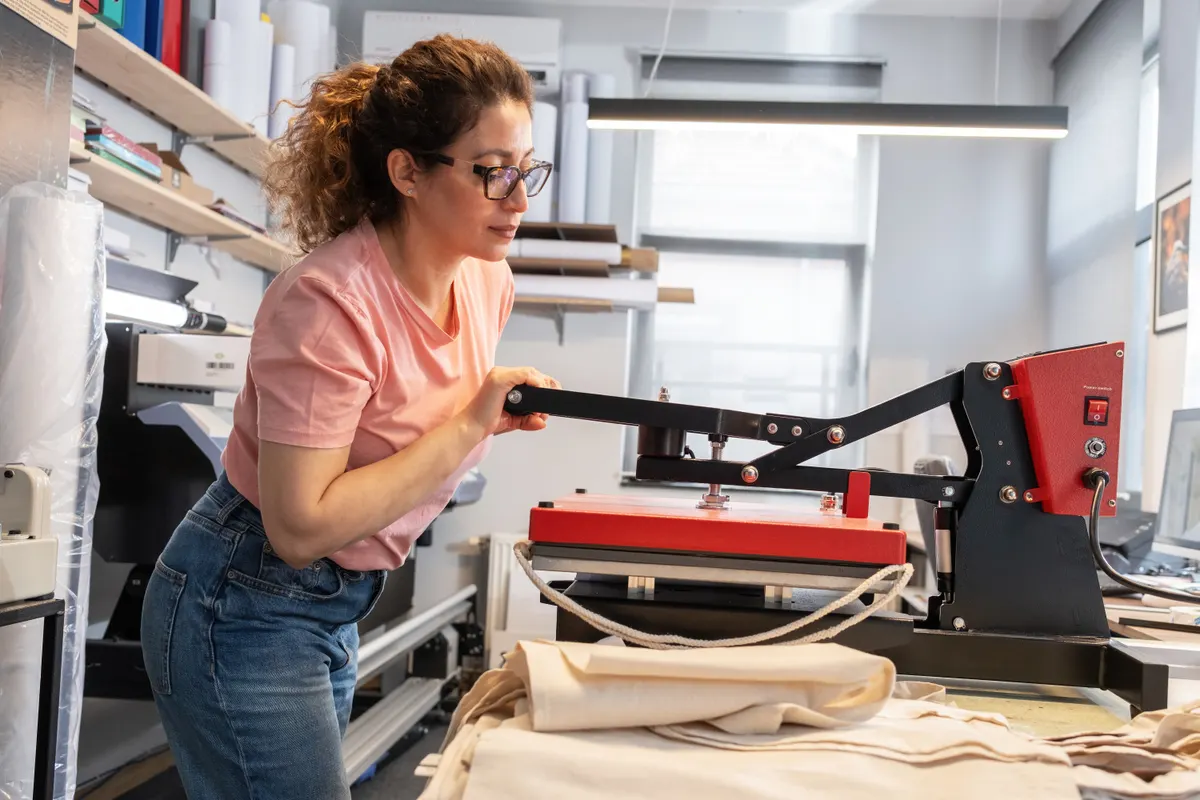
Print-on-demand apparel marketing agency: a print shop worker is operating a heat press machine for textile printing, carefully aligning the material before pressing.

Who buys print-on-demand apparel and why

Print-on-demand apparel has no stock, no minimums and no margin to waste. Every tee and hoodie is printed after the order, on a blank you did not make, by a supplier whose production time and quality you do not control, and the difference between the blank cost plus printing and the price you can charge is what every click has to be bought from. A store that markets like a fashion brand with warehouse stock runs out of money before it runs out of designs.

We write growth plans for print-on-demand apparel stores that already sell online. The plan sets the ad maths from your real margin per garment, picks the designs and audiences that can pay for a click, builds a feed that passes Merchant Center with mockups and many variants, keeps design and ad creative clear of the trademark and copyright rejections that shut down accounts, and builds repeat buying inside the niche community each store serves.

It also handles the returns reality: printed-to-order garments are usually not returnable for change of mind, and the page has to say so.

The print-on-demand customer is buying the design, not the garment. She is a nurse who wants a tee that says something only nurses understand, a dog owner who wants her breed on a hoodie, a fan of a hobby, a member of a group, a person buying a gift for someone with an identity the design speaks to. The niche is the product, and the sharper the niche, the more the design is worth and the cheaper the audience is to find.

Garment expectations are set by the blank. Shoppers want to know the fabric weight, whether the tee is unisex or fitted, and how the blank's size chart runs, because the same design on two different blanks fits differently. They ask whether the print will crack or fade, and reviews with wash photos answer that better than any description.

Production time is part of the offer. A printed-to-order hoodie takes days to make before it ships, and a buyer who expected next-day delivery leaves a bad review or a chargeback. Gift buyers, who dominate November and December, need the cut-off date for delivery before Christmas stated on the product page, not discovered at checkout.

Returns are limited. Most print-on-demand stores accept returns only for defects or wrong items, since a custom print cannot be resold, and the shopper needs to know that before ordering and needs a size chart good enough to make the risk acceptable. Repeat buying happens when a store keeps releasing designs for the same identity, so the customer comes back for the next one rather than for the same garment.
Where print-on-demand apparel stores
lose revenue

The four levers, in this niche.

Visitors

Visitors: find the niche, not the garment

Nobody searches for a printed tee; they search for the identity on it. A store that ranks and bids for the niche terms, such as funny nurse shirts, border collie hoodie or crochet lover gifts, finds buyers at a cost the margin can carry; a store bidding on t-shirt terms competes with the whole apparel industry. Social prospecting is where print-on-demand grows, with creative that speaks the niche's own language to interest and community audiences, and organic content inside those communities. We map your designs to niches, cut the ones without an audience, and put spend where the identity is strongest.

Conversion rate

Conversion: real garment facts on a mockup product page

The product page needs the blank's fabric weight, composition and fit, the manufacturer's size chart with garment measurements, the print method and how it wears, the production time plus shipping shown as a delivery date, the limited returns policy stated plainly, and at least one photo or customer image of the real printed garment beside the mockup. Gift cut-off dates appear from November. Reviews are asked for size bought and how the print has washed. We rebuild the template so mockups are supported by facts and the delivery promise is honest, which lowers disputes as well as raising conversion.

Average order

Order value: the same design across garments, and the set for the group

A customer who loves a design will often take it on a second garment or in a second colour, and a group buyer will take several sizes of one design for a team, a class or a family. Bundles of two tees at a small saving, a hoodie-and-tee pair of the same design, a size-run option for groups, and a free-shipping threshold set above one garment all lift an order that has to pay for its own click. We use order data to find which designs are bought in multiples and build the pairing modules from that.

Repeat purchases

Repeat purchases: the next design for the same identity

Print-on-demand customers do not replace a tee; they collect the next one. Flows record the niche and the garment size from the first order and send each new design in that niche to those customers first, deep-linked to their size. Seasonal designs for the niche, such as a holiday version, create a calendar. Gift buyers get a reminder before the next occasion. Review and wash-photo requests build the proof that the print lasts, which is what the next buyer in the niche needs to see. Win-back is a new design, not a discount.

What we do for
print-on-demand apparel stores

Five channels, one plan.

Google Shopping and search

Google Shopping and search ads for print-on-demand apparel

Shopping is a secondary channel for print-on-demand, useful for designs that match a searched phrase and expensive for everything else. Titles carry the niche and the garment: Funny Nurse T-Shirt, Unisex Heavy Cotton, Black, or Border Collie Mum Hoodie, Unisex, Heather Grey, with the design's own phrase where it is what people search. Campaigns are split by niche so each has a budget the margin can carry, and designs whose clicks cost more than the profit per garment are cut rather than optimised.

Search ads take gift and occasion queries such as gifts for nurses or dog dad shirt, landing on niche collection pages rather than single products. Google's trademark policy applies to ad text and to landing pages: a design that uses a protected name, logo or character can get the ad disapproved and the account suspended, so the campaign is built only on designs that are clear. Delivery times in ads must match the production-plus-shipping reality, and gift campaigns state the pre-Christmas cut-off.

Meta and TikTok

Meta and TikTok ads for print-on-demand apparel

Social is the main engine for print-on-demand because the niche is an audience, not a search term. Creative speaks in the identity's own voice: the joke only a teacher gets, the breed-specific detail only that owner notices, the hobby's in-language. Real photos and videos of the printed garment outperform mockups, and creator content from inside the community, with the person stating the size worn and showing the print after washing, does the work of a product page. Audiences are built from interests and from your own buyers per niche, with lookalikes per niche rather than one for the store.

Meta's intellectual property rules are enforced on ad creative, and a design that uses a trademarked phrase, a copyrighted character or a brand's look will be rejected and can lead to account restrictions, so every design goes through a clearance check before it is advertised. Delivery claims in ads must match production time. Comment sections fill with size and quality questions and with requests for the design on a different garment, and both become the next ad and the next product.

Merchant Center and the feed

Merchant Center and the feed for print-on-demand apparel

A print-on-demand feed has more variants than most stores and less real photography, and Merchant Center has views on both. Mockups are accepted as product images when they show the product accurately, with no overlaid text or badges and no watermark, but generated images that misrepresent the garment or the print size cause disapprovals, and a real photo of the printed garment as an additional image helps. Each design on each blank is a product with its sizes and colours sharing an item_group_id, so the feed grows fast; keep the design and blank relationship clean rather than submitting every combination you could print.

Apparel attributes are required: age_group, gender, color and size on every variant, with size taken from the blank's chart and size_system declared. Most print-on-demand garments have no GTIN, so identifier_exists is set to false rather than a supplier barcode being reused across designs. Delivery time must reflect production plus shipping in the shipping settings, and Google's policies on trademark and copyright apply to listings, so designs with protected content are kept out of the feed entirely. Availability is normally in_stock, but the blank's stock at the supplier can change, and the feed should follow it.

SEO and AI search

SEO and AI search for print-on-demand apparel

Shoppers ask search engines and assistants for gift ideas for a person with a particular job, hobby, pet or identity, whether print-on-demand shirts are good quality, how the print holds up after washing, and which blank fits how. A store that answers those questions inside its own niche becomes the source assistants cite. We build niche hubs, one per identity the store serves, with real copy and the designs grouped by occasion, plus a quality page that explains the print method, the blanks, the sizing and the washing with photographs of real garments over time, each page opening with the direct answer.

Product pages avoid the thin-content trap: instead of hundreds of near-identical pages with a mockup and a sentence, each carries the design's story, the garment facts and the delivery promise as text, and weak designs are removed rather than left to dilute the site. Gift guides per niche are updated each year. Structured data on products and FAQs lets assistants answer the quality and sizing questions with your information, and designs are kept clear of protected names so the pages do not attract takedowns.

Email and SMS

Email and SMS for print-on-demand apparel

The programme is organised by niche. The first order records the identity the design belongs to and the garment size, and from then on each new design in that niche is sent to those customers first, deep-linked to their size. Seasonal versions of niche designs create a calendar, with the holiday versions and the gift cut-off dates going out early. Gift buyers get their own track with a reminder before the next occasion and a note of what they bought last time.

Post-purchase flows explain production time and shipping as a delivery date, send wash instructions that keep the print looking new, and ask for a review with the size bought and a photo of the garment after washing, which is the proof the next buyer needs. Requests for the design on another garment are captured and answered. Win-back is a new design for the same identity rather than a discount, since the margin cannot carry discounts. SMS is limited to dispatch notices and the last order date before Christmas.

First three fixes

What the plan usually starts with for print-on-demand apparel stores.

  1. Designs that use protected names and characters

    A share of the catalogue uses trademarked phrases, sports teams, characters or brand looks, and ads and listings keep getting disapproved, with the account one strike from suspension. We audit every design, remove the protected ones from the feed and the ads, and set a clearance check before any new design is advertised.

  2. Delivery that reads like a warehouse store

    The product page and the ads promise fast delivery, the supplier takes days to print, and gift buyers file chargebacks. We show production plus shipping as a delivery date on the product page, in the feed's shipping settings and in the order emails, and state the pre-Christmas cut-off from November.

  3. One ad budget across every niche

    All designs share one campaign, so the popular niche pays for the clicks the weak ones waste and nothing shows a profit. We split campaigns by niche with a budget set from the margin per garment, cut designs whose clicks cost more than they earn, and build lookalikes per niche from that niche's buyers.

Questions from print-on-demand apparel stores

Yes, when they show the product accurately, without overlaid text, badges or watermarks, and without misrepresenting the print size or placement. A photo of the real printed garment as an additional image helps approval and conversion. Images that are clearly generated and misleading about the product cause disapprovals.

Most often because a design uses a trademarked phrase, a copyrighted character, a sports team or a brand's look, which Meta and Google enforce against in ads and landing pages. Repeated rejections can restrict the ad account. Audit every design before it is advertised and keep protected content out of the feed and the campaigns.

From the margin, per niche. Work out the profit per garment after the blank, printing and shipping, split campaigns by niche so each has its own budget, and cut designs whose cost per sale is above that margin rather than trying to optimise them. Bundles and second-garment offers raise what each order can afford to pay for a click.

State plainly that custom-printed items are returnable for defects or wrong items only, next to the size selector and in the order confirmation, and give the blank's garment measurements so the shopper can choose a size with confidence. A clear policy up front prevents disputes; a policy hidden in the terms page creates them.

By releasing new designs for the same identity and telling past buyers first. Record the niche and the size at the first order, send each new design in that niche to those customers with their size pre-selected, add seasonal versions, and offer the same design on another garment. Customers collect the next design; they do not replace the last one.

Other apparel & fashion stores we work with

Send your print-on-demand apparel store store.

The plan says which lever is leaking and what to fix first, for your store as it is today.

Store, name, email and phone. A person replies from a real inbox. Privacy

Get your free growth plan