Skip to content

Craft spirit marketing agency

Growth plans for distilleries and craft spirit brands: age-gated ads, retail handoff tracking, cocktail demand, bottle engraving and single barrel releases.

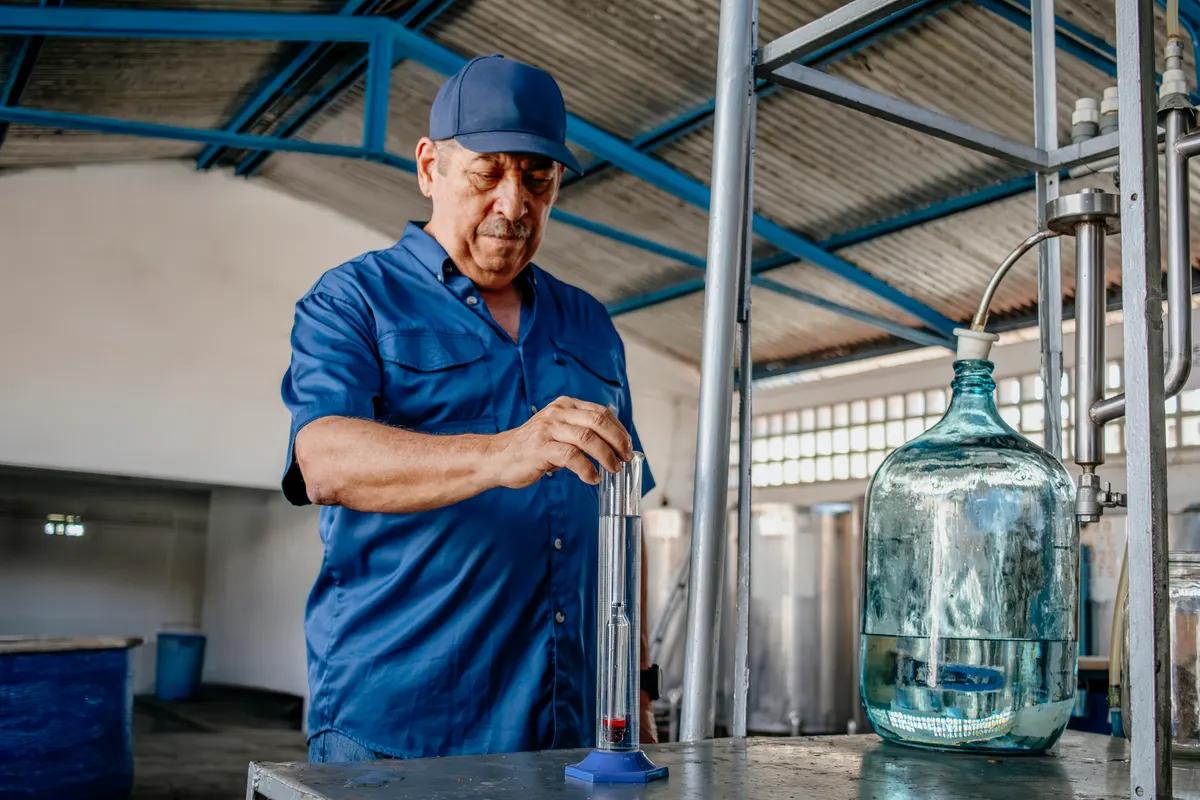
Craft spirit marketing agency: distillery worker testing alcohol levels with a glass hydrometer tube.

People buy a spirit for a drink they already have in mind

A craft spirit brand usually has a marketing problem and a plumbing problem at the same time. The marketing problem is that half the paid channels either restrict spirits or refuse them outright. The plumbing problem is that in many markets a distillery cannot sell a bottle directly to the drinker at all, so the checkout on your own site hands the customer to a licensed retailer or a marketplace, and the moment it does, most brands stop being able to see what happened.

We work with distilleries and spirit brands that already sell online, whether that is direct shipping where it is permitted, a retail handoff, a distillery shop, or merchandise and glassware alongside the bottles. The plan covers visitors, conversion, order value and repeat purchases, and it starts by working out which of those you can actually measure today, because in this category that is rarely all four.

Almost nobody sets out to buy gin in the abstract. They are making a negroni, replacing a bottle that ran out, choosing a present for someone who likes rye, or trying something after tasting it at a bar. Those four intentions want four different pages, and a site that offers only a range grid with tasting notes serves none of them well. The pages that convert lead with the drink: what this bottle is for, which cocktails it was built around, what it does that the supermarket equivalent does not.

The second thing a buyer weighs is proof of craft. Mash bill, still type, barrel programme, cask finish, batch or barrel number, bottling strength. This audience reads that detail closely and treats vagueness as a sign of contract distilling, so the specifics that a maker considers too technical for the website are often the exact reason someone chooses the bottle.

Third is the gift question. A large share of spirit orders are presents, which means engraving, a tube or box, a message card and an arrival date matter as much as the liquid, and the buyer often knows very little about spirits and needs guiding to a safe choice.

Where craft spirit brands
lose revenue

The four levers, in this niche.

Visitors

Cocktail and category searches ahead of brand searches

The demand is in drinks and categories rather than in your name: best rye for a manhattan, london dry gin, cask strength bourbon, what to mix with mezcal. Cocktail searches vastly outnumber brand searches and they run all year, so they are the reliable way to be found. Where paid channels restrict spirits, that traffic has to be earned through content and organic reach, which makes the recipe and technique library a real acquisition asset rather than a nice extra.

Conversion rate

Say clearly how someone can actually buy the bottle

The most damaging page on many distillery sites is the one that leaves the buying route ambiguous. State plainly where you ship direct, where the order passes to a licensed retail partner, and where the only route is a shop or bar locator, and do it before the shopper has chosen a bottle. Keep the age gate light, and pass product and quantity through to the partner checkout so the handoff does not dump the customer on a homepage.

Average order

Bottles plus the things that go around them

A spirits order grows through the accessories the drink needs and the gift wrapping the occasion needs: glassware, a bar spoon, bitters, mixers, a presentation box, engraving on the bottle. Engraving in particular changes the economics, since it raises the price, removes the comparison with the same bottle elsewhere and rules out a return. Two bottle bundles built around a cocktail, one spirit and one modifier, also sell better than a discount on a single bottle.

Repeat purchases

Releases and allocations rather than replenishment

A bottle lasts months, so repeat buying is not driven by running out. It is driven by scarcity and novelty: a single barrel selection, a cask finish, a seasonal release, a bottling done for one shop. Brands that publish a release calendar and give their list first refusal have a reason to write every few weeks that is not a discount. Where you cannot sell direct, the same announcements drive people into the retailers who stock you.

What we do for
craft spirit brands

Five channels, one plan.

Google Shopping and search

Paid search under alcohol rules, and what to promote instead

Search advertising for spirits is possible in a number of markets but it is the most tightly governed part of alcohol advertising. Availability depends on the country, age targeting is mandatory, some formats are unavailable for hard alcohol, and certain markets require a certification step before anything runs. The plan starts with that map rather than with keywords.

Where spirits ads are permitted, brand and category terms carry the work, and the landing page has to resolve the buying route immediately, since a click that ends at a locator with no stockist nearby is money spent on frustration.

Where they are not, the account still has a job. Glassware, merchandise, distillery tours, tasting experiences and gift vouchers are not spirits and can usually be advertised normally, and each one puts your brand in front of exactly the right person. A tour booking is also one of the strongest first purchases in this category, because it produces an email address and a visit.

Meta and TikTok

Meta with age restrictions, TikTok without paid support

Meta accepts alcohol advertising in many markets provided the campaign carries the local minimum age and the targeting rules are respected, and it is the main paid social route for spirits. TikTok does not accept alcohol advertising at all, so a distillery there is working organically and should treat the platform as a place to build recognition rather than a place to buy sales.

The creative that performs is the pour and the process. A cocktail built in real time in one shot, a still being charged, a barrel dumped, a hydrometer reading taken. Bartenders make excellent partners because they demonstrate the bottle rather than describe it.

Audiences come from the people you already know: past buyers, tour visitors, tasting attendees, cocktail recipe readers and anyone who used a stockist locator. That last group is valuable and usually ignored, since a person who searched for where to buy your bottle has stated their intent more clearly than any interest category could.

Merchant Center and the feed

Feed setup where spirits are listed, and what else can be listed

Merchant Center handles alcohol under a specific policy, with eligibility depending on the country and on the seller meeting local requirements, so this is a compliance task before it is a feed task. Where listings are allowed, titles need the category, the style, the bottling strength and the bottle size, because a shopper comparing tiles is comparing proof and volume as much as price.

Batch and barrel bottlings are their own products rather than variants, and they need their own identifiers and honest availability, since a single barrel that has sold out is a listing that should disappear the same day.

Where spirits cannot be listed, the same account can still carry glassware, gift sets without alcohol, merchandise and experiences, all of which pass review normally and all of which bring the right visitor to the site. Keep those items in clearly separated feeds so an alcohol policy issue on one part of the catalogue never puts the rest of it at risk.

SEO and AI search

Cocktail content and honest answers about how to buy

Search and AI assistants are where spirits marketing is least restricted, which makes organic content the most productive channel in this niche. People ask which whiskey to use in a particular cocktail, what the difference between two styles is, whether a bottle is worth its price, and where they can buy it locally. Each of those is a page a distillery can own with more authority than a general drinks site.

The cocktail library is the core. Every recipe should name your bottle in the specification, give real measurements, and link both to the direct purchase route and to the stockist finder, so a reader who arrived for a recipe leaves with a way to buy.

Product pages carry the production detail in text: the mash bill or botanicals, the still, the cask type and age where you can state it, the bottling strength and whether it is chill filtered. Those specifics are what assistants quote when someone asks for a spirit with particular characteristics, and vague marketing language gives them nothing to work with.

Email and SMS

Releases, allocations and the visitor list

Email is the one channel in this category with no advertising policy standing between you and the drinker, so it deserves more investment than it usually gets. The list is built at the distillery door, at tastings and festivals, from cocktail content, and from anyone who used the stockist locator.

The programme runs on releases. A single barrel, a cask finish or a seasonal bottling is announced to the list first, with the number of bottles stated honestly and a clear window to claim one. Where you can ship direct, that is a sale. Where you cannot, the same message tells people which retailers received stock, which is the closest thing to demand generation a brand under three tier distribution can run.

Between releases, the useful sends are drink led. A cocktail for the season, a technique, a bartender collaboration. Gift season gets its own track for engraving lead times and delivery cut-offs, and tour and tasting bookings are followed up with a note that turns a visit into a first order.

First three fixes

What the plan usually starts with for craft spirit brands.

  1. Make the buying route explicit on every product page

    Say where you ship direct, where the order goes to a licensed retail partner and where only a stockist locator applies, and carry the chosen bottle through to the partner checkout instead of dropping the shopper on a homepage.

  2. Build the cocktail library as the acquisition channel

    With paid channels restricted, recipes and technique pages that specify your bottle by name are how new drinkers find you, and they are what AI assistants quote when someone asks what to use in a drink.

  3. Advertise the things that are not alcohol

    Glassware, gift sets, merchandise, tours and tastings can usually run in channels where spirits cannot, and a tour booking produces an email address, a visit and a first bottle.

Questions from craft spirit brands

Yes, but the goal changes. You are building demand that gets fulfilled by a retail partner or a shop, so the measures that matter are locator use, partner referrals, list growth and release sell-through rather than site revenue alone. Tag every handoff link so you can at least see which campaigns produce clicks to a stockist.

It depends on your market. Meta accepts alcohol in many countries with age restrictions applied, search advertising varies by country and may need a certification step, and TikTok does not accept alcohol advertising anywhere. Confirm the rules for each market before planning budget, since a structure that ignores them simply gets disapproved.

Guide the choice rather than listing the range. Ask what the recipient already drinks, offer engraving and a presentation box, state the lead time engraving adds and the delivery cut-off, and make the gift page separate from the enthusiast pages. Gift buyers rarely know the category and will leave a page that assumes they do.

Announce them to your email list first, state how many bottles exist, and set a clear claim window. Remove the listing the moment it sells out. Scarcity is the repeat purchase mechanism in spirits, and it only works if the numbers you publish are true and the page reflects reality.

Rarely as a bottle-a-month plan, because a bottle lasts too long and shipping rules complicate it. What works better is a release club: members get first access to limited bottlings and pay only when they claim one, which fits how enthusiasts actually buy and does not send liquid nobody asked for.

Other food & beverage stores we work with

Send your craft spirit brand store.

The plan says which lever is leaking and what to fix first, for your store as it is today.

Store, name, email and phone. A person replies from a real inbox. Privacy

Get your free growth plan