Skip to content

Orthopedic & comfort shoe marketing agency

Growth plans for orthopedic and comfort shoe stores: width fittings, removable footbeds, health-claim ad rules and the insole reorder.

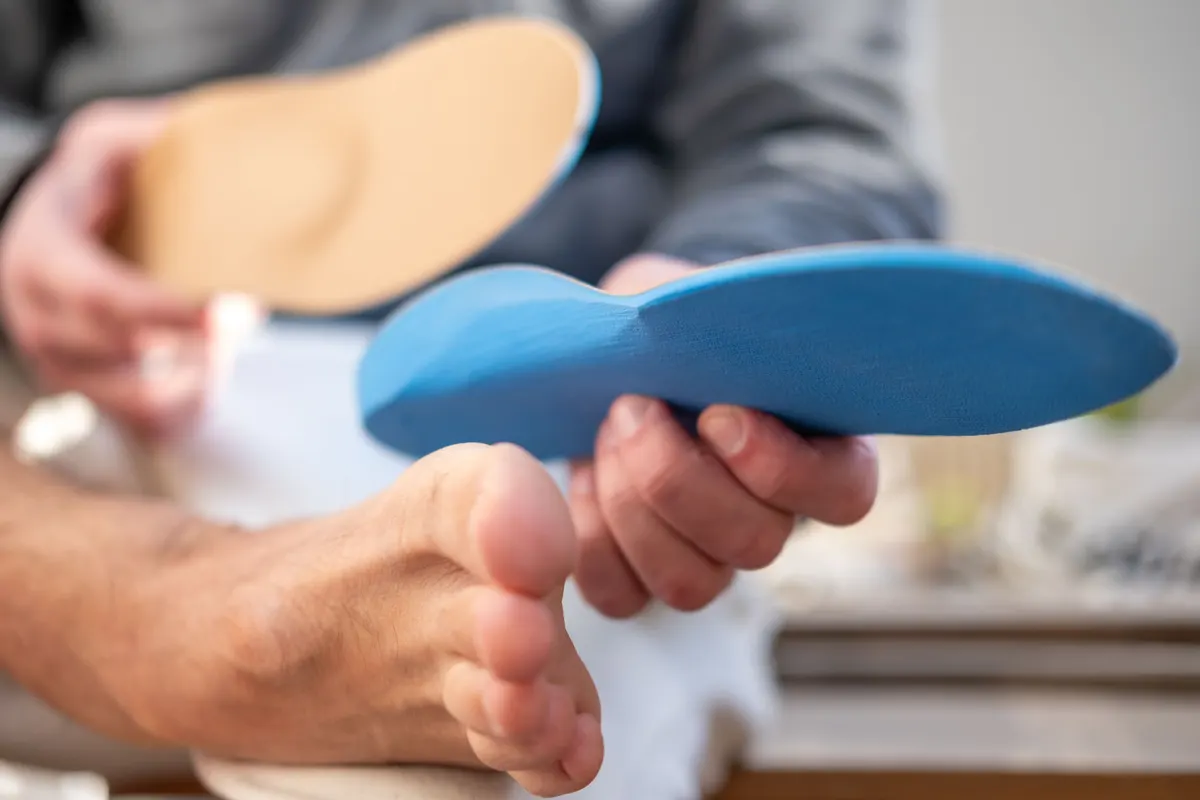
Orthopedic & comfort shoe marketing agency: man trying orthopedic shoe insoles on bare foot, fitting medical arch support insert, Podiatry and foot health prevention, foot care and podiatry concept, choosing comfortable support for walking.

How a comfort shoe shopper decides

Comfort shoe shoppers arrive with a problem and a question, and the store that answers the question in plain words gets the order. Someone searching for a shoe with a removable footbed is holding a custom orthotic. Someone searching for extra depth has been told their current shoes are too shallow. Someone searching by width fitting has already been sent home from a shop that stocks standard only.

We work with orthopedic and comfort shoe stores that already sell online: extra-depth and diabetic footwear retailers, comfort brands built around a removable footbed, stores that carry several widths across every size. The plan is built around three things this category cannot avoid. Fit is measured in widths as well as lengths. Advertising sits under health-claim and personalised advertising rules that most footwear stores never have to read. And the customer comes back for insoles, socks and a second pair long before the shoes themselves wear out.

This shopper is rarely browsing. They have been standing all day, or recovering from something, or carrying an orthotic they were fitted with and cannot get into a normal shoe. They are looking for permission to trust the purchase, and they get it from specifics.

The first specific is the footbed. Does it come out, and how deep is the shoe underneath it. A shopper with a prescribed orthotic needs the volume, not just the length, and a page that says the footbed is removable without saying what is left when it is out has not answered the question.

The second is width. This category sells in fittings, and a store that carries several of them has an advantage worth stating loudly on every page and in every ad. A shopper who wears a wide fitting has been disappointed enough times to search on width before style.

The third is closure. Adjustable straps, laces that can be swapped for elastic, a wide throat opening. Feet swell through the day and swell more with certain conditions, and adjustability is the feature that decides whether the shoe still fits at five in the afternoon.

The fourth is what the shoe looks like. Comfort shoppers are tired of being sold shoes that announce a problem. Photograph them as shoes, worn with normal clothes, on a person of the age that actually buys them.
Where orthopedic & comfort shoe stores
lose revenue

The four levers, in this niche.

Visitors

Search by fitting, not by style

The searches that convert in this category name a problem or a fitting: removable footbed, extra depth, wide fitting shoes for swollen feet, shoes that fit an orthotic. Those terms are cheaper than fashion footwear terms and they bring people who buy on the first visit. We build search and Shopping around the fitting and feature vocabulary first, then use style terms as a second tier once the intent terms are saturated.

Conversion rate

Depth, width and closure on the page

Conversion here comes from removing doubt. Every product page states whether the footbed lifts out, how much depth is left underneath, which fittings the style is made in, and how the closure adjusts. Add a foot measuring guide that covers width as well as length, since most shoppers have never measured a width at home. A returns note that says exchanges between fittings are simple turns a nervous first order into a placed one.

Average order

Insoles, socks and the second pair

The natural additions in this category are genuinely useful, which makes them easy to sell. Replacement footbeds, non-binding socks, a shoe horn with a long handle for people who cannot bend easily, and a spray for leather uppers. The largest single lift is the second pair, because rotating two pairs is standard advice for anyone on their feet all day, and a two-pair offer at checkout is often taken.

Repeat purchases

The footbed wears out before the shoe

Comfort shoes are bought to last, but the footbed inside them compresses long before the upper gives up. That is the reorder. A flow timed from the purchase date, offering the exact replacement footbed for the model they own, brings the customer back without any discount. Beyond that, this is a loyal buyer who will take the same last in a second colour and a sandal or slipper on the same fitting.

What we do for
orthopedic & comfort shoe stores

Five channels, one plan.

Google Shopping and search

Shopping campaigns split by fitting and by feature

Shopping works here when the campaign structure matches the way people search. We separate feature-led products, meaning styles with a removable footbed or extra depth, from general comfort styles, because the feature searches carry higher intent and deserve their own budget and target.

Wide and extra-wide inventory gets its own campaign as well. If you stock fittings that most stores do not, that inventory should never share a budget with standard widths, where you are one of many sellers.

Search campaigns cover the practical phrases: shoes for swollen feet, shoes that fit orthotics, extra depth walking shoes. Keep condition names out of ad copy even where the search term contains one, because Google restricts advertising that implies knowledge of a user's health status. Negatives should remove prescription, insurance and clinic searches unless you actually dispense, and remove repair and orthotic-only searches from shoe campaigns.

Meta and TikTok

Meta and TikTok inside the health-claim rules

Social is where this category gets accounts restricted, so the creative brief starts with the policy. Meta's personalised advertising rules do not allow copy that implies you know something about a person's health, so an ad that opens by naming a condition and asking whether the viewer has it is the wrong opening even when the product is right.

What works instead is describing the shoe and the situation. A day on your feet, a shoe that takes your own insole, a fitting that comes in four widths. Show the footbed lifting out in the first seconds of the video, because that single motion answers the question the shopper came with.

Casting matters more here than in any other footwear niche. Use models of the age that buys, in ordinary clothes, walking. Customer content is powerful and should be filmed the same way, describing the fit rather than the diagnosis. Catalogue ads carry the range and should be filtered so that wide fittings show to people who browsed wide fittings.

Merchant Center and the feed

Widths, footbed details and health rules in the feed

Merchant Center requires colour, size, gender and age_group for footwear in the markets that matter for this category, and the size attribute is where widths live. Google has no separate width field, so the fitting belongs inside the size value, written consistently across every variant, for example the numeric size followed by the fitting code. Mixing formats across an item group is what causes variants to collapse or disappear.

Set size_system to match the sizes you actually submit, and use size_type only where it applies to the garment sense of the word rather than inventing a value for width.

The removable footbed, the depth and the closure type go into product_detail as named attribute and value pairs, which is the only structured place they fit. Product_highlight carries the same points in plain sentences for the listing.

Keep condition and treatment language out of titles and descriptions. Shopping ads fall under the healthcare policies, and a title that positions a shoe as treating something can take down the whole feed rather than one item.

SEO and AI search

Fitting pages and the questions asked of AI assistants

The lasting organic asset in this category is a page per fitting and per feature, not per season. A page for shoes with removable footbeds, one for extra-depth styles, one for each width you stock, each listing the products that qualify and explaining who the fitting is for. These rank for years because the searches never go out of season.

A measuring guide that covers width earns links and answers a question almost nobody solves well: how to measure your own foot width at home with a piece of paper and a tape measure.

Shoppers ask AI assistants things like whether a shoe will fit a custom orthotic, which of your styles come in a wide fitting, and whether the insole can be replaced later. Assistants quote pages that answer in the first sentence, so each product page should carry a short, direct fit statement rather than a paragraph of marketing. Mark up the variants with size and availability so the fitting grid can appear in search results.

Email and SMS

Fit follow-up, footbed reorders and the second pair

Email in this category earns its place because the products genuinely need follow-up. The first message after delivery asks one question: did the fitting work. That single question catches the exchange before it becomes a return and gives you width data on that customer forever.

The reorder flow is built on the footbed. Timed from purchase, it offers the replacement insole for the exact model, with a short note about why compressed cushioning is worth replacing. It needs no discount because the customer already knows how the shoe felt when it was new.

A second flow covers the rotation argument, offering a second pair in the same last and fitting, which is an easier sale than a new style. Segment the list by fitting and never send a standard-width launch to a customer who bought extra wide. SMS is best kept for restock alerts, since wide fittings sell out in the middle sizes first and those customers wait months rather than switch.

First three fixes

What the plan usually starts with for orthopedic & comfort shoe stores.

  1. Put the fitting in the size attribute the same way every time

    Inconsistent width formats across variants break item groups and hide the stock a customer is searching for. One format, applied across the whole feed, with the same wording on the size selector so the page and the listing agree.

  2. Rewrite ads that name a condition

    Copy that implies you know a shopper's health status breaches personalised advertising rules on the major platforms and puts the account at risk. The same product sells on depth, width and adjustability without the diagnosis.

  3. Launch the replacement footbed flow

    Most stores in this category sell the shoe once and never mention the insole again. A dated flow offering the exact replacement footbed brings back a customer who is still wearing the shoe and still likes it.

Questions from orthopedic & comfort shoe stores

You can describe what the shoe does. You cannot write copy that implies you know the viewer has a condition, which is where personalised advertising rules bite on the main ad platforms. Say the footbed lifts out, the shoe comes in extra depth and four fittings, and let the shopper make the connection. Keep condition language out of product titles and feed data entirely, since a policy problem there affects the whole feed.

As a separate selector from length, with the fittings you stock shown as available or out of stock rather than hidden. A shopper who wears a wide fitting wants to see immediately whether you carry it. Pair the selector with a measuring guide that explains how to measure width at home, because almost nobody knows their fitting without being measured in a shop.

Show it rather than claim it. A short video of the footbed lifting out and an orthotic dropping in, plus a sentence stating the depth available underneath, does more than any description. Add whether the shoe still fastens correctly with a thicker orthotic in place, because that is the failure people have had before and the reason they are asking.

Yes. The footbed compresses long before the upper wears out, which gives you a reason to contact a happy customer at a natural moment rather than an invented one. Stock the exact footbed for each model, list it as its own product so it can be searched and fed, and reference it in the post-purchase flow.

It costs sales. Comfort shoppers are choosing between a shoe that solves the fit problem and one that does not embarrass them, and most stores only show the first. Photograph the shoes worn, with normal clothing, on people the age of your actual customers, and keep the technical shots for a second gallery slot where they support the fit story.

Other footwear stores we work with

Send your orthopedic & comfort shoe store store.

The plan says which lever is leaking and what to fix first, for your store as it is today.

Store, name, email and phone. A person replies from a real inbox. Privacy

Get your free growth plan