Skip to content

Sandal & slide marketing agency

Growth plans for sandal and slide brands: a short, weather-driven season, whole-size slides, EU sizing and the holiday shopper who buys two pairs.

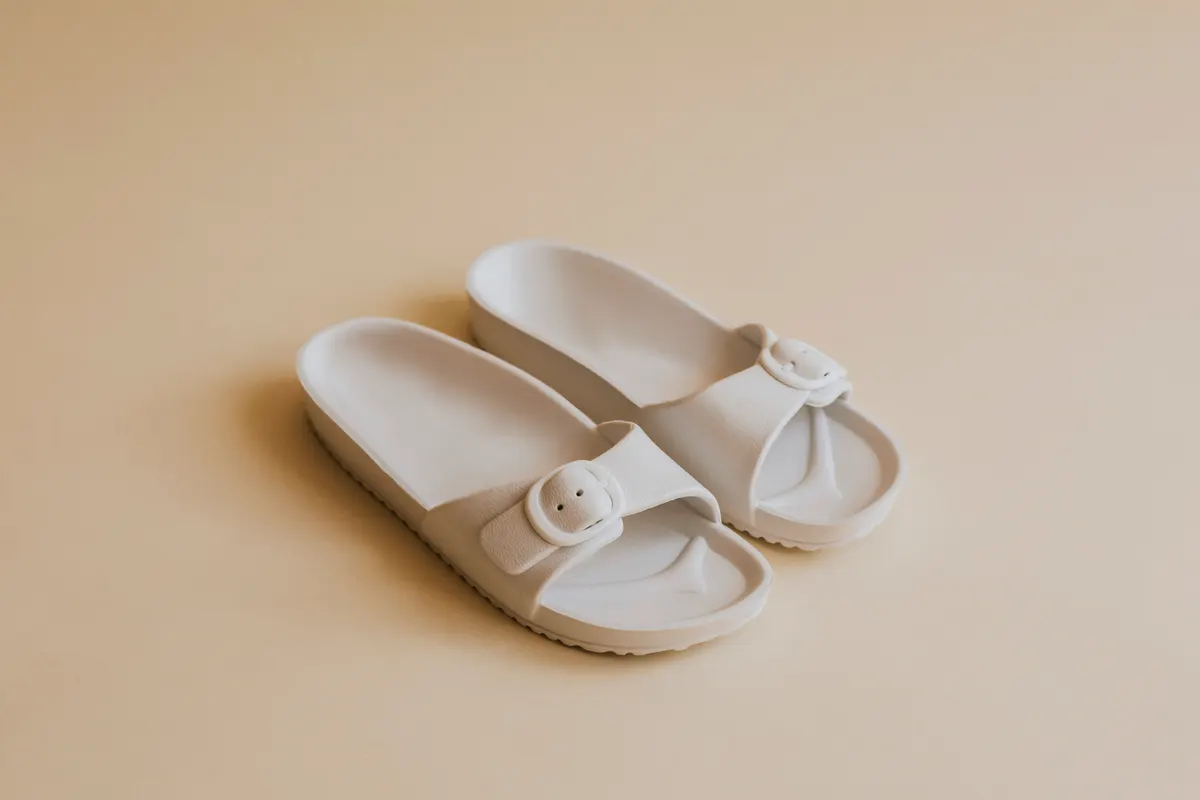
Sandal & slide marketing agency: white buckle slide sandal slippers.

How sandal buyers plan the summer

Sandal and slide brands sell against the calendar and the forecast. The season opens with the first warm weekend, peaks around the summer holidays, and closes when the shopper's attention moves to boots. In between, a single hot week can produce more orders than a cool month, and a brand that cannot move budget quickly leaves most of those orders to whoever can.

We work with sandal and slide brands that already sell online, from cork-footbed and leather sandal makers to EVA slide labels and water-friendly sport sandals. The plan is built for a short season: where to be visible before it opens, how to spend when the weather turns, and what to do with the list once the season closes. It is also built for the fit reality of the category, where slides often come in whole sizes only, sizing is frequently quoted in EU numbers, and a shopper on holiday abroad wants delivery before the flight, not after it. The lever that leaks most is usually visitors, because demand is concentrated and the brand is late to it.

A sandal buyer is usually buying for an event: a holiday, a wedding abroad, the first hot week, a summer of walking. The purchase is triggered by the date approaching or the weather arriving, and the shopper wants the sandal in hand before that date. Delivery speed is part of the product in this category in a way it is not for boots.

Fit works differently here. A slide has no laces and no closure, so the fit is entirely about length and the width of the strap, and most slides come only in whole sizes. A sandal with adjustable straps is more forgiving on width but still exposes the toe and the heel, so a half size out shows visibly. Many sandal brands quote EU sizes as the primary system, which means a shopper used to US or UK sizes is converting in their head, often wrongly.

The question a sandal shopper asks before buying is about support and about water. 'Can I walk all day in these', 'is there arch support', 'can they get wet'. Those answers belong on the page in the first lines, not buried in a spec table.

Sandal buyers also buy in multiples more readily than boot buyers. The price is lower, the season is short and a second colour for a second outfit is an easy add. A two-pair offer at the right moment lifts order value without discounting the brand.

Where sandal & slide brands
lose revenue

The four levers, in this niche.

Visitors

Weather-triggered budget and pre-season presence

Sandal traffic follows the temperature. We build Shopping and Meta campaigns that are live and learning before the season opens, with budget rules tied to the forecast so spend rises in the days before a warm spell and settles after it. Holiday-driven searches, such as sandals for a destination or an occasion, start earlier than weather-driven ones and get their own always-on campaign from late winter.

Conversion rate

EU sizing, whole sizes and delivery before the trip

Sandal pages convert when the size selector shows the shopper's system alongside EU, states whether the style is whole sizes only and which way to round, and promises a delivery date the shopper can trust before a holiday. A foot-length chart in centimetres is the most honest size guide for an open shoe, since the toe position shows. We add it, plus the support and water answers, above the fold.

Average order

The second colour and the travel bundle

Sandals invite a second pair. A two-colour offer on the product page, or a bundle of a walking sandal and a pool slide for the same trip, raises order value at a price the shopper was going to spend across two stores anyway. Care products for cork and leather footbeds are a small but reliable add for premium styles.

Repeat purchases

Next summer starts with this summer's list

The sandal customer comes back next season if you reach them before the first warm week. We build the pre-season email and the Meta audience from this year's buyers, segmented by the style they bought, and open the next season with the new colours in the style they already trust for fit. Off-season, the list stays warm with a short winter-sun message for people travelling somewhere hot.

What we do for
sandal & slide brands

Five channels, one plan.

Google Shopping and search

Shopping that opens before the season and follows the forecast

Shopping for sandals is a campaign that has to be warmed up before demand arrives, because a campaign started on the first hot day spends its learning period during the best week of the year. We open Shopping in early spring at low budget, let it gather conversion data on the early searches, and raise budget as the weather turns. Weather-based rules move daily budget up ahead of a warm forecast and down after it.

Campaign structure separates style types: cork and leather sandals, sport and walking sandals, slides. They have different price points and different shoppers, and a slide search bidding against a walking-sandal search wastes budget on both. Holiday and occasion terms, such as sandals for a wedding abroad or for a specific kind of trip, run in a search campaign that stays on through winter at low spend, because those shoppers book and buy early.

Feed rules pause whole-size slides as they sell out, and end-of-season stock moves to a clearance campaign with its own tighter target. Negative keywords keep repair, orthotic and medical terms out of fashion sandal campaigns, where the shopper is looking for something the product does not claim to be.

Meta and TikTok

Sun, water and feet on Meta and TikTok

Sandal creative works when it shows summer: feet on a hot pavement, a pool edge, a beach walk, a city square. Shots that show the footbed and the strap detail matter for premium styles where the shopper is paying for cork, leather or a moulded footbed. TikTok content from creators on holiday, showing the sandal packed, worn and walked in, tends to pull more product page visits than studio footage.

We sequence the season. Early spring runs a soft launch to last year's buyers and site visitors, showing the new colours. As the weather turns, prospecting widens to lookalikes and to broad. Through the peak, catalogue ads carry the full range with sizes in stock, fed by the same feed as Shopping. Late season, retargeting closes people who browsed but waited.

Policy in this category is mostly about health claims. A sport sandal with a supportive footbed is fine to describe as supportive. Describing it as treating a foot condition triggers health-claim review on Meta and Google and invites disapproval. We write the support message in terms of comfort and walking distance, and leave the medical language to the orthopedic category.

Merchant Center and the feed

Size systems, unisex slides and seasonal availability in the feed

The Merchant Center feed for sandals has to get the size system right, because it is the most common place this category goes wrong. If your primary sizes are EU, we set size_system to EU and submit the EU number in the size attribute, then present the US and UK conversion on the product page. Submitting a US size with the EU system, or mixing systems across variants of one item group, produces mismatches that Google flags and shoppers misread.

Slides sold as unisex are set to gender unisex with a single size run. Where a brand sells the same slide as a men's and a women's product with different size labels, we submit them as two item groups so the sizes do not conflict. Age_group, gender, colour and size are required for footwear in the US, UK, Germany, France, Japan and Brazil, so those fields are filled for every variant.

Material carries the footbed and upper materials, which is what a premium sandal shopper filters on. Product_highlight carries the support and water claims in plain words. Seasonal availability is set honestly: out_of_stock when a size is gone, and for the following season's launch, preorder with an availability_date. Off-season, we do not pull the products from the feed, because the winter-sun and destination shoppers still search.

SEO and AI search

Occasion pages and the walking-comfort question in AI search

Sandal SEO has two parts. Style pages rank for the type of sandal, cork footbed, sport sandal, slide, and they need to be live and indexed before spring so they rank when searches begin. Occasion pages catch the earlier, higher-intent traffic: sandals for a beach wedding, for a walking holiday, for a hot city, for the pool. Those searches start in winter, which is when a sandal brand's organic traffic is otherwise quiet.

What shoppers ask AI assistants is about comfort over distance and about water. 'Can you walk all day in [brand] sandals', 'do [brand] slides run big', 'can [brand] sandals get wet', 'how do I break in a cork footbed'. The answers should be on the product page in direct sentences and on a fit and care page per style, because assistants quote pages that answer plainly. A slide that runs large should say so, with the rounding rule, rather than 'true to size'.

Size conversion is a search topic of its own. A conversion page for your sizing, in your size system, with foot length in centimetres, ranks for the brand plus 'size chart' searches and cuts the wrong-size orders that come from guessing.

Email and SMS

Pre-season launch, holiday countdown and the off-season warm-up

Sandal email is front-loaded. The most valuable send is the pre-season launch to last year's buyers, showing the new colours in the style they bought, before the first warm week. It goes out when the forecast turns, not on a fixed date, so we build it in advance and trigger it by weather in your main markets.

During the season, a weekly message follows the weather and the holidays: the pool slide before the school holidays, the walking sandal before a bank holiday weekend, delivery cut-offs before the peak travel dates. Abandoned-cart and browse flows run with a delivery-date message, because the sandal shopper is often buying against a departure date and needs to know the pair will arrive first.

Post-purchase, the flow is short: fit check in the first days, care for cork and leather footbeds, a second-colour offer while the sun is still out. Off-season is where sandal brands usually go silent for six months and lose the list. We keep a low cadence going with winter-sun content, a message for anyone travelling somewhere warm, and an early look at next season's colours in late winter. SMS is used for restock alerts on sold-out sizes and for the last delivery day before a holiday weekend.

First three fixes

What the plan usually starts with for sandal & slide brands.

  1. Open Shopping and Meta before the first warm week

    Campaigns started on the first hot day learn during the best week of the year. We open them in early spring at low budget so they are converting by the time the weather turns, with budget rules tied to the forecast.

  2. Fix the size system in the feed and put the conversion on the page

    EU sizes submitted under the wrong size_system, or mixed systems within one item group, cause disapprovals and wrong-size orders. One system in the feed, foot length in centimetres on the page, and a rounding rule for whole-size slides.

  3. Build the pre-season email from this year's buyers

    The cheapest sales next summer are to people who bought this summer. We segment by style and set up the launch send now, triggered by weather, so next season opens with the customers who already trust the fit.

Questions from sandal & slide brands

A rounding rule stated on the product page and in the size selector: for this slide, half sizes go up, or go down, whichever your returns data shows. Add foot length in centimetres per size, because an open shoe shows the toe position and a shopper can measure their foot in a minute. The same rule goes in the order confirmation so the shopper can change it before dispatch.

No. Winter-sun and destination shoppers search all year, and pulling the products loses the feed history that helps the campaigns perform when spring arrives. Keep the products live with honest availability and reduce budget rather than removing the listings.

With campaigns that are already live and rules that raise budget on the forecast rather than on the day. A campaign that has been running at low spend since spring can absorb a budget increase in hours. One that is switched on in the heatwave spends the whole spell learning.

Yes, if they do. What you cannot do without review is say they treat or relieve a named foot condition. Meta and Google treat that as a health claim. Describe the footbed, the support and the walking comfort in plain terms and leave the medical language out of ads and product titles.

Not if it is framed as a second colour or a second use, such as a walking sandal and a pool slide for the same trip. The shopper was likely to buy two pairs across the summer anyway. Offering both together lifts order value at a lower price per pair than a general sale would cost you.

Other footwear stores we work with

Send your sandal & slide brand store.

The plan says which lever is leaking and what to fix first, for your store as it is today.

Store, name, email and phone. A person replies from a real inbox. Privacy

Get your free growth plan