Skip to content

Handmade leather shoe marketing agency

Growth plans for handmade leather shoe brands: made to order lead times, last and width sizing, patina content and the resole relationship.

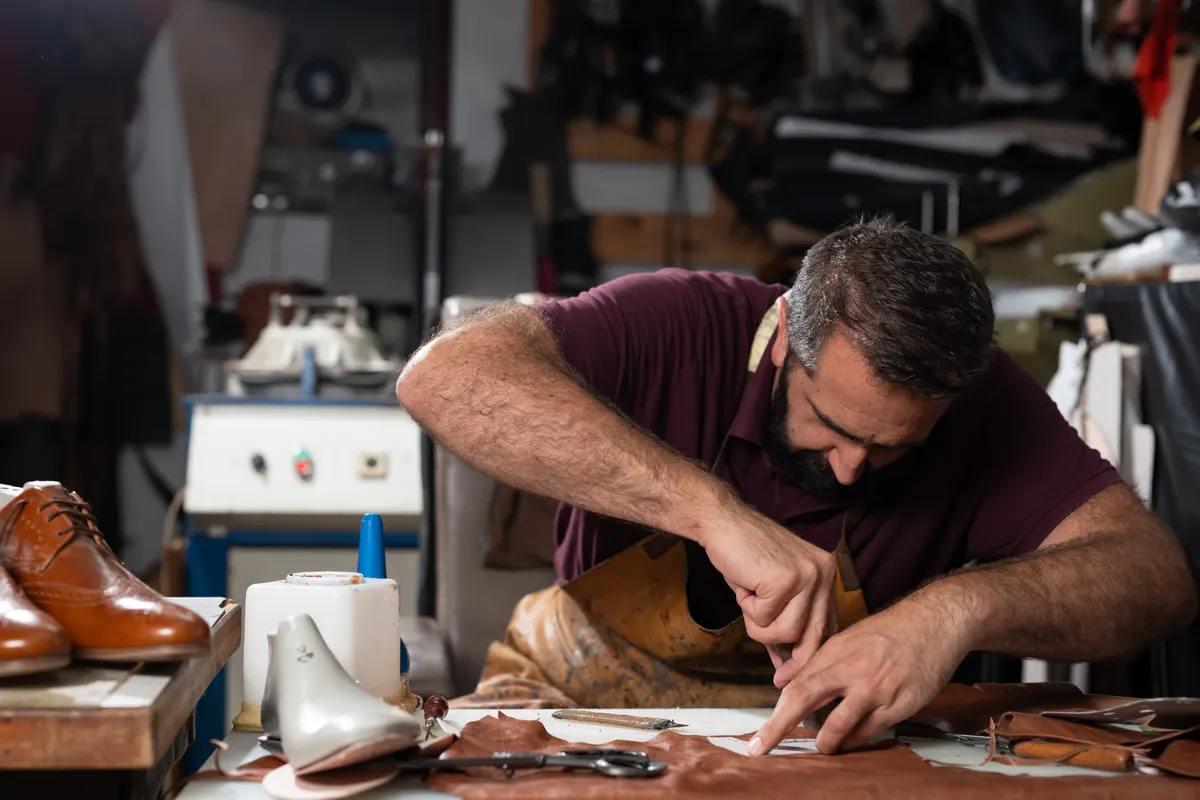
Handmade leather shoe marketing agency: man crafts leather shoes in a cluttered workshop, focused on stitching and detailing.

How someone commits to a handmade pair

A handmade shoe is a considered purchase with a long decision and a long wait, and the marketing has to survive both. Someone spending several months' worth of ordinary shoe budget on one pair reads everything: the leather, the construction, the last shape, who made it, what happens if it does not fit. They will visit many times before they buy, and the job of the site is to keep answering better each visit rather than to close them on the first.

We work with handmade leather shoe brands that already sell online, from small workshops making to order to established makers running ready-to-wear alongside a bespoke service. The plan is built around the three constraints that shape this business. Production capacity is finite, so demand has to be matched to it rather than maximised. Sizing runs on your own last, which no size chart in the world describes. And the customer is worth more over ten years than over one order.

The decision runs on proof and patience. A buyer at this price is trying to work out whether the shoe is what it says it is, and the claims that matter are specific: the tannery and grade of leather, whether it is Goodyear welted, Blake stitched or hand welted, whether the sole is leather or rubber, where the work is actually done and which parts are done by hand.

Half of the reassurance is visual. Photographs of the making, the closing, the lasting, the welt being stitched, do more for conviction than any adjective. Buyers at this level look for the details a machine-made shoe cannot show.

Fit is the real obstacle. Your last is your own, so a buyer's usual size is only a starting point. The brands that convert well ask for a foot tracing or a measurement in centimetres, publish how their last compares to a size a buyer is likely to already own, and offer a first-fit exchange that removes the risk from a large order.

Lead time is not a problem if it is stated. A buyer who is told it will be several weeks will wait. A buyer who is told nothing and waits the same time writes a bad review. Publish the current lead time, keep it accurate, and show the order moving through the workshop while they wait.
Where handmade leather shoe brands
lose revenue

The four levers, in this niche.

Visitors

Reach the people who research construction

Buyers in this category search by construction and material long before they search by brand. Goodyear welted shoes, hand welted, museum calf, shell cordovan, made to order dress shoes. Those searches are low in volume and high in value, and they are usually cheap because most footwear advertisers do not bid on them. Search, Shopping and content should be built around that vocabulary, with capacity in mind so you are not buying demand you cannot make.

Conversion rate

Solve fit before the order, not after it

The biggest reason a considered buyer does not click buy is that they cannot be sure of the fit at this price. Offer a fit consultation, a foot tracing upload, or a size comparison against a widely owned last. State your width fittings and what the last does at the toe and the instep. Then make the first exchange easy and say so, because a stated exchange policy is what converts a nervous first order into a lifetime customer.

Average order

Trees, care and the second pair on the same last

A pair of handmade shoes should never leave without cedar trees, because they protect the product and the buyer knows it. Add the conditioner, the polish and the brushes as a care set. Beyond that, the natural next order is the same last in a different leather or a different style, which needs no new fitting risk, so an owner who is happy with the fit is the easiest second sale you have.

Repeat purchases

The resole relationship

Welted shoes are built to be resoled, and the resole is what keeps a customer for a decade. Offer the service, publish what it involves and what it costs, and contact owners on the anniversary of their order with care advice rather than a sale. Every returning pair is an opportunity to talk about the next one, and a customer who has had a pair rebuilt is the customer most likely to buy a third.

What we do for
handmade leather shoe brands

Five channels, one plan.

Google Shopping and search

Shopping matched to what the workshop can make

Shopping in this category is not about volume, it is about reaching a small number of people who are already looking for what you make. Campaigns split by construction and by style family, because a buyer searching for a welted boot and one searching for a dress oxford have different budgets in mind.

Capacity governs spend. If a made-to-order queue is already several weeks long, adding budget makes the queue worse and the reviews worse with it. We set spend against production capacity and current lead time, raising it when the bench has room and lowering it when the queue is full.

Ready-to-wear stock, where you hold it, is a separate campaign because it ships now, and shipping now is a genuine selling point against your own made-to-order line.

Search covers construction terms, leather names and repair intent if you offer resoling. Negatives should exclude cheap and replica searches, which arrive constantly in this category and never convert at your price.

Meta and TikTok

The workshop is the content

Nothing sells a handmade shoe like watching one being made. Clicking stitches on the welt, a knife trimming the sole edge, a last being pulled, wax burnished into a toe cap. This footage is genuinely watched on short video and it is content only you can produce, which is the rarest advantage a small brand can have.

Build a library rather than campaigns. Film every stage once, properly, and reuse it for years, since the process does not change. Add customer patina posts, which are the most persuasive proof of quality available: the same pair at one year, three years and after a rebuild.

Targeting is narrow. Past visitors and customers first, then interest audiences around tailoring, watches, leather goods and craft. Broad prospecting rarely pays at this price point unless a specific piece of content is performing on its own.

Be accurate with claims. If parts of the work are machine assisted, do not call the whole shoe hand made. This audience knows the difference and comment sections in this category do not let it pass.

Merchant Center and the feed

Made-to-order availability and honest material data

The feed problem specific to this niche is availability. A made-to-order shoe is not in stock, and marking it as in stock when it will ship in weeks creates the mismatch between listing and reality that Merchant Center penalises and shoppers complain about. Use backorder or preorder with an availability_date that reflects the real lead time, and update it as the queue moves.

The material attribute should carry the actual leather, calf, suede, shell cordovan, rather than the word leather on its own, because the specific term is what buyers search and filter for.

Construction, last name, sole type and country of manufacture belong in product_detail as named pairs. Country of origin claims need to be accurate to the rules of the markets you sell into, since this is a category where those claims carry a premium and attract scrutiny.

Colour, size, gender and age_group remain required for footwear. Where you sell in widths, keep the fitting inside the size value in a consistent format across the whole feed so item groups hold together.

SEO and AI search

Construction guides, last pages and AI assistant questions

Organic search is the strongest channel this category has, because the buyer researches for weeks and reads everything. The content that earns that traffic explains rather than sells: what Goodyear welting is and what it means for resoling, how leather grades differ, how to break in a stiff pair, how to rotate and rest shoes.

A page per last is the most underused asset in the trade. Describe the shape, the toe, the instep, which of your styles are built on it, and how it compares to a size the reader already owns. Those pages rank for your brand plus sizing searches and they cut exchanges.

AI assistants get asked whether a brand's shoes are worth the money, how a maker's sizing runs, whether the shoes can be resoled and how long they last. The pages quoted are the ones that answer in a sentence and back it with construction detail. Write the answer first, then the explanation.

Care and repair content keeps earning traffic long after the sale and brings owners back to the site.

Email and SMS

Order updates, care and the anniversary of the pair

For a made-to-order brand, the order update is the most read email you will ever send. Cut, closed, lasted, welted, finished, dispatched. Each with a photograph if you can manage it. Buyers waiting weeks want to see progress, and this sequence turns waiting into anticipation instead of doubt.

Before the sale, the useful flow is educational. Someone who has viewed a pair three times is not undecided about wanting it, they are unsure about fit or justification. Send the last and sizing guide, then the construction explanation, then the exchange policy.

After delivery, cover break-in honestly, then care at the first month and the first season. Then an anniversary message each year with care advice, and a resole prompt when the wear suggests it.

Launches suit this list well when they are limited: a small run in an unusual leather, sold to the list before anywhere else. Discounting rarely belongs here, since the price is the argument and undercutting it damages the next sale.

First three fixes

What the plan usually starts with for handmade leather shoe brands.

  1. Publish the current lead time and keep it true

    Waiting is acceptable, uncertainty is not. Show the real lead time on every made-to-order product and update it as the queue changes, then let the order status emails show the work happening.

  2. Give every last its own page

    Your last is the fit, and no generic size chart describes it. A page per last, with shape, fittings and a comparison to a shoe the reader likely owns, converts researchers and reduces exchanges on expensive orders.

  3. Match ad spend to bench capacity

    Buying more demand than the workshop can make lengthens the queue and damages the reviews that sell the next pair. Spend rises when there is room to make and falls when the queue is full.

Questions from handmade leather shoe brands

By making the wait visible. State the current lead time on the product page, use backorder or preorder in the feed with a real availability date, and send progress updates with photographs as the pair moves through the workshop. Buyers at this price accept a wait for something made for them. What they do not accept is silence after paying a large sum, which is where most complaints in this category come from.

Publish a last page that describes the shape and compares it to a size the buyer probably already owns, ask for a foot length in centimetres or a tracing before dispatch on made-to-order pairs, and offer a straightforward first exchange. Exchanges will still happen on a first order, and that is the cost of acquiring a customer who may buy on the same last for years. Aim to remove the second exchange, not the first.

Yes, but sized to capacity. The point of advertising here is not volume, it is filling the bench evenly and building an audience for future runs. Spend follows the queue, rising when there is room and falling when the lead time stretches. The rest of the budget goes into content and the email list, which cost nothing extra to reach when a run is ready.

Rarely, and never on the core range. The price is part of the argument for the shoe, and discounting it teaches buyers to wait. Where stock needs clearing, use ends of runs, single pairs in odd sizes or a sample sale to your own list, framed by the reason rather than by a percentage. Limited leathers and small runs create urgency without touching the standing price.

Everything, accurately. Country of origin and what work is done by hand are checked in this category by buyers who know the trade, and origin claims are regulated in the markets you sell into. If some operations are machine assisted, say so plainly and describe the hand work honestly. Precision reads as confidence, and vagueness in a premium listing reads as something being hidden.

Other footwear stores we work with

Send your handmade leather shoe brand store.

The plan says which lever is leaking and what to fix first, for your store as it is today.

Store, name, email and phone. A person replies from a real inbox. Privacy

Get your free growth plan