Skip to content

Kids' shoe marketing agency

Growth plans for kids' shoe stores: growing feet and a short reorder cycle, school shoe season, age_group in the feed and measuring at home.

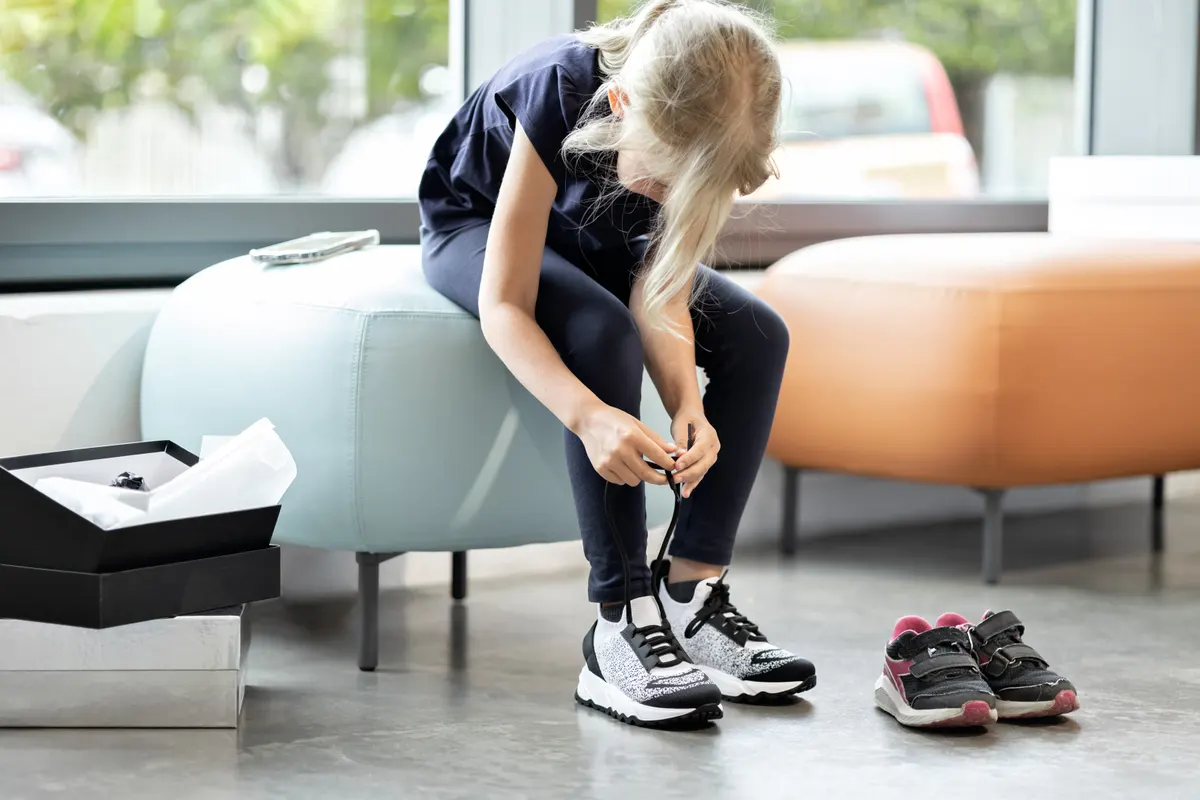
Kids' shoe marketing agency: kid tying her shoelaces and trying on sport shoes in store.

How parents buy shoes for a child

Children's feet grow, which means a kids' shoe store has a built in reorder cycle that almost no other footwear business has. The same customer needs a new size every few months, then a new size again, for years. Most stores in this category sell each pair as though it were the last one and let the parent go elsewhere when the next size is needed.

We work with kids' shoe stores that already sell online: school shoe specialists, first walker and pre-walker brands, multi-brand children's retailers and stores fitting widths for children. The plan is built around the three things that separate this category from adult footwear. The person paying is not the person wearing. Demand collapses into a small number of weeks around the start of the school year. And parents cannot measure a wriggling child's foot at home unless you make it simple for them.

The parent is the buyer, the child is the wearer and the veto. A shoe that fits perfectly and the child refuses to wear is a return, so both have to be satisfied on the same page. That is why colour and character licensing sell so hard in this category while the copy still has to talk to an adult about fit and durability.

The fit problem is real and specific. Children cannot tell you reliably whether a shoe pinches, they grow in unpredictable spurts, and the size they wore three months ago is often wrong now. Parents want growing room without a shoe that slips at the heel. They want to know how much room is right, how to check it with a thumb, and when to measure again.

Width is a live question in children's footwear in a way many parents only discover when a shoe rubs. Stores that carry fittings should say so on every page, because a parent whose child needs a wider fitting will build their whole shopping habit around a store that stocks it.

The practical requirements are unglamorous and decisive. School shoes usually have to be plain black or plain dark, scuff resistant and washable. Fastening matters by age, since a child who cannot tie laces needs a strap or a hook and loop closure they can manage alone at school. Say those things plainly and the parent trusts the rest of the page.

Where kids' shoe stores
lose revenue

The four levers, in this niche.

Visitors

Own the school shoe weeks and the everyday searches

A large share of this category's year lands in the weeks before term starts, and the stores that win those weeks were already visible in the quiet month before them. We build the school campaign to open early and scale hard, then run the rest of the year on the searches that never stop: first walking shoes, wide fitting children's shoes, wellies and sandals in season, and the fastening terms parents use when they need a shoe a child can put on alone.

Conversion rate

Make measuring at home possible

The single biggest conversion blocker is a parent who does not know the current size. A printable measuring gauge, a short video showing how to measure a standing child, and a clear statement of how much growing room the size includes will move more orders than any offer. Add the fastening type, whether the shoe is school compliant and whether it comes in fittings, and the parent has everything they were going to ask in a shop.

Average order

The second pair a child actually needs

Children need more than one pair at once, which makes multi-pair baskets normal rather than pushy. School shoes and plimsolls or trainers for games go together. Wellies and sandals sit either side of the season. Socks in the right size are an easy add for a parent already buying. Where a family has more than one child, a sibling prompt at the basket saves the parent a second visit and lifts the order without a discount.

Repeat purchases

Reorder on the growth clock

This is the only footwear niche where the reorder date can be estimated from the child's age and the date of the last purchase. Younger feet grow faster, so the interval shortens for toddlers and lengthens for older children. A remeasure reminder sent on that schedule, with the gauge attached and the same shoe available in the next size, brings the parent back before they think to search. Term dates give you two more natural moments each year.

What we do for
kids' shoe stores

Five channels, one plan.

Google Shopping and search

Shopping built around term dates and fastening types

Shopping in this category has one enormous peak and a steady base. The school campaign should be live and gathering data weeks before parents start buying, because a campaign that opens in the first busy week spends the peak learning instead of selling.

Structure separates school shoes from everything else, and then splits school shoes by age band, because an infant school shoe and a senior school shoe are different prices and different decisions. First walkers get their own campaign year round, since that search never stops and the shopper is usually new to you.

Delivery promises matter enormously in the last week before term. Where you can ship next day, say so in the campaign and in the feed, because a parent buying on the final weekend is choosing on arrival date rather than price.

Negatives should remove costume and fancy dress searches, second-hand terms and school uniform clothing searches that are not shoes. After term starts, budget moves out of school and into the seasonal ranges rather than staying put out of habit.

Meta and TikTok

Meta and TikTok aimed at parents, not children

Everything on social in this category is aimed at the adult, and that is a policy requirement as well as a strategy. The major platforms do not permit ad targeting of under-eighteens in the way they permit adult targeting, so the audience is parents, and the creative should speak to them while showing children who look like their own.

What performs is the practical demonstration. A hand checking growing room at the toe, a four year old fastening a strap without help, a school shoe being wiped clean after a wet playground. Parents share those clips with each other, which is where the reach comes from.

Seasonal sequencing runs from a soft launch of the school range to last year's buyers, through a broad push in the buying weeks, to seasonal ranges afterwards. Keep permissions and taste in mind when using customer photographs of children, and prefer content you have clear consent for.

Catalogue ads work well because parents browse and return. Feed the catalogue with the same stock rules as Shopping so a size that has sold out stops being shown.

Merchant Center and the feed

Age_group, size systems and school compliance in the feed

The age_group attribute is the field that decides whether your products reach the right shoppers. Merchant Center accepts newborn, infant, toddler, kids and adult, and each maps to an age range that Google uses for filtering. Sending everything as kids flattens the range and loses the parent shopping for a pre-walker.

Gender is required for footwear alongside colour, size and age_group in the main markets, and unisex is a valid answer that many children's ranges should be using rather than splitting stock artificially.

Sizes are the trap. Children's size runs restart their numbering and then hand over to adult sizes at the top of the range, so the same number can mean two different shoes. Set size_system correctly, keep the child and adult runs in separate item groups, and label the changeover clearly.

School compliance, fastening type and fittings go in product_detail as named pairs, and product_highlight can carry the plain sentences a parent scans for. Keep availability honest through the peak, since nothing damages a school season like selling a size you cannot ship before term.

SEO and AI search

Measuring guides and the questions parents ask assistants

The best performing page a kids' shoe store can own is a measuring guide. How to measure a child's foot at home, how much growing room to allow, how often to check. It earns links from parenting sites, it ranks all year, and it is exactly the kind of page an AI assistant quotes when a parent asks how to size shoes for a toddler.

Around it sit the durable category pages: school shoes by age band, first walking shoes, wide fitting children's shoes, and a plain page explaining what makes a shoe school compliant in your market.

Parents ask assistants very practical questions. Whether a shoe is suitable for a child who cannot tie laces, how a brand's sizing compares to the size measured at a shop, whether a style comes in a wider fitting, how long a growing child will get out of a pair. Each of those deserves a direct answer in the first sentence of a page rather than a paragraph of description.

Publish the school content well before the season so it is indexed and settled when the searches begin, then refresh it each year in place.

Email and SMS

Remeasure reminders and the term calendar

The remeasure reminder is the flow that makes this category profitable. Capture the child's age or the size bought, then send a reminder on a growth-appropriate interval with the measuring gauge and the next size up of the shoe they already own. It reads as helpful rather than promotional because it is.

The term calendar gives the rest of the year its shape. A message before the school buying weeks with sizes and delivery dates, one at half term for the pair that has already worn through, one before the summer holidays for sandals, one before the wet months for wellies.

Post-purchase, ask whether the fit was right. Parents will tell you, and the answer feeds both your returns rate and your understanding of how your sizes run.

Segment by child age, and update it as time passes, because a list segmented on the age a child was two years ago will send toddler content to a family with a seven year old. SMS is best kept for the last delivery day before term and for restocks in the sizes that sell out first.

First three fixes

What the plan usually starts with for kids' shoe stores.

  1. Publish a printable measuring gauge and film the method

    Parents cannot buy confidently without a current size, and most have no way to get one at home. A gauge they can print, plus a short video of measuring a standing child, removes the main reason kids' shoe carts are abandoned.

  2. Split the feed by real age_group values

    Sending every product as kids hides pre-walker and infant ranges from the parents searching for them. Newborn, infant, toddler, kids and adult each map to a filter Google uses, so the field is worth setting properly.

  3. Open the school campaign before the school rush

    Campaigns launched in the first busy week learn during the best week of the year. Open early at low budget on last year's data, then scale as the searches rise, and move budget out again once term starts.

Questions from kids' shoe stores

Give a specific, consistent rule for your own lasts and repeat it everywhere: on the size guide, the product page and the order confirmation. The rule matters less than the consistency, because parents compare what you say to what they were told in a shop. Pair it with a measuring gauge so the parent is measuring rather than guessing, and state how the room is checked, usually with a thumb width at the toe while the child stands.

No. The major ad platforms restrict targeting of minors, and the audience for children's shoes is the parent or grandparent in any case. Build audiences from adults with parental interests, from your own customer list segmented by the age of the child, and from site visitors. Show children in the creative, speak to the adult in the copy, and be careful about using customer photographs of children without clear consent.

The searches that never stop. First walking shoes are bought all year because babies keep starting to walk. Wide fitting children's shoes have steady demand and few sellers. Seasonal ranges pick up either side of the school peak, wellies in the wet months and sandals in summer. Half term is a real second peak for replacements, since a term of playground use finishes a lot of shoes.

Yes, into different item groups with the size system set for each. Children's numbering restarts and then hands over to adult numbering at the top of the range, which means the same number can describe two completely different shoes. Keeping them in one group creates variants that contradict each other and a size selector that confuses the parent.

Two ways, and both should be automated. The first is the growth clock, a remeasure reminder timed from the last purchase and the child's age, offering the next size of a shoe that already worked. The second is siblings. If a family has more than one child, prompt for the second size at the basket and store it, then include both in future reminders.

Other footwear stores we work with

Send your kids' shoe store store.

The plan says which lever is leaking and what to fix first, for your store as it is today.

Store, name, email and phone. A person replies from a real inbox. Privacy

Get your free growth plan